
Intuit and OpenAI Join Forces to Revolutionize Financial Processes Using AI
- Intuit and OpenAI announced a $100M multiyear partnership to integrate AI into financial tools like TurboTax and QuickBooks via ChatGPT. - The collaboration enables users to perform tax calculations, credit assessments, and business finance management through AI-powered chatbots. - Intuit's shares rose 3.4% premarket as analysts praised the deal for enhancing user engagement and validating AI-driven financial services. - OpenAI gains access to Intuit's financial data while expanding its AI infrastructure
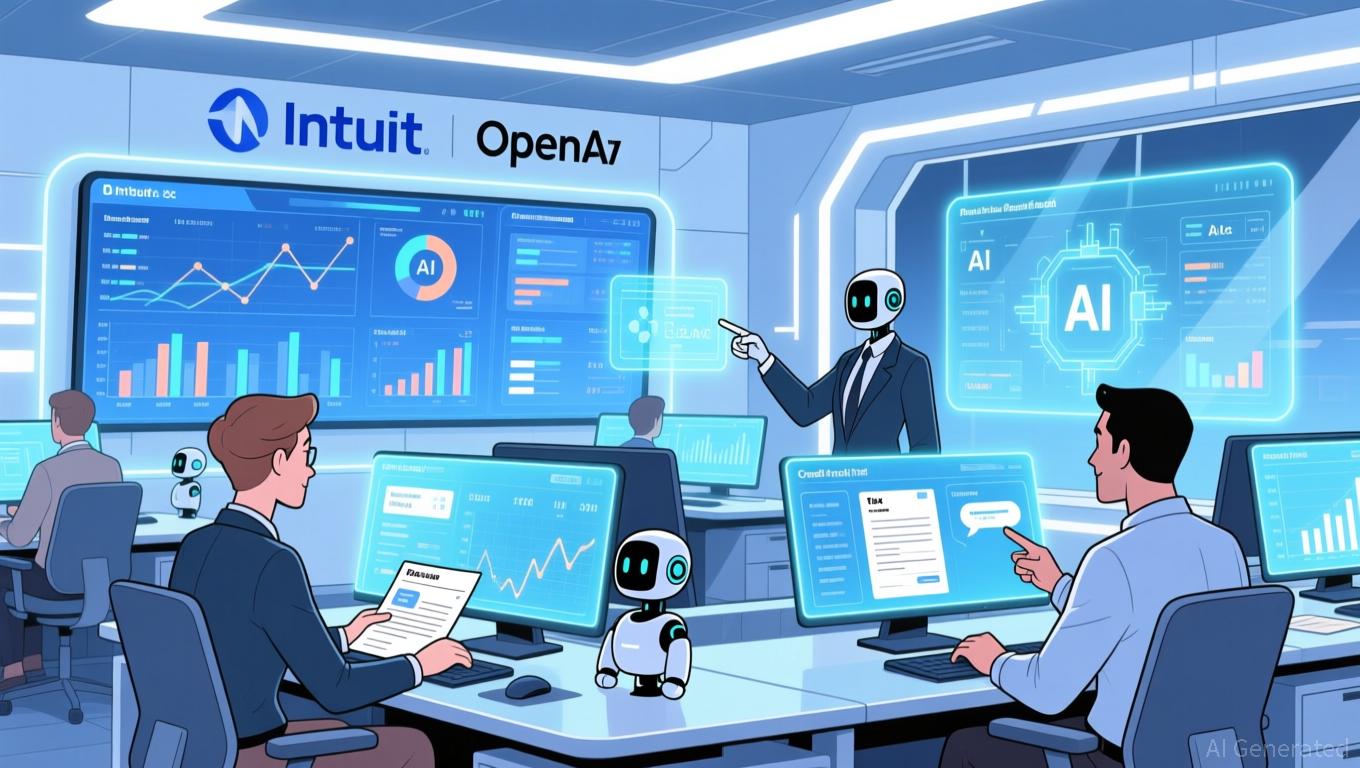
Intuit Inc. (INTU) has entered a multi-year agreement valued at $100 million with OpenAI, representing a major move to bring artificial intelligence into its suite of financial software. Announced on November 18, the partnership will integrate Intuit’s products—including TurboTax, Credit Karma, and QuickBooks—within OpenAI’s ChatGPT platform,
This alliance, which
The market responded favorably to the news, with
For OpenAI, the partnership is part of a broader strategy to generate revenue from its AI infrastructure. CEO Sam Altman has
While the financial specifics of the deal remain limited beyond the $100 million figure, Intuit has reiterated its focus on expanding AI integration. The company
The long-term effects of the partnership will depend on how widely users adopt the technology and how effectively AI agents simplify financial processes. With 2.8 million customers already utilizing Intuit’s AI features, the company is well-positioned to benefit from the increasing demand for automation. For OpenAI, the agreement strengthens its status as a key provider of AI infrastructure, even as it faces rising expenses to develop new-generation models.
Disclaimer: The content of this article solely reflects the author's opinion and does not represent the platform in any capacity. This article is not intended to serve as a reference for making investment decisions.
You may also like
Bitcoin Leverage Liquidation Spike: Systemic Threats and Institutional Investor Responses in 2025
- 2025 Bitcoin leverage liquidations exposed systemic risks across DeFi, institutional portfolios, and traditional markets, triggered by macroeconomic tightening and regulatory uncertainty. - Institutions accelerated adoption of AI-driven risk frameworks, with 72% implementing crypto-specific strategies post-crisis to mitigate cascading losses. - MicroStrategy's 60% stock collapse and $3.5B Bitcoin ETF outflow highlighted cross-market contagion, while hedging tools helped institutions navigate volatility.

Bitcoin Price Fluctuations and Institutional Involvement in Late 2025: Optimal Timing for Long-Term Investment
- Bitcoin's 2025 volatility dropped to 43% amid $732B inflows and institutional-grade infrastructure maturing. - Regulatory clarity (MiCA/GENIUS Act) and $115B ETF assets (BlackRock/Fidelity) normalized crypto in institutional portfolios. - $90K price near Fibonacci support zones reflects technical strength and improved liquidity from tokenized assets. - Vanguard's $9T Bitcoin access and Fed policy shifts reinforced crypto's transition from niche to $4T mainstream asset class.

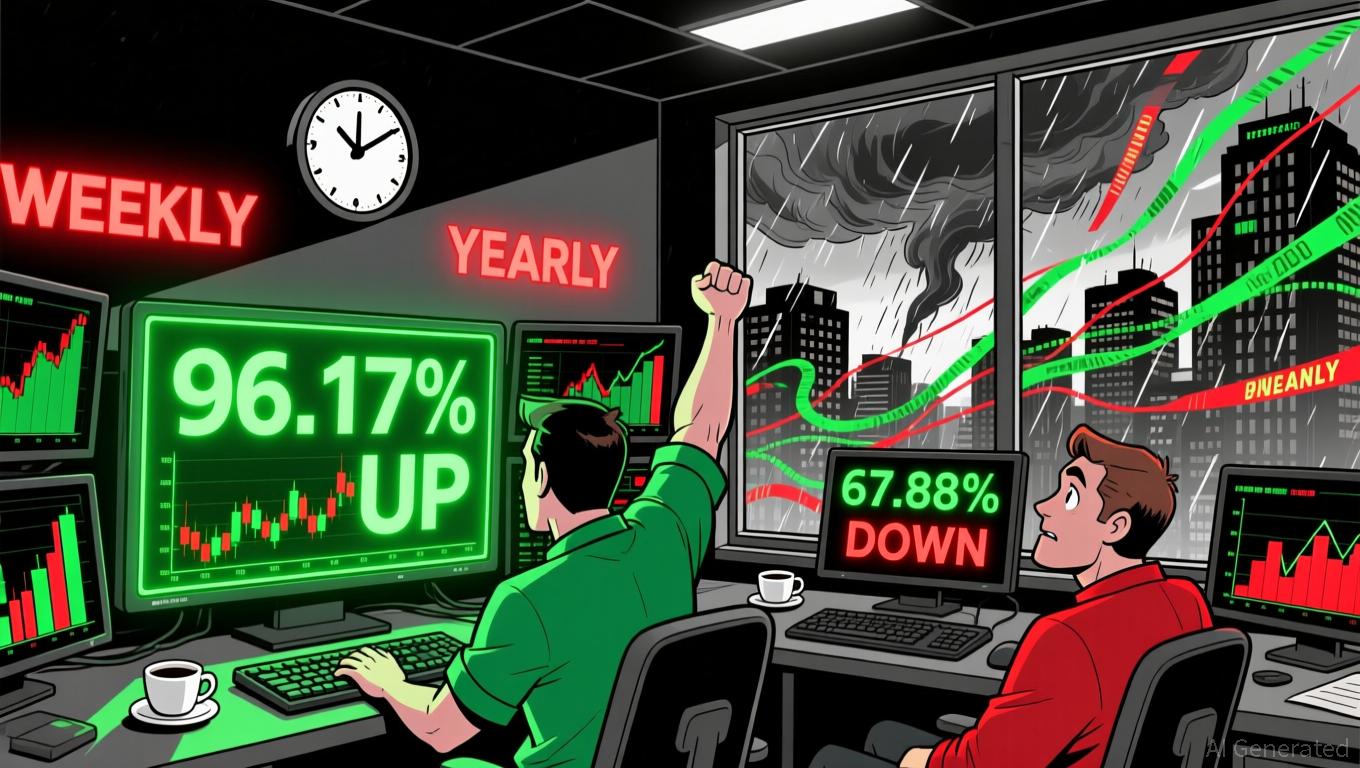
LUNA +96.17% 7D: Surge Attributed to Rumors of SBF Receiving a Pardon
- LUNA surged 96.17% in 7 days amid speculation about Sam Bankman-Fried's potential legal resolution. - The Terra 2.0 token (LUNA) trades at $0.1353, contrasting with LUNC's 70.3% 24-hour gain and $342M market cap. - Market optimism remains cautious as LUNA still faces a 67.88% annual decline and regulatory uncertainties. - SBF's legal developments could influence broader crypto sentiment, though Terra's recovery depends on technical performance.
Bitcoin’s Steep Drop: Uncovering the Triggers and What It Means for Investors
- Bitcoin's 2025 year-end 20% plunge highlights systemic risks and psychological volatility in crypto markets. - Trump's 100% China rare earth tariffs and Fed's 75-basis-point rate hike triggered initial 38% price collapse. - China's crypto ban erased 5% of Bitcoin's value, amplifying global regulatory risks for digital assets. - Algorithmic trading accelerated selloffs by detecting bearish signals faster than human traders could respond. - Investors must prioritize diversification and adapt strategies to
Trending news
MoreCrypto prices
More





