
COAI's Unexpected Price Decline and Its Impact on the Market: Systemic Risks in Linked Commodity Markets
- ChainOpera AI (COAI) token collapsed in late 2025 with 96% price drop, exposing systemic risks in AI-driven crypto ecosystems and triggering volatility in energy/metals markets. - Governance failures, regulatory ambiguity, and hyper-concentrated token distribution (88% controlled by 10 wallets) created manipulative trading dynamics mirroring 2008 GFC patterns. - COAI's collapse revealed hidden interdependencies between AI tokens and commodities, with copper/lithium prices surging as investors reassessed
The Unraveling of ChainOpera AI (COAI): Exposing Fragilities in AI-Driven Crypto and Commodity Markets
In late 2025, the ChainOpera AI (COAI) token experienced a dramatic collapse, with its value plummeting by 96% in November and suffering an 88% decline over the year. This sharp downturn revealed significant weaknesses within AI-powered cryptocurrency systems and highlighted their potential to disrupt traditional commodity markets. The crisis, fueled by failures in governance, unclear regulations, and deliberate market manipulation, echoed the systemic dangers seen during the 2008 Global Financial Crisis. The widespread impact of COAI’s downfall across sectors such as energy, metals, and finance emphasized the urgent necessity for modernized risk management strategies to address the growing links between speculative AI tokens and tangible commodities.
Governance and Regulatory Gaps: Triggers Behind the Downfall
COAI’s rapid decline was driven by a combination of unstable corporate leadership and ambiguous regulatory oversight. For example, C3.ai reported a net loss of $116.8 million in the first quarter of 2025, while executive turnover and a class-action lawsuit further undermined investor trust. The lack of clear guidelines in the U.S. Congress’s CLARITY Act left AI-related cryptocurrencies in a legal limbo, discouraging institutional investors and fueling a cycle of mistrust that hastened the withdrawal of capital from AI tokens.
Additionally, the token’s vulnerability was heightened by its highly concentrated ownership—just ten wallets controlled 88% of COAI’s supply. This allowed for orchestrated trading among a small group of holders, who manipulated prices and exploited information gaps to incite panic selling. These patterns closely resemble the pre-2008 environment, where opaque ownership and herd mentality among financial institutions amplified systemic threats.
Ripple Effects in Traditional Commodity Markets
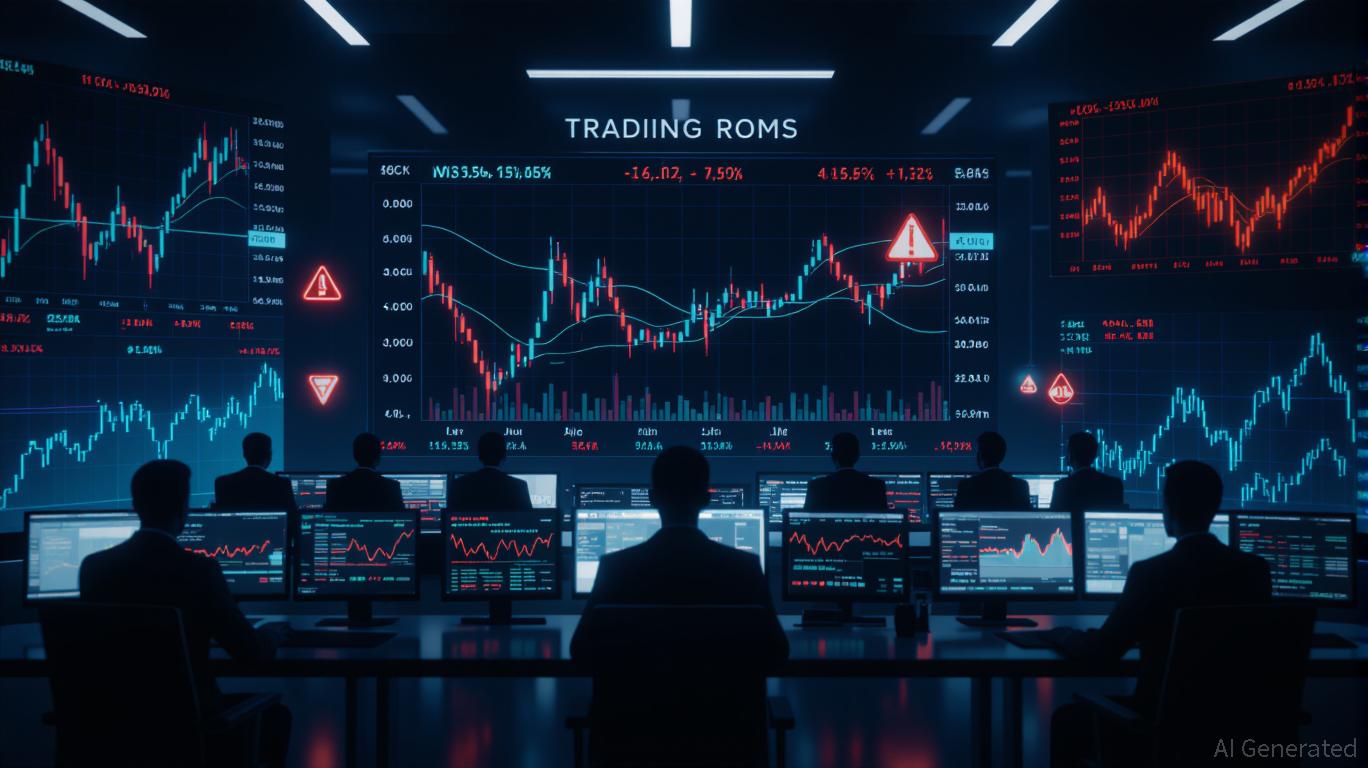
The collapse of COAI sent shockwaves through energy and metals markets, exposing hidden connections between AI-based cryptocurrencies and established commodities. Studies show that key strategic metals—such as copper, lithium, and nickel, which are vital for AI and renewable energy technologies—became more volatile as investors reevaluated supply chain risks. For instance, copper prices fluctuated sharply in late 2025 as doubts grew over the sustainability of AI-driven demand, while crude oil markets faced downward pressure as capital shifted toward speculative assets like meme coins.
The International Monetary Fund has cautioned that unregulated AI crypto projects now threaten to spread instability to traditional financial systems, especially as they become intertwined with energy and infrastructure supply chains. This situation mirrors the contagion seen during the 2008 crisis, when risky mortgage-backed securities destabilized global banks. Similarly, COAI’s collapse demonstrated how AI tokens, despite lacking practical utility, can distort commodity prices through algorithmic trading and speculative bubbles.
Learning from 2008: Strengthening Systemic Risk Management
Risk management frameworks developed after 2008 stress the importance of monitoring interconnected markets and identifying early warning signs, such as rising volatility and autocorrelation. These concepts are increasingly relevant in AI-driven financial systems, where machine learning algorithms can intensify market swings through synchronized trading actions. For example, coordinated moves by large language models in stock trading—such as mass sell-offs triggered by events like COAI’s crash—can set off self-reinforcing market declines.
The 2008 financial crisis also exposed how regulatory blind spots can allow risks to spread unchecked. Today, the absence of clear oversight for AI-linked commodities increases these vulnerabilities. The vague language of the CLARITY Act, for instance, has left energy companies susceptible to speculative capital flows from crypto markets, drawing a parallel to the unchecked growth of derivatives before 2008. Without strong governance, these connections could destabilize energy markets, as seen in the 2025 disruptions to oil and natural gas.
Investor Psychology and the Threat of Misinformation
The COAI debacle was further intensified by misinformation campaigns that used AI-generated deepfakes and fabricated news to sway market sentiment and accelerate panic-driven sell-offs. This introduces a new layer of systemic risk, where synthetic media can influence commodity prices regardless of underlying fundamentals. Unlike in 2008, these dangers are now widespread in AI-powered markets, making it essential to update risk frameworks to include media literacy and ethical considerations for AI technologies.
Moving Forward: Building Resilient Risk Frameworks
The COAI episode stands as a stark warning for both regulators and investors. It highlights the necessity for risk management systems that address the unique challenges posed by AI, such as algorithmic collusion and the spread of synthetic misinformation, while drawing on lessons from past financial crises. Policymakers should focus on increasing transparency in AI-linked commodity markets, enforcing strict governance over token distribution, and adopting post-2008 resilience measures like stress testing and advanced contagion risk models.
As artificial intelligence continues to transform global markets, the boundaries between crypto speculation and real-world commodities will become increasingly blurred. Without decisive action, future crises may not be limited to a single digital asset but could disrupt entire supply chains, repeating the most severe consequences of 2008.
Disclaimer: The content of this article solely reflects the author's opinion and does not represent the platform in any capacity. This article is not intended to serve as a reference for making investment decisions.
You may also like
Ethereum tops 24-hour net inflows with $138.7M: Artemis
Robert Kiyosaki Says Ethereum Could Hit $60,000 by 2026
Quick Take Summary is AI generated, newsroom reviewed. Robert Kiyosaki predicts Ethereum will hit $60,000 by 2026. ETF approvals and the Dencun upgrade strengthen the bullish case. ETH trades near $3,037, implying a potential 20x surge. Critics cite Kiyosaki’s past overly optimistic predictions.References X Post Reference
XRP ETFs Hit a Massive 15-Day Inflow Streak
Quick Take Summary is AI generated, newsroom reviewed. U.S. spot XRP ETFs logged 15 straight days of net inflows. Total XRP ETF assets now approach $900 million. XRP traded at $2.02, down 7.9%, even as inflows rose. Institutional buyers continue to accumulate via OTC channels.References X Post Reference
Altcoin Dominance Tracks the PMI: Why This Cycle Has No Real Altseason
Trending news
MoreCrypto prices
More





