
Why is the current macro environment favorable for risk assets?

In the short term, risk assets are viewed positively due to AI capital expenditures and strong consumer spending among the wealthy, which support earnings. However, in the long term, structural risks stemming from sovereign debt, demographic crises, and geopolitical restructuring must be closely monitored.
Bullish on risk assets in the short term, as AI capital expenditure and affluent class consumption support profits, but in the long run, one must be wary of the structural risks posed by sovereign debt, demographic crises, and the reshaping of geopolitics.
Written by: @arndxt_xo
Translated by: AididiaoJP, Foresight News
In a nutshell: I am bullish on risk assets in the short term, due to AI capital expenditure, consumption driven by the affluent class, and still relatively high nominal growth, all of which structurally benefit corporate profits.
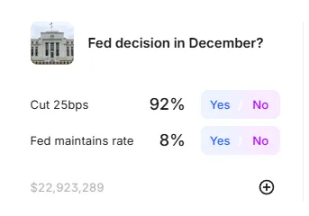
Put simply: when the cost of borrowing drops, "risk assets" usually perform well.
At the same time, I am deeply skeptical of the narrative we are currently telling about what all this means for the next decade:
- The sovereign debt problem cannot be solved without some combination of inflation, financial repression, or unexpected events.
- Fertility rates and demographic structure will invisibly constrain real economic growth and quietly amplify political risks.
- Asia, especially China, will increasingly become the core definer of both opportunities and tail risks.
So the trend continues—keep holding those profit engines. But to build a portfolio, you must recognize that the road to currency devaluation and demographic adjustment will be bumpy, not smooth sailing.
The Illusion of Consensus
If you only read the views of major institutions, you would think we are living in the most perfect macro world:
Economic growth is "resilient," inflation is sliding toward target, artificial intelligence is a long-term tailwind, and Asia is the new engine of diversification.
HSBC's latest outlook for Q1 2026 is a clear reflection of this consensus: stay in the stock market bull run, overweight technology and communication services, bet on AI winners and Asian markets, lock in investment-grade bond yields, and use alternative and multi-asset strategies to smooth volatility.
I actually partially agree with this view. But if you stop here, you miss the truly important story.
Beneath the surface, the reality is:
- A profit cycle driven by AI capital expenditure, whose strength far exceeds expectations.
- A partially broken monetary policy transmission mechanism due to massive public debt piled onto private balance sheets.
- Some structural ticking time bombs—sovereign debt, collapsing fertility rates, geopolitical restructuring—which are irrelevant to this quarter, but are crucial to what "risk assets" themselves will mean a decade from now.
This article is my attempt to reconcile these two worlds: one is the shiny, easy-to-sell "resilience" story, the other is the chaotic, complex, path-dependent macro reality.
1. Market Consensus
Let's start with the prevailing views of institutional investors.
Their logic is simple:
- The stock market bull run continues, but with increased volatility.
- Sector styles should be diversified: overweight technology and communication, while also allocating to utilities (electricity demand), industrials, and financials to achieve value and diversification.
- Use alternative investments and multi-asset strategies to hedge against downturns—such as gold, hedge funds, private credit/equity, infrastructure, and volatility strategies.
Focus on capturing yield opportunities:
- As spreads have narrowed, shift funds from high-yield bonds to investment-grade bonds.
- Increase exposure to emerging market hard currency corporate bonds and local currency bonds to capture spreads and returns with low correlation to equities.
- Use infrastructure and volatility strategies as sources of inflation-hedged returns.
Treat Asia as a core for diversification:
- Overweight China, Hong Kong, Japan, Singapore, and South Korea.
- Focus on themes: the Asian data center boom, China's leading innovative companies, Asian companies' return rates boosted by buybacks/dividends/M&A, and high-quality Asian credit bonds.
In fixed income, they are clearly bullish on:
- Global investment-grade corporate bonds, as they offer higher spreads and the opportunity to lock in yields before policy rates fall.
- Overweight emerging market local currency bonds to capture spreads, potential FX gains, and low correlation with equities.
- Slight underweight on global high-yield bonds due to high valuations and individual credit risks.
This is a textbook "late-cycle but not over" allocation: go with the trend, diversify, and let Asia, AI, and yield strategies drive your portfolio.
I think this strategy is broadly correct for the next 6-12 months. But the problem is that most macro analysis stops here, while the real risks start from here.
2. Cracks Beneath the Surface
From a macro perspective:
- US nominal spending growth is about 4-5%, directly supporting corporate revenues.
- But the key is: who is consuming? Where is the money coming from?
Simply discussing the decline in the savings rate ("consumers are out of money") misses the point. If wealthy households draw on deposits, increase credit, and cash out asset gains, they can continue to spend even if wage growth slows and the job market weakens. The part of consumption that exceeds income is supported by the balance sheet (wealth), not the income statement (current income).
This means a large part of marginal demand comes from wealthy households with strong balance sheets, not broad-based real income growth.
This is why the data looks so contradictory:
- Overall consumption remains strong.
- The labor market is gradually weakening, especially in low-end jobs.
- Inequality in income and assets is intensifying, further reinforcing this pattern.
Here, I diverge from the mainstream "resilience" narrative. The reason macro aggregates look good is because they are increasingly dominated by a small group at the top of the income, wealth, and capital acquisition ladder.
For the stock market, this is still bullish (profits don't care if income comes from one rich person or ten poor people). But for social stability, the political environment, and long-term growth, this is a slow-burning risk.
3. The Stimulus Effect of AI Capital Expenditure
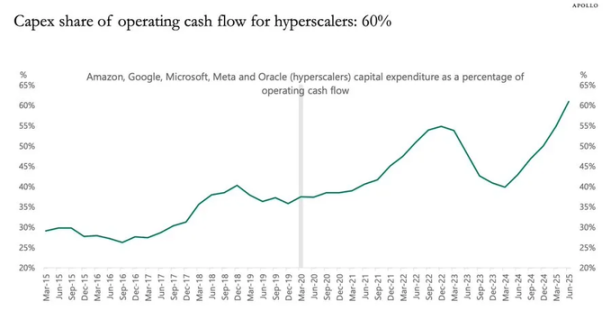
The most underestimated dynamic right now is AI capital expenditure and its impact on profits.
Simply put:
- Capital expenditure is someone else's income today.
- The related costs (depreciation) will be reflected gradually over the next few years.
Therefore, when AI hyperscalers and related companies sharply increase total investment (for example, by 20%):
- Revenue and profits get a huge and front-loaded boost.
- Depreciation rises slowly over time, roughly in line with inflation.
- Data shows that at any point, the best single indicator to explain profits is total investment minus capital consumption (depreciation).
This leads to a very simple, yet non-consensus conclusion: as long as the AI capital expenditure wave continues, it stimulates the business cycle and maximizes corporate profits.
Don't try to stand in front of this train.
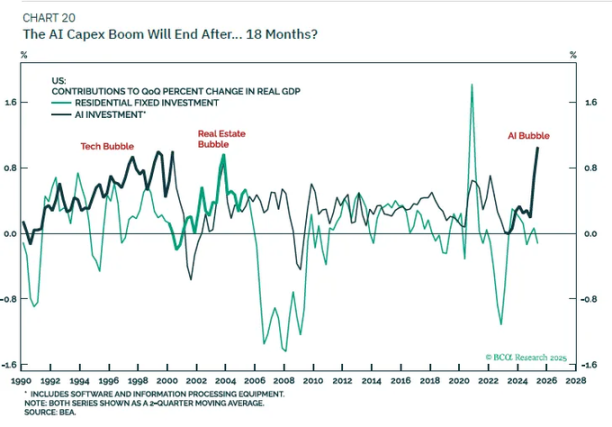
This fits perfectly with HSBC's overweight on tech stocks and its "evolving AI ecosystem" theme—they are essentially laying out the same profit logic in advance, albeit in different words.
What I am more skeptical about is the narrative regarding its long-term impact:
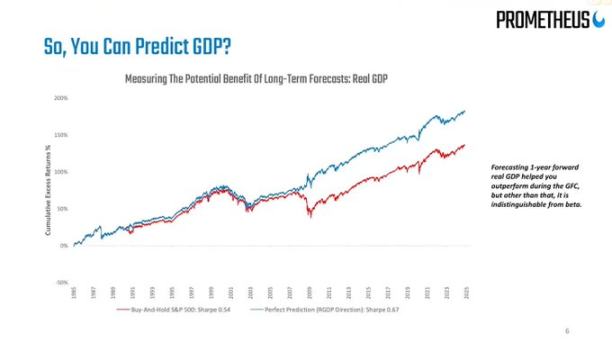
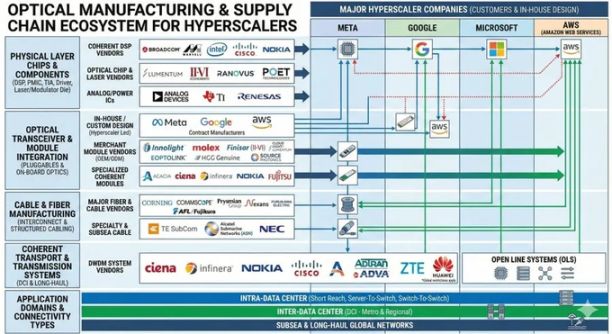
I don't believe that AI capital expenditure alone can usher us into a new era of 6% real GDP growth.
Once the window for corporate free cash flow financing narrows and balance sheets become saturated, capital expenditure will slow.
When depreciation gradually catches up, this "profit stimulus" effect will fade; we will return to the underlying trend of population growth + productivity improvement, which is not high in developed countries.
Therefore, my stance is:
- Tactically: as long as total investment data continues to soar, remain bullish on AI capital expenditure beneficiaries (chips, data center infrastructure, power grids, niche software, etc.).
- Strategically: treat this as a cyclical profit boom, not a permanent reset of the trend growth rate.
4. Bonds, Liquidity, and a Semi-Broken Transmission Mechanism
This part gets a bit weird.
Historically, a 500 basis point rate hike would severely hit the private sector's net interest income. But now, trillions in public debt sit as safe assets on private balance sheets, distorting this relationship:
- Rising interest rates mean higher interest income for holders of government bonds and reserves.
- Many corporate and household debts are fixed-rate (especially mortgages).
- The end result: the private sector's net interest burden has not worsened as macro forecasts predicted.
So we face:
- A Federal Reserve caught in a dilemma: inflation remains above target, while labor data is weakening.
- A highly volatile rates market: the best trade this year has been mean reversion in bonds—buy after panic selling, sell after sharp rallies—because the macro environment never clarifies into a clear "big rate cut" or "rate hike again" trend.
On "liquidity," my view is straightforward:
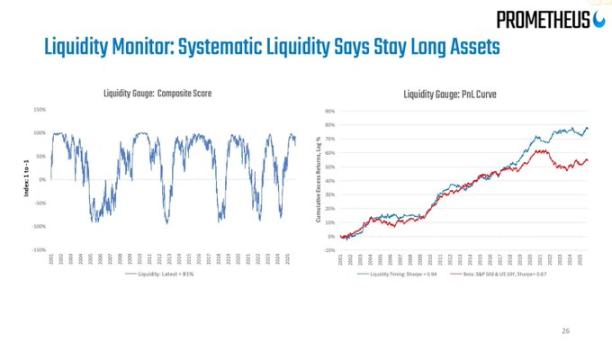
- The Fed's balance sheet is now more of a narrative tool; its net changes are too slow and too small relative to the entire financial system to be an effective trading signal.
- The real liquidity changes happen on private sector balance sheets and in the repo market: who is borrowing, who is lending, and at what spread.
5. Debt, Demographics, and China's Long-Term Shadow
Sovereign Debt: The Ending Is Known, the Path Is Not
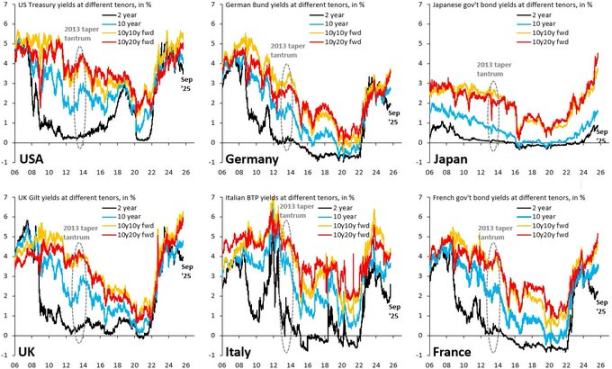
International sovereign debt is the defining macro issue of our era, and everyone knows the "solution" is nothing more than:
Reducing the debt/GDP ratio to manageable levels through currency devaluation (inflation).
The unresolved issue is the path:
Orderly financial repression:
- Keep nominal growth rate > nominal interest rate,
- Tolerate inflation slightly above target,
- Slowly erode the real debt burden.
Chaotic crisis events:
- The market panics over out-of-control fiscal trajectories.
- Term premiums suddenly spike.
- Weaker sovereigns experience currency crises.
Earlier this year, when concerns over fiscal issues sent US long-term Treasury yields soaring, we got a taste of this. HSBC itself also pointed out that the narrative of "deteriorating fiscal trajectory" peaked during relevant budget discussions, then faded as the Fed shifted its focus to growth concerns.
I believe this drama is far from over.
Fertility: A Slow-Motion Macro Crisis
Global fertility rates have fallen below replacement levels, and this is not just a problem for Europe and East Asia—it has now spread to Iran, Turkey, and is gradually affecting parts of Africa. This is essentially a far-reaching macro shock hidden by demographic statistics.
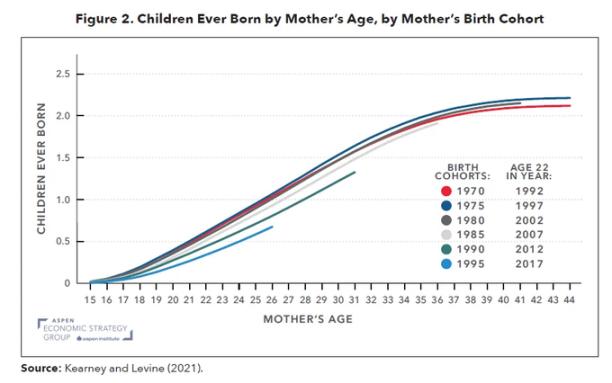
Low fertility means:
- A higher dependency ratio (a greater proportion of people needing support).
- Lower long-term real economic growth potential.
- Long-term social distribution pressures and political tensions as capital returns continue to outpace wage growth.
When you combine AI capital expenditure (a capital-deepening shock) with declining fertility (a labor supply shock),
you get a world where:
- Capital owners perform extremely well in nominal terms.
- The political system becomes more unstable.
- Monetary policy is caught in a dilemma: it must support growth, but also avoid triggering a wage-price spiral when labor finally gains bargaining power.
This will never appear in institutional outlook slides for the next 12 months, but for a 5-15 year asset allocation horizon, it is absolutely critical.
China: The Overlooked Key Variable
HSBC's Asian outlook is optimistic: bullish on policy-driven innovation, AI cloud computing potential, governance reforms, higher corporate return rates, low valuations, and the tailwind from widespread rate cuts in Asia.

My view is:
- From a 5-10 year perspective, the risk of zero allocation to China and North Asian markets is greater than the risk of moderate allocation.
- From a 1-3 year perspective, the main risks are not macro fundamentals, but policy and geopolitics (sanctions, export controls, capital flow restrictions).
It is worth considering allocating to Chinese AI, semiconductors, data center infrastructure-related assets, as well as high-dividend, high-quality credit bonds, but you must determine the allocation size based on a clear policy risk budget, not just historical Sharpe ratios.
Disclaimer: The content of this article solely reflects the author's opinion and does not represent the platform in any capacity. This article is not intended to serve as a reference for making investment decisions.
You may also like
With retail investors leaving, what will drive the next bull market?
Bitcoin has recently plummeted by 28.57%, leading to market panic and a liquidity crunch. However, long-term structural positives are converging, including expectations of Federal Reserve rate cuts and SEC regulatory reforms. The market currently faces a contradiction between short-term pressures and long-term benefits. Summary generated by Mars AI. The accuracy and completeness of this summary are still being iteratively improved.

Tether's "son" STABLE crashes? Plunges 60% on first day, whale front-running and no CEX listing spark trust panic
The Stable public blockchain has launched its mainnet. As a project associated with Tether, it has attracted significant attention but performed poorly in the market, with its price plummeting by 60% and facing a crisis of confidence. It is also confronted with fierce competition and challenges related to its tokenomics. Summary generated by Mars AI. The accuracy and completeness of the content are still being iteratively updated.

Hassett: The Fed has ample room to cut interest rates significantly.
From "Crime Cycle" to Value Reversion: Four Major Opportunities for the Crypto Market in 2026
We are undergoing a “purification” that the market needs, which will make the crypto ecosystem better than ever before, potentially improving it tenfold.

Trending news
MoreCrypto prices
More





