
As bitcoin ETFs gain ground on gold funds, is a flippening in the cards?

Though the opposing flow trend is likely to slow over time, industry watchers note, bitcoin fund assets could one day eclipse the $90 billion gold ETF space
As bitcoin ETFs continue to see inflows roughly six weeks after launching, investor capital has exited gold funds — though some believe the flow relationship is unlikely to last.
While analysts predict bitcoin ETF assets could one day eclipse those within gold funds, industry watchers noted that the two sectors are not directly related.
The 10 spot bitcoin funds that came to market on Jan. 11 have so far tallied net inflows of roughly $5.5 billion.
Meanwhile the largest gold ETFs — State Street Global Advisors’ SPDR Gold Shares (GLD) and BlackRock’s iShares Gold Trust (IAU) — have endured net outflows of about $2.7 billion and $350 million, respectively, since that date, according to ETF.com data.
“Though little of that gold cash likely went into the bitcoin ETFs , their existence and the enthusiasm surrounding the new funds — the most successful launch in history by many measures — has added competition for the metal,” Bloomberg Intelligence analysts Eric Balchunas and Andre Yapp wrote in a Monday research note.
Interest in the US spot bitcoin ETFs catalyzed a fourth straight week of net inflows for crypto investment products, CoinShares data shows. The category saw $598 million of net inflows last week despite Grayscale Investments’ Bitcoin Trust ETF ( GBTC ) notching another week of outflows, amounting to roughly $430 million.
Flows directly correlated?
Bryan Armour, director of passive strategies research at Morningstar, said he isn’t yet willing “to draw a line directly” between flows into bitcoin ETFs and gold ETFs. The two assets represent very different investments, he added.
“Gold may be seeing outflows because rate cut expectations have changed or because the market is shifting further into risk-on mode,” Armour told Blockworks. “Those rationales fit how investors traditionally have used gold in portfolios.
“I would expect the flows trend to reverse should market risk increase,” he added. “A bear market would likely see a flight to quality and investors taking risk off, which would hurt flows in bitcoin.”
Fineqia International research analyst Matteo Greco said he expects the opposing flow trend between bitcoin funds and gold to ultimately cease in the long term.
While some investors view bitcoin as digital gold — and therefore opted to shift money from gold ETFs to bitcoin ETFs — gold remains a safe-haven asset for many investors, he noted.
“I foresee this trend gradually slowing down over time, with gold maintaining its esteemed status while BTC attracting increasing investments and recognition in the long run,” Greco said. “I perceive it more as a net inflow into bitcoin ETFs rather than a complete replacement from gold to BTC.”
Will bitcoin ETFs pass gold funds in assets?
Despite GBTC’s outflows of more than $7.4 billion since converting to an ETF, it remains the largest in the category with nearly $22.8 billion in assets under management.
BlackRock ’s iShares Bitcoin Trust (IBIT) and Fidelity’s Wise Origin Bitcoin Fund (FBTC) have roughly $6.6 billion and $4.7 billion in assets, respectively.
Bitcoin ETFs so far hold nearly $38 billion in assets under management. Gold ETFs, meanwhile, hold more than $90 billion in assets — with GLD and IAU accounting for about $54 billion and $25 billion, respectively.
Greco noted that gold ETFs took years to attract a similar flow level to spot bitcoin ETFs. After long-awaited regulatory approval for bitcoin ETFs, the funds got off to a historic start with IBIT and FBTC each growing to more than $3 billion in assets a month after launching. GLD had only broken the $1 billion asset barrier in its first 30 days of trading.
As digitalization and tokenization is expected to become more prevalent, Greco said it is probable bitcoin ETF assets will ultimately surpass those within gold funds.
“Without ETFs, traditional finance investors would not have direct access to invest in BTC,” he told Blockworks. “Thus the impact of this product could potentially be more transformative than what was witnessed in 2004 when the first gold ETF was approved.”
Balchunas said in an X post there’s a “decent chance” assets under management in bitcoin ETFs eclipse those in gold funds within two years.
But bitcoin ETFs flippening gold ETFs in assets would likely be in the “distant future,” Armour said — if it happens at all.
“I expect bitcoin ETF flows to continue to be positive and for bitcoin to gain ground,” he noted. “But getting to gold ETF’s $90 billion in assets requires wider adoption of bitcoin ETFs and continued strong performance.”
Disclaimer: The content of this article solely reflects the author's opinion and does not represent the platform in any capacity. This article is not intended to serve as a reference for making investment decisions.
You may also like
Research Report|In-Depth Analysis and Market Cap of Talus (US)

Five charts to help you understand: Where does the market go after each policy storm?
After this regulatory crackdown, is it a harbinger of an impending downturn, or the beginning of a new cycle where all negative news has been fully priced in? Let’s examine the trajectory after the storm through five key policy milestones.

Mars Morning News | The crypto market rebounds across the board, Bitcoin rises above $94,500; The "CLARITY Act" draft is expected to be released this week
The crypto market has fully rebounded, with bitcoin surpassing $94,500 and US crypto-related stocks rising across the board. The US Congress is advancing the CLARITY Act to regulate cryptocurrencies. The SEC chairman stated that many ICOs are not securities transactions. Whales are holding a large number of profitable ETH long positions. Summary generated by Mars AI. The accuracy and completeness of the content generated by the Mars AI model is still being iteratively updated.

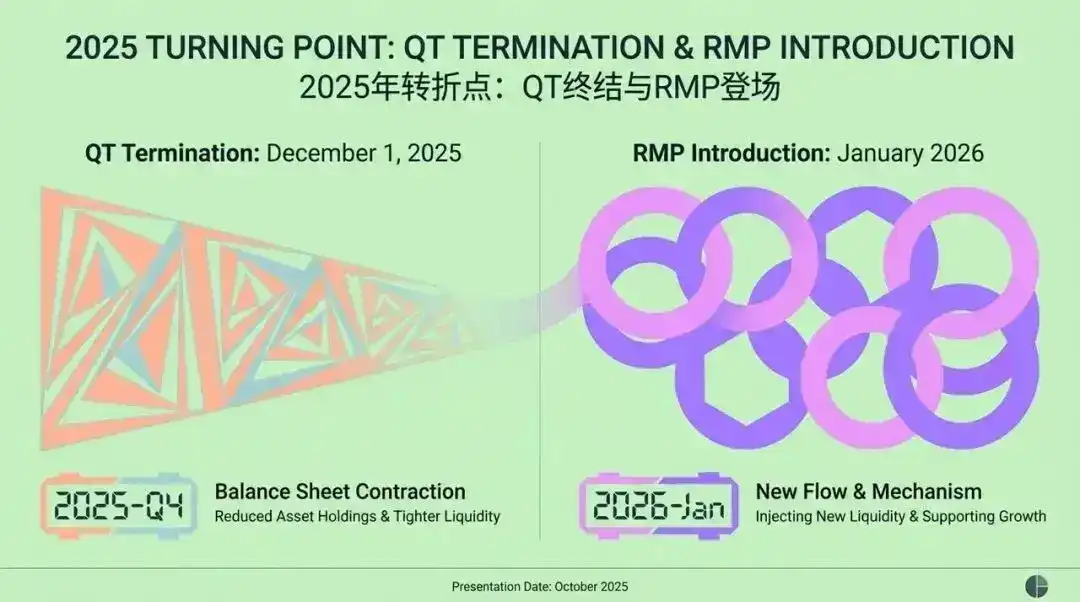
Federal Reserve’s Major Shift: From QT to RMP, How Will the Market Transform by 2026?
The article discusses the background, mechanism, and impact on financial markets of the Federal Reserve's introduction of the Reserve Management Purchases (RMP) strategy after ending Quantitative Tightening (QT) in 2025. RMP is regarded as a technical operation aimed at maintaining liquidity in the financial system, but the market interprets it as a covert easing policy. The article analyzes RMP's potential effects on risk assets, the regulatory framework, and fiscal policy, and provides strategic recommendations for institutional investors. Summary generated by Mars AI This summary was generated by the Mars AI model, and the accuracy and completeness of its content are still in the process of iterative improvement.
Trending news
MoreCrypto prices
More





