
The Bottom Is In On Bitcoin’s Latest Pullback, Says Willy Woo

A look at Bitcoin’s fundamentals suggests Bitcoin is due for a choppy trading period over the next two months, one popular analyst says.
The price of Bitcoin (BTC) has likely already bottomed from a sharp pullback that followed new all-time highs last week, according to popular price analyst Willy Woo.
The analyst provided a list of “good news” and ”bad news” surrounding Bitcoin’s fundamentals on Thursday, comparing the asset’s recent consolidation to that of past bull market cycles.
Has Bitcoin Bottomed Yet?
Woo began with a look at Bitcoin’s Spent Output Profit Ratio (SOPR), an on-chain metric gauging whether the average Bitcoin transaction is currently realizing a profit or a loss. The ratio recently spiked to highs not seen since January 2021, suggesting high profit-taking, and foreboding a lengthy consolidation period.
After tapping $74,000 last week, the asset slid back to $61,000 on Wednesday and has now slightly bounced back to $65,200. The 17% pullback is reminiscent of when Bitcoin broke all-time highs during its previous cycle, experiencing a 31% correction at the time.
“IMO this is typical of a freak out spaz before a pump, need to shake the weak hands,” wrote Woo.
Bitcoin’s “expected inflows” also appear to have bottomed – a measure of the market’s expected buying pressure based on Bitcoin’s 24-hour simple moving average.
Not all looks bullish, however: long interest is still built up within Bitcoin’s perpetual futures market, which still needs to draw down by 10% to 20% before returning to a normal range.
Woo noted that March has historically been a sideways trading month while April may get “choppy in both directions” based on present data. In the long term, he says macro structure “remains bullish.”
“Overall, it’s a patience game. The short-term consolidation bottom is probably in,” the analyst concluded. “There’s a chance we may consolidate right into the halvening which normally brings downward volatility.”
Bitcoin ETF Reversal
According to an on-chain analysis by CryptoQuant, Bitcoin miners have ramped up their BTC sales in recent months, taking profit following as the coin appreciates in value. Even short-term holders have started to take profit, mimicking patterns typically seen during previous cycle peaks.
Bitcoin spot ETFs in the United States have also seen an unprecedented wave of outflows this week, losing over $700 million in the past three days alone.
Disclaimer: The content of this article solely reflects the author's opinion and does not represent the platform in any capacity. This article is not intended to serve as a reference for making investment decisions.
You may also like
A decade-long tug-of-war ends: "Crypto Market Structure Bill" sprints to the Senate
At the Blockchain Association Policy Summit, U.S. Senators Gillibrand and Lummis stated that the "Crypto Market Structure Bill" is expected to have its draft released by the end of this week, with revisions and hearings scheduled for next week. The bill aims to establish clear boundaries for digital assets by adopting a classification-based regulatory framework, clearly distinguishing between digital commodities and digital securities, and providing a pathway for exemptions for mature blockchains to ensure that regulation does not stifle technological progress. The bill also requires digital commodity trading platforms to register with the CFTC and establishes a joint advisory committee to prevent regulatory gaps or overlapping oversight. Summary generated by Mars AI. The accuracy and completeness of this summary, generated by the Mars AI model, is still being iteratively updated.

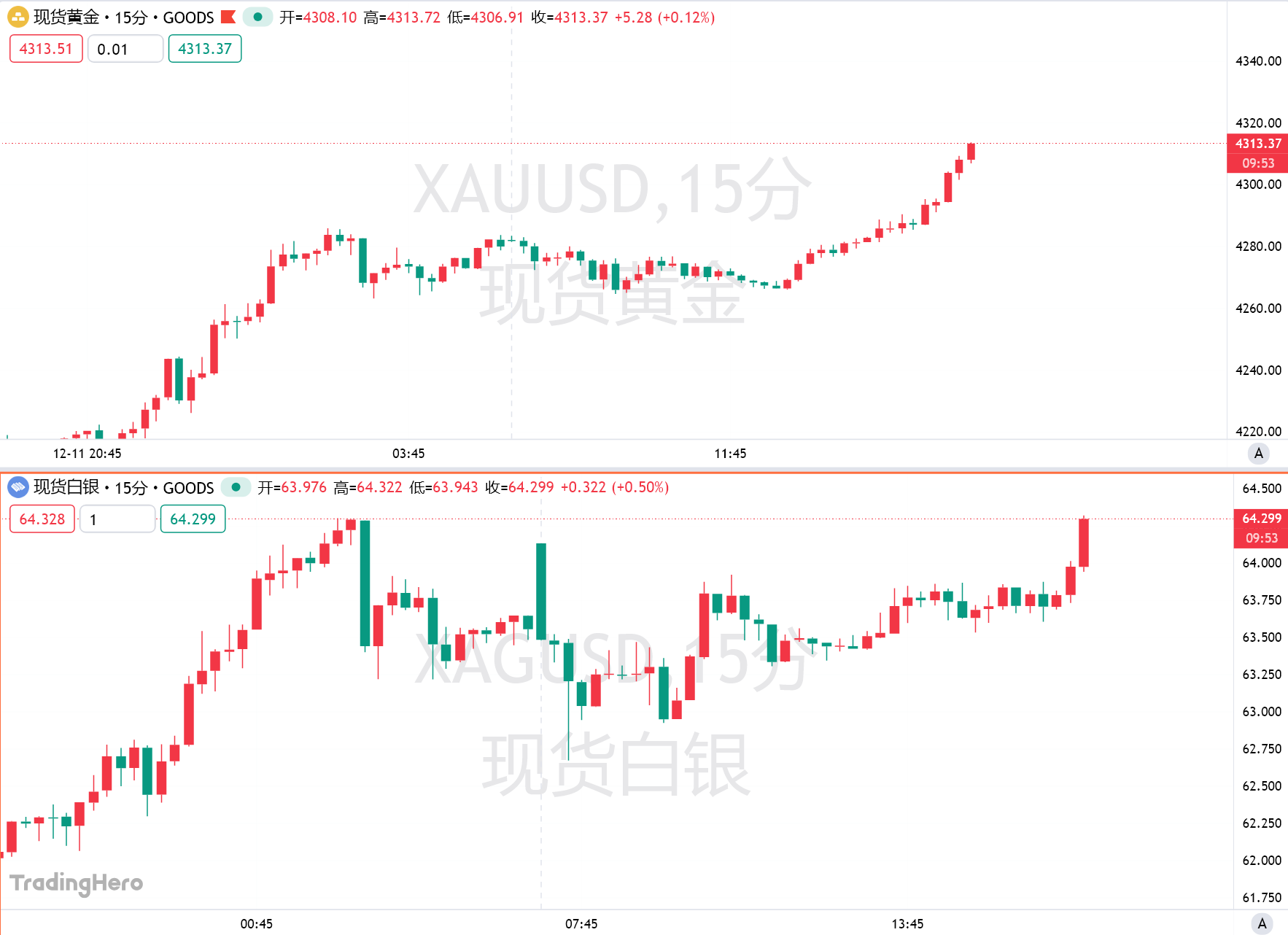
Gold surpasses the $4,310 mark—Is the "bull frenzy" returning?
Boosted by expectations of further easing from the Federal Reserve, gold has risen for four consecutive days. Technical indicators show strong bullish signals, but there remains one more hurdle before reaching a new all-time high.
Trend Research: Why Are We Still Bullish on ETH?
Against the backdrop of relatively accommodative expectations in both China and the US, which suppress asset downside volatility, and with extreme fear and capital sentiment not yet fully recovered, ETH remains in a favorable "buy zone."

Trending news
MoreCrypto prices
More





