
Time Wiki: ⏰Presale details

Token Distribution Structure
Initial Investment Allocation
Participants in the presale will receive tokens according to their investment amount and the presale price, as outlined below:
Bonus Structure for $TIME
Participants will receive bonus tokens based on the amount of SOL invested:
0-10,000 SOL: 25% bonus tokens
10,001 - 20,000 SOL: 20% bonus tokens
20,001 - 30,000 SOL: 15% bonus tokens
30,001 - 40,000 SOL: 10% bonus tokens
Note that maximum allocation allowed per wallet – 150 SOL
Exceeding the Presale Cap
If the presale investment exceeds the cap of 111,111 SOL, the token distribution will follow a specific structure to ensure fairness and proportional allocation.
Allocation of the First 40,000 SOL
The first 40,000 SOL invested will be fully credited towards the presale.
Participants within this range will receive 1-to-1 tokens according to their investment without any refunds.
Proportional Refund Crowdsale (PRC) Logic
Investments exceeding the initial 40,000 SOL will be subject to the PRC logic.
Under PRC, participants will receive tokens proportionally based on their investment, and the remaining SOL will be refunded.
Post-Presale Actions
If a participant's contribution exceeds the effective cap and results in a partial refund, they are encouraged to purchase $TIME on the open market once trading begins on decentralized exchanges (DEX).
The presale structure for $TIME tokens aims to provide a fair and equitable distribution of tokens to all participants. By implementing a bonus structure and proportional refund mechanism, the process ensures that all participants are fairly rewarded based on their investment while maintaining the overall integrity of the hard cap.
Disclaimer: The content of this article solely reflects the author's opinion and does not represent the platform in any capacity. This article is not intended to serve as a reference for making investment decisions.
You may also like
Zcash Halving: What It Means for Cryptocurrency Investors in 2025
- Zcash's 2028 halving will reduce annual inflation to 1%, reinforcing its deflationary model after prior 50% block reward cuts in 2020 and 2024. - The 2024 halving triggered 1,172% price surge followed by 96% drop, highlighting volatility risks despite growing institutional investments like Grayscale's $137M Zcash Trust. - Privacy-focused hybrid model (shielded/transparent transactions) attracts institutional interest but faces EU MiCA regulatory scrutiny, requiring selective compliance strategies. - Inve
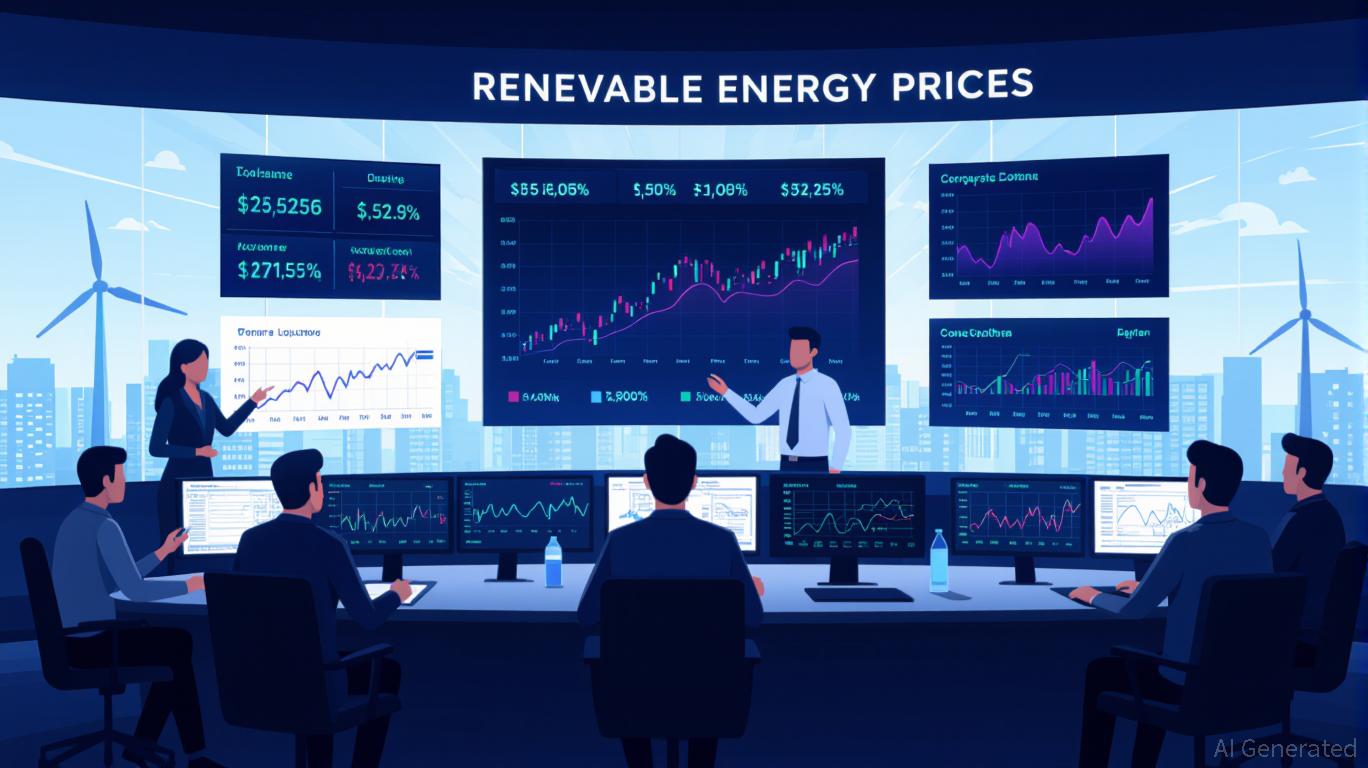
CleanTrade and the Evolution of Clean Energy Markets: Market Fluidity, Openness, and the Role of the CFTC
- CleanTrade, a CFTC-approved SEF, transforms clean energy markets by integrating VPPAs, PPAs, and RECs under institutional-grade transparency. - The platform unlocks liquidity through real-time pricing and centralized trading, accelerating net-zero transitions for corporations and utilities . - Enhanced transparency via project-specific REC data combats greenwashing, while regulatory alignment boosts investor confidence and market legitimacy. - By bridging traditional and renewable energy markets, CleanTr
The CFTC-Authorized Clean Energy Marketplace: An Innovative Gateway for Institutional Investors
- REsurety’s CleanTrade platform, CFTC-approved as a SEF, addresses clean energy market illiquidity and opacity by centralizing VPPAs, PPAs, and RECs. - Within two months of its 2025 launch, it attracted $16B in notional value, enabling institutional investors to streamline transactions and reduce counterparty risk. - By aggregating market data and automating compliance, CleanTrade enhances transparency, aligning with ESG priorities and regulatory certainty for institutional portfolios. - It democratizes a

SOL Drops 50%: Is This a Healthy Market Adjustment or the Onset of a Major Sell-Off?
- Solana's 50% price drop sparks debate over whether it signals a bear market correction or deeper structural selloff. - On-chain metrics show liquidity contraction and reduced exchange supply, but ETF inflows and validator activity suggest structural resilience. - Corporate transfers and the Upbit hack highlight volatility risks, while Solana's alignment with Bitcoin's trend underscores macroeconomic influence. - Key watchpoints include liquidity recovery timelines, ETF inflow sustainability, and potentia
Trending news
MoreCrypto prices
More





