
Fed report examines how crypto price changes impact ownership trends

A recent report by the Federal Reserve Bank of Philadelphia's Consumer Finance Institute (CFI) delves into how fluctuations in cryptocurrency prices affect ownership patterns among consumers.
The study, titled “Do Price Changes Affect Crypto Ownership?” and authored by Senior Advisor and Research Fellow Tom Akana, highlights a surprising trend: despite significant price increases in Bitcoin (CRYPTO:BTC), overall interest and ownership of cryptocurrencies have declined during market downturns.
The report is based on data collected since January 2022 through six different surveys conducted by the Consumer Finance Institute.
These surveys focused on cryptocurrency ownership and, in some cases, the likelihood of future purchases.
The findings were part of the CFI’s broader Labor, Income, Finances, and Expectations (LIFE) Survey, which tracks various economic behaviors, including attitudes toward crypto investments.
According to the CFI's data, both cryptocurrency ownership and interest in buying crypto dropped as market conditions worsened during the "crypto winter."
This decline occurred even though the price of Bitcoin, often used as a benchmark for the overall crypto market, showed a significant recovery beginning in October 2023.
Akana pointed out that while Bitcoin prices surged dramatically from October 2023 onwards, the surveys revealed only a slight decrease in ownership.
This finding is counterintuitive to the expectation that rising prices would boost ownership rates.
The report noted that although market performance generated higher interest in future cryptocurrency purchases, this did not translate into increased ownership.
Akana emphasised that this discrepancy suggests a more complex relationship between price movements and consumer behavior in the crypto market than initially assumed.
He proposed that further investigation is necessary to understand the specific patterns that influence consumers’ decisions to enter or exit the market.
One of the report's significant recommendations is for more detailed research into consumer behavior patterns related to market entry and exit.
By examining these behaviors more closely, the report argues, researchers could provide better insights into why ownership decreases even during periods of rising prices.
This could include understanding whether potential buyers are deterred by volatility or if they view crypto primarily as a speculative asset rather than a long-term investment.
The findings challenge the assumption that price increases in assets like Bitcoin naturally lead to higher ownership and suggest that other factors may be at play.
These could include broader economic conditions, regulatory concerns, or changes in consumer confidence in the cryptocurrency market.
The report is part of an ongoing effort by the Federal Reserve to monitor and analyse the growing impact of digital assets on the broader financial landscape.
As cryptocurrencies continue to gain prominence, understanding how market dynamics affect consumer behavior will be crucial for policymakers, financial institutions, and investors.
Overall, the CFI's report adds a new dimension to the discussion on cryptocurrency adoption and investment behavior, indicating that price alone is not the sole driver of market participation.
As the crypto landscape evolves, further research could help shed light on how economic and psychological factors influence individual decisions in this highly volatile market.
Disclaimer: The content of this article solely reflects the author's opinion and does not represent the platform in any capacity. This article is not intended to serve as a reference for making investment decisions.
You may also like
A decade-long tug-of-war ends: "Crypto Market Structure Bill" sprints to the Senate
At the Blockchain Association Policy Summit, U.S. Senators Gillibrand and Lummis stated that the "Crypto Market Structure Bill" is expected to have its draft released by the end of this week, with revisions and hearings scheduled for next week. The bill aims to establish clear boundaries for digital assets by adopting a classification-based regulatory framework, clearly distinguishing between digital commodities and digital securities, and providing a pathway for exemptions for mature blockchains to ensure that regulation does not stifle technological progress. The bill also requires digital commodity trading platforms to register with the CFTC and establishes a joint advisory committee to prevent regulatory gaps or overlapping oversight. Summary generated by Mars AI. The accuracy and completeness of this summary, generated by the Mars AI model, is still being iteratively updated.
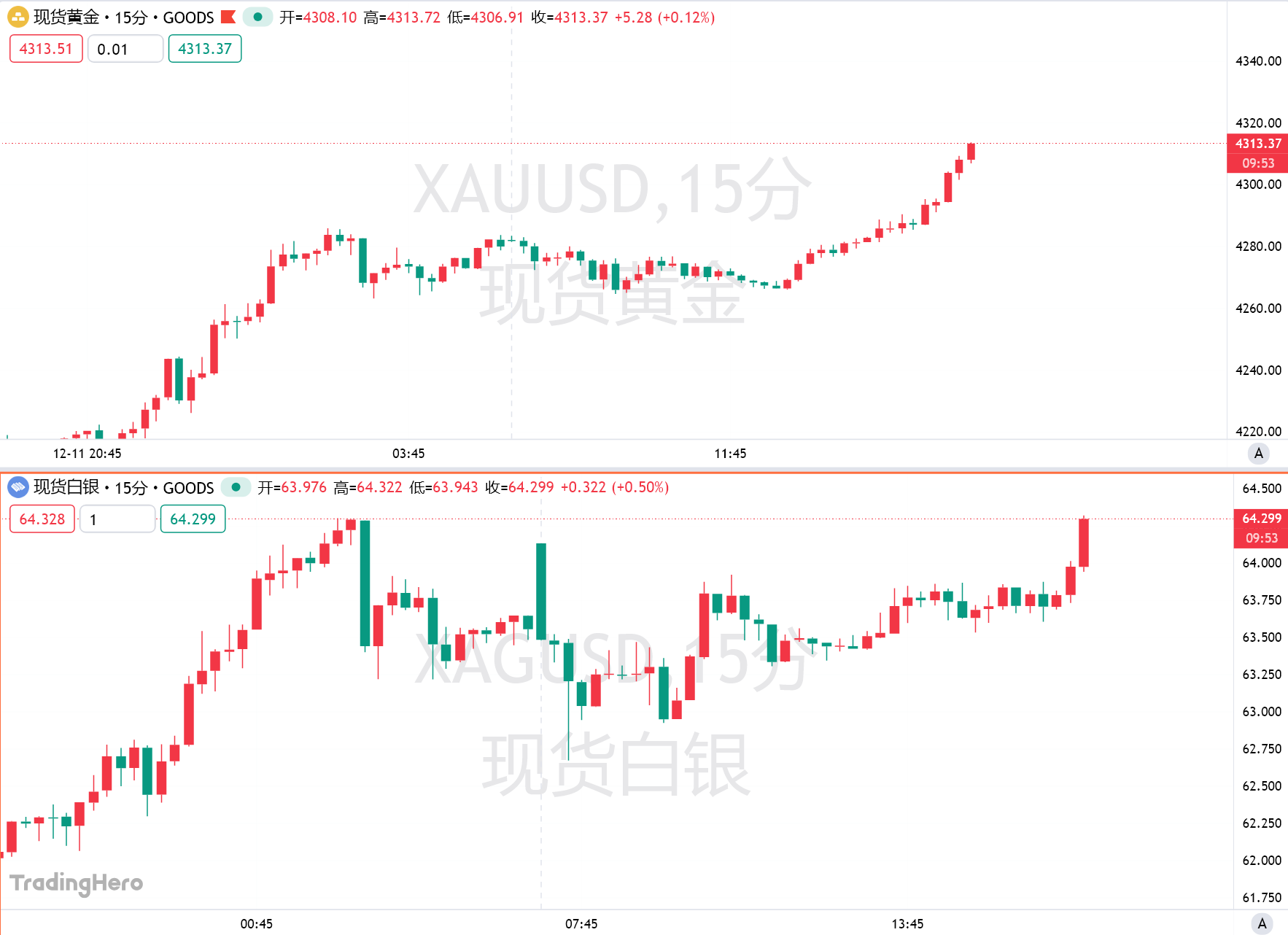
Gold surpasses the $4,310 mark—Is the "bull frenzy" returning?
Boosted by expectations of further easing from the Federal Reserve, gold has risen for four consecutive days. Technical indicators show strong bullish signals, but there remains one more hurdle before reaching a new all-time high.
Trend Research: Why Are We Still Bullish on ETH?
Against the backdrop of relatively accommodative expectations in both China and the US, which suppress asset downside volatility, and with extreme fear and capital sentiment not yet fully recovered, ETH remains in a favorable "buy zone."

Trending news
MoreCrypto prices
More





