
Ethereum cofounder Vitalik Buterin outlines possible areas of improvement for the protocol

Quick Take Vitalik Buterin outlined current areas of improvement for the Ethereum protocol. Buterin outlined improvements across block finalization time and the 32-ether requirement to be a staker.

The Ethereum ETH +3.67% protocol transitioned from a proof-of-work to a proof-of-stake consensus mechanism nearly two years ago , but its co-creator believes there is still room for improvement.
Though Vitalik Buterin believes Ethereum’s proof-of-stake implementation has “performed remarkably well” in terms of stability, performance, and avoidance of centralization risks, he outlined what can still be improved in its technical design in a post on his personal website.
One problem that Buterin believes needs to be solved is the 15-minute block finalization time and the 32 ether requirement to be a staker. He claims that we would ideally finalize blocks in one slot — thereby reducing the 15-minute wait to 12 seconds — and allowing validators to stake with only one ether. The former goal would simplify the protocol and surrounding infrastructure, while the second would support solo stakers.
However, these goals conflict with Ethereum’s broader goal of minimizing overhead. Buterin claims they would likely have to be resolved through brute-force technical advancements, orbit committees, two-tiered staking, doing nothing, or combining those approaches.
Single secret leader elections
Another problem identified by Buterin is the fact that which validator is going to propose the next block is known in advance — creating a security vulnerability — but this has a simple fix. “The best way to fix the DoS issue is to hide the information about which validator is going to produce the next block, at least until the moment when the block is actually produced,” Buterin explained.
To achieve this “single secret leader election,” Buterin explains that Ethereum developers need to find and implement a protocol that is both simple and safe to implement on the mainnet.
“We highly value Ethereum being a reasonably simple protocol, and we do not want complexity to increase further,” he said.
Four-second confirmation times and quantum resistance
Buterin also sees value in reducing Ethereum’s transaction confirmation times all the way down to roughly four seconds. “Doing this would significantly improve the user experience of both the L1 and based rollups while making DeFi protocols more efficient,” he wrote. Based rollups rely on Ethereum block builders for transaction sequencing.
Additionally, Ethereum's co-creator sees more research needed to recover from a potential 51% attack and increase the quorum threshold. Finally, quantum-resistance is also an issue that could come to the fore around 2030, according to some estimates. “This has consequences across the entire Ethereum roadmap,” Buterin said, adding: “This justifies conservatism in the assumptions around performance of proof-of-stake designs, and also is a cause to be more proactive to develop quantum-resistant alternatives.”
Disclaimer: The content of this article solely reflects the author's opinion and does not represent the platform in any capacity. This article is not intended to serve as a reference for making investment decisions.
You may also like
A decade-long tug-of-war ends: "Crypto Market Structure Bill" sprints to the Senate
At the Blockchain Association Policy Summit, U.S. Senators Gillibrand and Lummis stated that the "Crypto Market Structure Bill" is expected to have its draft released by the end of this week, with revisions and hearings scheduled for next week. The bill aims to establish clear boundaries for digital assets by adopting a classification-based regulatory framework, clearly distinguishing between digital commodities and digital securities, and providing a pathway for exemptions for mature blockchains to ensure that regulation does not stifle technological progress. The bill also requires digital commodity trading platforms to register with the CFTC and establishes a joint advisory committee to prevent regulatory gaps or overlapping oversight. Summary generated by Mars AI. The accuracy and completeness of this summary, generated by the Mars AI model, is still being iteratively updated.

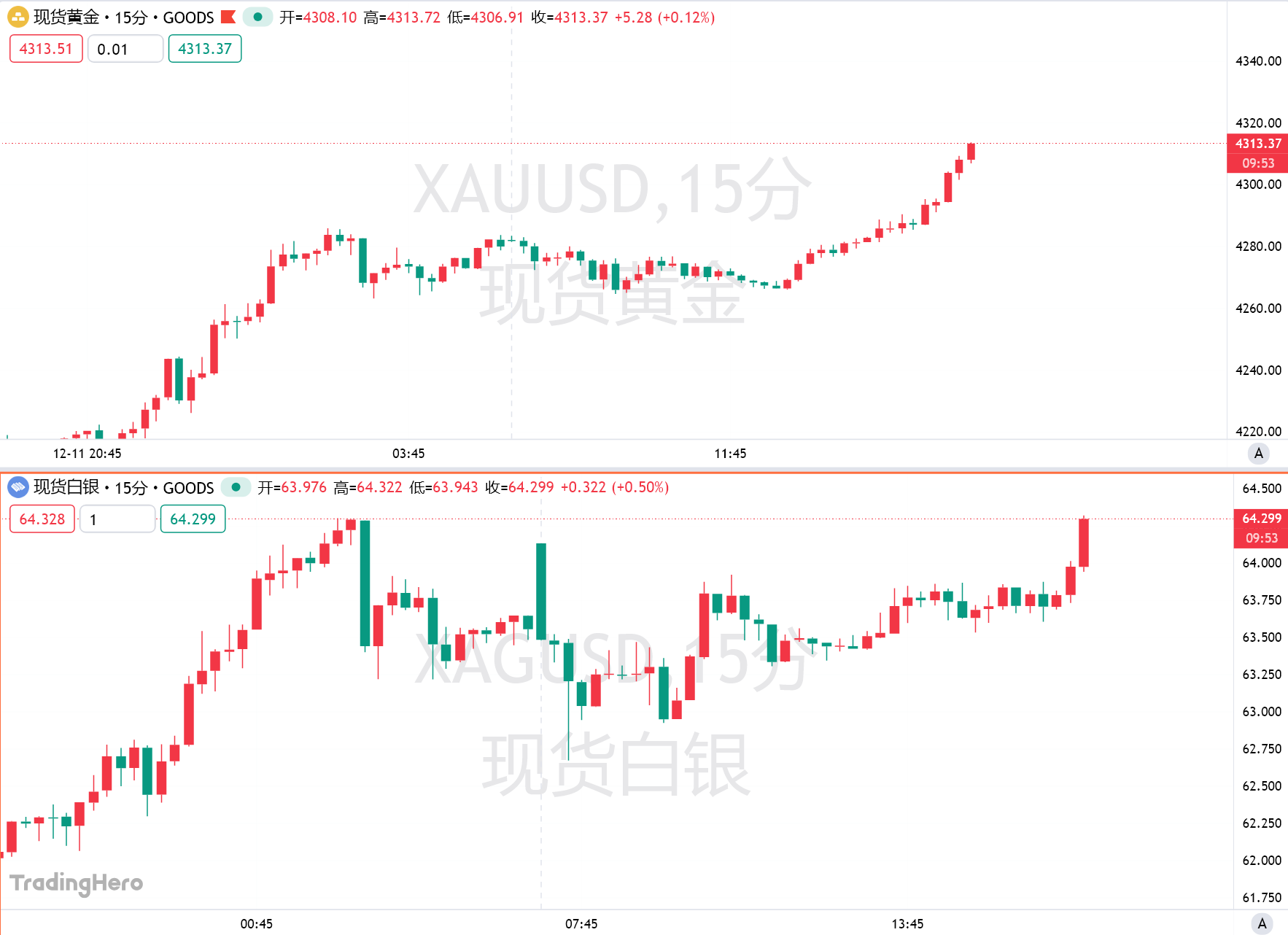
Gold surpasses the $4,310 mark—Is the "bull frenzy" returning?
Boosted by expectations of further easing from the Federal Reserve, gold has risen for four consecutive days. Technical indicators show strong bullish signals, but there remains one more hurdle before reaching a new all-time high.
Trend Research: Why Are We Still Bullish on ETH?
Against the backdrop of relatively accommodative expectations in both China and the US, which suppress asset downside volatility, and with extreme fear and capital sentiment not yet fully recovered, ETH remains in a favorable "buy zone."

Trending news
MoreCrypto prices
More





