
FDIC asked financial institutions to pause crypto-related activity according to letters obtained through Coinbase lawsuit

Quick Take Coinbase, through consultant firm History Associates Inc., sued the FDIC in June and accused the agency of trying to cut off the crypto industry from the banking sector. “Operation Chokepoint 2.0 wasn’t just some crypto conspiracy theory,” Coinbase Chief Legal Officer Paul Grewal said in a post on X.
The Federal Deposit Insurance Corporation asked financial institutions to pause cryptocurrency-related activity, according to heavily redacted letters obtained in a lawsuit brought by Coinbase.
Coinbase, through consultant firm History Associates Inc., sued the FDIC in June and accused the agency of trying to cut off the crypto industry from the banking sector. The lawsuit also requested the FDIC's "pause letters."
"... at this time the FDIC has not yet determined what, if any, regulatory filings will be necessary for a bank to engage in this type of activity," one letter from March 2022 read. "As a result, we respectfully ask that you pause all crypto asset-related activity."
CoinDesk first reported the news.
The lawsuit alleged that FDIC was not complying with Freedom of Information Act requests and asked a court to force the agency to comply. FOIA requests allow for the public to ask for records from any federal agency.
Coinbase said History Associates sent FOIA requests on the agency's "pause letters." The FDIC began issuing "pause letters" between March 2022 and May 2023 to some financial institutions asking them to not expand crypto-related activities and provide more information, according to a 2023 report from FDIC's Office of Inspector General. That office is tasked with evaluating the FDIC.
FDIC also asked financial institutions for crypto-related documents, specifically "cost-benefit analysis," disclosures and marketing materials, according to the documents released on Friday.
The letters show that "Operation Chokepoint 2.0 wasn't just some crypto conspiracy theory," Coinbase Chief Legal Officer Paul Grewal said in a post on X.
Some in the crypto industry refer to the phrase "Operation Choke Point 2.0," tied to Operation Choke Point 1.0 — a U.S. Department of Justice Initiative from 2013 that looked to limit banking services for industries considered high-risk for fraud and money laundering, including payday lenders and firearm dealers. Rep. French Hill, who could have a lead role in financial services next year, voiced concerns about debanking in the crypto industry during a congressional hearing this week.
"Law abiding American businesses should be able to access banking services without government interference," Grewal said. "The incoming administration has the opportunity to reverse so many poor crypto policy decisions, chief among them politically motivated regulatory decisions like Operation Chokepoint 2.0."
FDIC's past
The FDIC did not respond to a request for comment from The Block.
In a report from October 2023, the FDIC's Office of Inspector General said that FDIC created potential uncertainty in the crypto industry.
"If financial institutions do not receive timely feedback from the FDIC and do not understand what constitutes the end of the FDIC’s review process, this uncertainty creates risk that the FDIC will be viewed as not being supportive of financial institutions engaging in crypto-related activities," according to the report.
The FDIC later noted in a 2024 Risk Review report that it and other agencies "continue to emphasize that banking organizations are neither prohibited nor discouraged from providing banking services to customers of any specific class or type."
As for next steps, Coinbase plans to get the court to weigh in on whether the exchange should be given access to the unredacted version of the pause letters, according to a joint status report filed on Friday.
"If you look through the documents, some of these are so redacted you think you're reading some secret CIA war plan," a person familiar with the matter told The Block. "But in reality these are letters that a financial regulator is sending to financial institutions, and yet they are so redacted to the point where you can't even tell what they're saying in some cases, but the things that you can tell are damning enough."
Disclaimer: The content of this article solely reflects the author's opinion and does not represent the platform in any capacity. This article is not intended to serve as a reference for making investment decisions.
You may also like
DiDi has become a digital banking giant in Latin America
DiDi has successfully transformed into a digital banking giant in Latin America by addressing the lack of local financial infrastructure, building an independent payment and credit system, and achieving a leap from a ride-hailing platform to a financial powerhouse. Summary generated by Mars AI. This summary was produced by the Mars AI model, and its accuracy and completeness are still being iteratively improved.

Fed rate cuts in conflict, but Bitcoin's "fragile zone" keeps BTC below $100,000
The Federal Reserve cut interest rates by 25 basis points, but the market interpreted the move as hawkish. Bitcoin is constrained by a structurally fragile range, making it difficult for the price to break through $100,000. Summary generated by Mars AI This summary was generated by the Mars AI model, and the accuracy and completeness of its content are still being iteratively updated.

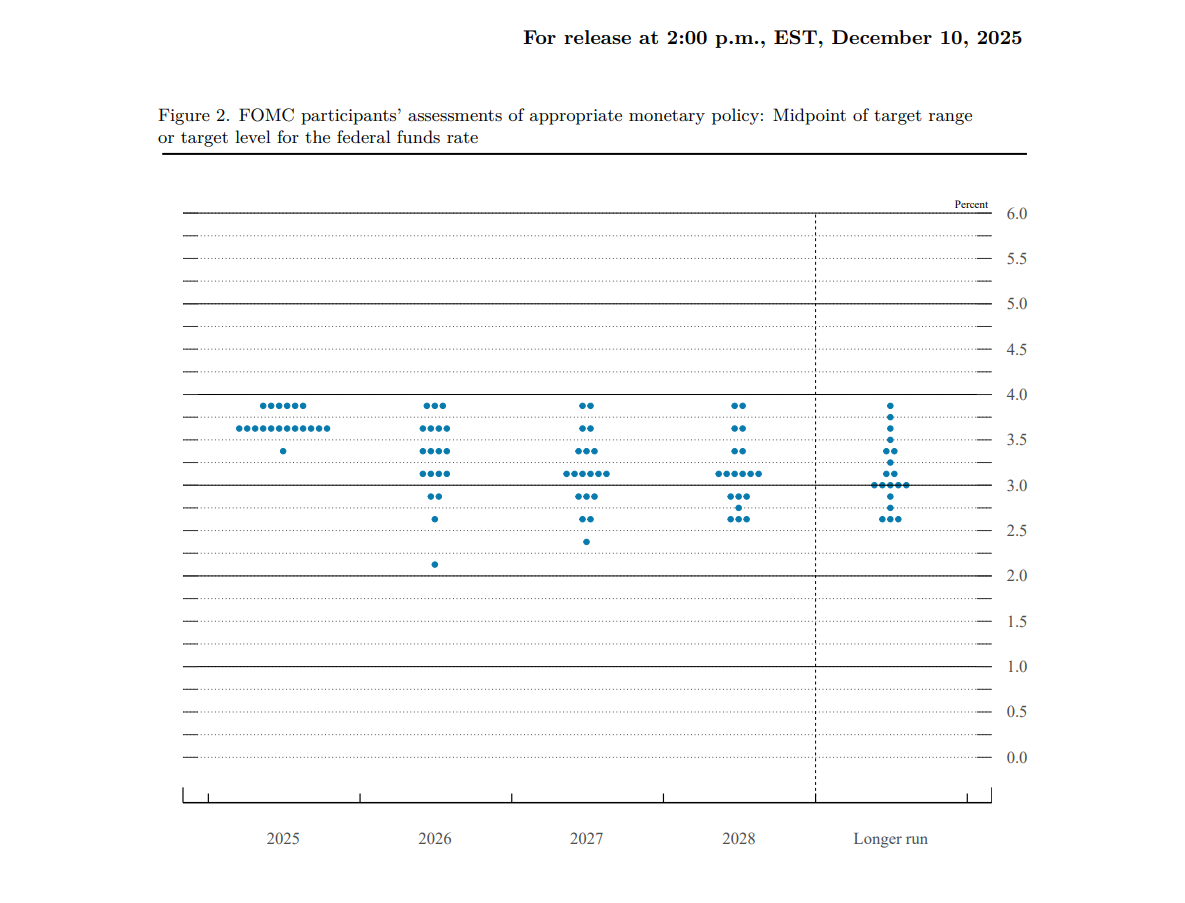
Full text of the Federal Reserve decision: 25 basis point rate cut, purchase of $4 billion in Treasury bills within 30 days
The Federal Reserve cut interest rates by 25 basis points with a 9-3 vote. Two members supported keeping rates unchanged, while one supported a 50 basis point cut. In addition, the Federal Reserve has restarted bond purchases and will buy $40 billion in Treasury bills within 30 days to maintain adequate reserve supply.
HyENA officially launched: Perp DEX supported by Ethena and based on USDe collateral goes live on Hyperliquid
The launch of HyENA further expands the USDe ecosystem and brings institutional-grade margin efficiency to the on-chain perpetuals market.
Trending news
MoreCrypto prices
More





