
CFTC Chair steps down, urges crypto regulation

Rostin Behnam, chair of the U.S. Commodity Futures Trading Commission (CFTC) , is set to step down on January 20 after a notable four-year tenure marked by pivotal enforcement actions and persistent calls for stronger regulatory oversight in the cryptocurrency sector. Behnam's departure leaves a critical void in the regulatory landscape as the U.S. struggles to address gaps in digital asset governance amid growing adoption and market complexity.
A Legacy of Action and Concern
Behnam's leadership at the CFTC was defined by significant enforcement measures, including a landmark $4.3 billion settlement with Binance over allegations of operating as an unlicensed crypto derivatives trading platform. However, while he spearheaded high-profile actions, Behnam consistently voiced concerns about the inadequacy of the current regulatory framework. He described the oversight of digital assets in the U.S. as “insufficient,” citing the vast unregulated portions of the market.
During his tenure, the CFTC expanded its focus into emerging areas like digital assets and carbon offset trading, pushing the agency's boundaries to address modern challenges. Behnam argued that many digital tokens should be classified as commodities, falling under the CFTC's jurisdiction, and called for a disciplined, law-driven approach to defining clear rules for the sector.
The Urgent Need for Crypto Regulation
As cryptocurrencies become increasingly integrated into mainstream finance, the regulatory gap highlighted by Behnam poses risks to market integrity and investor protection. Without robust oversight, the U.S. risks falling behind in regulating a fast-evolving global market, leaving consumers exposed to fraudulent schemes and market manipulation.
Behnam’s calls for intentional regulation are especially relevant as more decentralized finance (DeFi) platforms and digital asset projects emerge, challenging traditional financial norms. His emphasis on creating "clearer lines" for permissible activities underscores the need for regulatory clarity to foster innovation while mitigating risks.
What’s Next for the CFTC?
With Behnam stepping down, attention turns to his potential successor. Brian Quintenz, a former CFTC commissioner and current head of policy at Andreessen Horowitz’s crypto division (a16z), is reportedly the frontrunner. Quintenz’s tenure at the CFTC between 2017 and 2021 saw him champion financial innovation in the digital asset industry, making him a strong advocate for balancing innovation with regulation.
If appointed, Quintenz could bring a fresh perspective to resolving the long-standing jurisdictional ambiguity over cryptocurrencies. His approach might include bridging the gap between the Securities and Exchange Commission (SEC) and the CFTC, a key step in creating a cohesive framework for digital asset regulation in the U.S.
The Road Ahead
Behnam’s departure and the potential appointment of Quintenz signal a pivotal moment for the U.S. crypto landscape. The transition offers an opportunity to address unresolved regulatory challenges:
- Increased Collaboration Between Agencies: A new chair with a forward-looking approach could foster collaboration between the CFTC and SEC, clarifying jurisdictional boundaries over digital assets.
- Comprehensive Regulatory Framework: Expect discussions to intensify around creating rules that balance innovation with investor protection, particularly as the industry seeks clearer guidance on token classification and DeFi regulation.
- Market Implications: Regulatory clarity could encourage institutional participation in the crypto space while simultaneously weeding out bad actors, fostering a more robust market environment.
- Global Competitiveness: The U.S. must act decisively to maintain its leadership in the crypto sector, as countries like the EU and Singapore implement progressive frameworks.
Conclusion
Rostin Behnam’s tenure has left an indelible mark on the CFTC’s approach to digital assets, but his departure underscores the urgent need for comprehensive crypto regulation. As the U.S. navigates this critical juncture, the leadership of the next CFTC chair will play a crucial role in shaping the future of the crypto market, ensuring innovation thrives within a secure and transparent framework. The coming months will reveal whether this transition serves as a springboard for progress or perpetuates the regulatory ambiguity that has long hindered the industry.
Disclaimer: The content of this article solely reflects the author's opinion and does not represent the platform in any capacity. This article is not intended to serve as a reference for making investment decisions.
You may also like
Mars Morning News | The crypto market rebounds across the board, Bitcoin rises above $94,500; The "CLARITY Act" draft is expected to be released this week
The crypto market has fully rebounded, with bitcoin surpassing $94,500 and US crypto-related stocks rising across the board. The US Congress is advancing the CLARITY Act to regulate cryptocurrencies. The SEC chairman stated that many ICOs are not securities transactions. Whales are holding a large number of profitable ETH long positions. Summary generated by Mars AI. The accuracy and completeness of the content generated by the Mars AI model is still being iteratively updated.

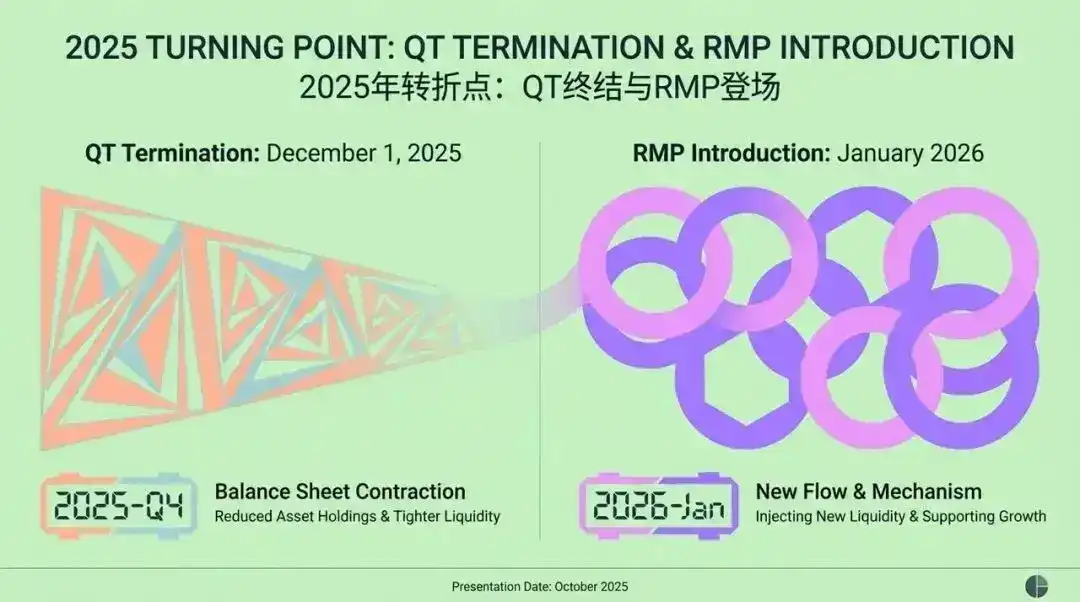
Federal Reserve’s Major Shift: From QT to RMP, How Will the Market Transform by 2026?
The article discusses the background, mechanism, and impact on financial markets of the Federal Reserve's introduction of the Reserve Management Purchases (RMP) strategy after ending Quantitative Tightening (QT) in 2025. RMP is regarded as a technical operation aimed at maintaining liquidity in the financial system, but the market interprets it as a covert easing policy. The article analyzes RMP's potential effects on risk assets, the regulatory framework, and fiscal policy, and provides strategic recommendations for institutional investors. Summary generated by Mars AI This summary was generated by the Mars AI model, and the accuracy and completeness of its content are still in the process of iterative improvement.
Rate Hike in Japan: Will Bitcoin Resist Better Than Expected?

Crucial Decision: Trump’s Final Interviews for Federal Reserve Chair Could Reshape Markets
Trending news
MoreCrypto prices
More





