

Last updated: February 19, 2025 15:30 EST
Vitalik Buterin Holds Q&A on Tako, Discusses Ethereum’s Long-Term Development and Decentralization
By:Hongji Feng
During a recent Q&A on Tako, Vitalik Buterin explains how a careful boost to Ethereum’s base capacity can work hand in hand with off-chain solutions, setting the stage for smoother transaction processing while keeping the network decentralized. His discussion sketches a measured pathway forward—one where on-chain upgrades and efficient second-layer methods together support a more resilient and accessible ecosystem.

Ethereum co-founder Vitalik Buterin discussed the network’s long-term development on Wednesday, emphasizing the importance of balancing Layer 1 scalability with Layer 2 expansion while ensuring the blockchain remains decentralized and resilient.
“Hybrid L1 + L2” Approach Proposed by Vitalik Buterin
During a QA session on Tako , Buterin addressed Ethereum’s long-term scalability strategy, stressing the necessity of maintaining a balance between Layer 1 (L1) and Layer 2 (L2) networks.
He elaborated on the need for increased gas limits on L1 and the implementation of stateless verification methods like Verkle trees.
These enhancements, he said, would improve transaction efficiency without compromising decentralization.
Buterin acknowledged that L2 solutions play an essential role in Ethereum’s scalability, particularly by handling high-frequency transactions.
However, he cautioned against relying solely on L2, stating that Ethereum should not take an “everything on L2” approach.
“Cross-L2 interactions still require L1. If an L2 fails, users must be able to migrate to another L2, meaning some use cases cannot avoid L1,” he explained.
Ethereum’s roadmap includes improvements in L2 interoperability to facilitate seamless transitions between different L2s, reducing reliance on L1 for every transaction while maintaining flexibility.
On the topic of L2 sequencers, Buterin highlighted both their benefits and risks.
He noted that centralized sequencers provide instant confirmations and help prevent frontrunning, but also introduce potential vulnerabilities.
“It is also important to have the ability to trade based on rollup or directly on L1. So I support the two-part ecosystem to promote these two methods at the same time, and then we can see which method is more suitable for which application,” Buterin stated.
“Maintaining the ability for regular users to issue censorship resistant transactions is of course critical,” he added.
Decentralization and Future of Blockchains
As Buterin said, Ethereum’s decentralization is evident in its ability to operate independently of its foundation.
Unlike centralized projects, its development is distributed across multiple teams.
This separation reinforces resilience, but maintaining decentralization requires ongoing effort.
Without it, networks risk external control, contradicting blockchain’s purpose of open participation and autonomy in financial and technological systems.
If decentralization deepens, blockchain networks may evolve into autonomous infrastructures, resistant to corporate or governmental control.
Future advancements could focus on minimizing reliance on centralized intermediaries, ensuring open participation remains intact.
However, sustaining this model will require continued innovation in governance, scalability, and security to prevent consolidation and maintain true decentralization.
2
0
Disclaimer: The content of this article solely reflects the author's opinion and does not represent the platform in any capacity. This article is not intended to serve as a reference for making investment decisions.
PoolX: Earn new token airdrops
Lock your assets and earn 10%+ APR
Lock now!
You may also like
ECB shifts stance! Will interest rate hikes resume in 2026?
In the debate over "further tightening" versus "maintaining the status quo," divisions within the European Central Bank are becoming increasingly public. Investors have largely ruled out the possibility of the ECB cutting interest rates in 2026.
Jin10•2025/12/10 14:11
On the eve of Do Kwon's trial, $1.8 billion is being wagered on his sentence
Dead fundamentals, vibrant speculation.
深潮•2025/12/10 12:59

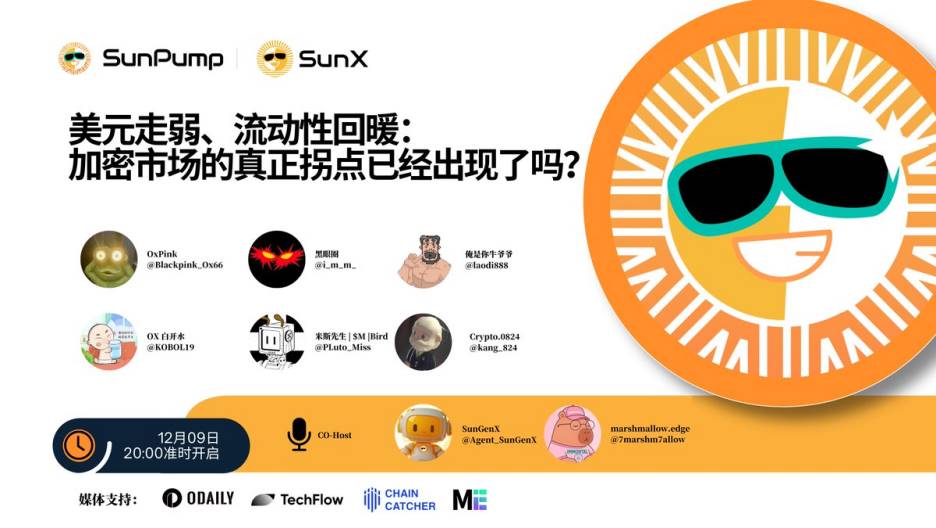
Space Review|When the US Dollar Weakens and Liquidity Recovers: Cryptocurrency Market Trend Analysis and TRON Ecosystem Strategy
This article reviews the identification of macro turning points and the capital rotation patterns in the crypto market, and delves into specific allocation strategies and practical approaches for the TRON ecosystem during market cycles.
深潮•2025/12/10 12:59
30-Year Wall Street Veteran: Lessons from Horse Racing, Poker, and Investment Legends That Inspired My Bitcoin Insights
What I focus on is not the price of bitcoin itself, but rather the position allocation of the group of people I am most familiar with—those who possess significant wealth, are well-educated, and have successfully achieved compounding returns on capital over decades.
深潮•2025/12/10 12:58
Trending news
MoreCrypto prices
More
Bitcoin
BTC
$92,082.22
+1.84%

Ethereum
ETH
$3,334.78
+6.98%

Tether USDt
USDT
$1
+0.01%

XRP
XRP
$2.06
-0.13%

BNB
BNB
$891.33
+0.89%

USDC
USDC
$0.9998
-0.03%

Solana
SOL
$137.66
+4.00%

TRON
TRX
$0.2782
-0.92%

Dogecoin
DOGE
$0.1459
+3.02%

Cardano
ADA
$0.4640
+3.04%
How to buy BTC
Bitget lists BTC – Buy or sell BTC quickly on Bitget!
Trade now
Become a trader now?A welcome pack worth 6200 USDT for new users!
Sign up now