
New US Bill Targets Carbon Emissions From Bitcoin Mining and AI Data Centers

The Clean Cloud Act would authorize the EPA to impose annual carbon limits on facilities using over 100 kilowatts of IT power, with escalating penalties for those exceeding the cap.
US Senators Sheldon Whitehouse and John Fetterman have introduced the Clean Cloud Act of 2025. The bill aims to reduce carbon emissions from energy-intensive crypto-mining operations and artificial intelligence data centers.
This comes at a time when Bitcoin miners are increasingly moving towards renewable energy sources to power their operations.
Clean Cloud Act Links Rising Energy Demand to Bitcoin Mining
According to the bill, the Environmental Protection Agency (EPA) would have the authority to set annual carbon performance standards for facilities with over 100 kilowatts of installed IT power.
These standards would tighten each year, with emissions limits declining by 11% annually.
Companies that exceed the cap will pay a starting fee of $20 per ton of carbon dioxide equivalent. This fee will rise yearly, adjusting for inflation and an additional $10 per ton. The bill also enforces strict accounting methods to include indirect emissions from the grid.
The lawmakers argue that crypto miners and AI centers are driving up power demand at an unsustainable pace. According to them, the current clean energy sources cannot keep up with the rapid growth of the demand for Bitcoin mining.
They noted that data centers alone use 4% of all electricity in the US and could hit 12% by 2028. They also pointed out that utilities have even restarted old coal plants to meet rising demand, worsening the country’s carbon footprint.
Considering this, Senator Whitehouse noted that this pressure is driving up electricity costs for consumers. He said the bill would push tech firms toward clean energy investments and help ensure the US power grid can reach net-zero emissions within the next decade.
“The good news is that we don’t have to choose between leading the world on AI and leading the world on climate safety: big technology and AI companies have all the money in the world to pay for developing new sources of clean energy, rather than overloading local grids and firing up fossil fuel pollution. The Clean Cloud Act will drive utilities and the burgeoning crypto and AI industries to invest in new sources of clean energy,” the lawmaker stated.
To protect low-income households, 25% of the revenue generated from emissions penalties will offset energy costs. The rest will fund grants supporting long-duration storage and clean power generation projects.
Meanwhile, this move is coming as the crypto industry steadily transitions to greener energy.
A recent MiCA Crypto Alliance report shows that renewable energy powered 41% of Bitcoin mining by the end of 2024, up from 20% in 2011.
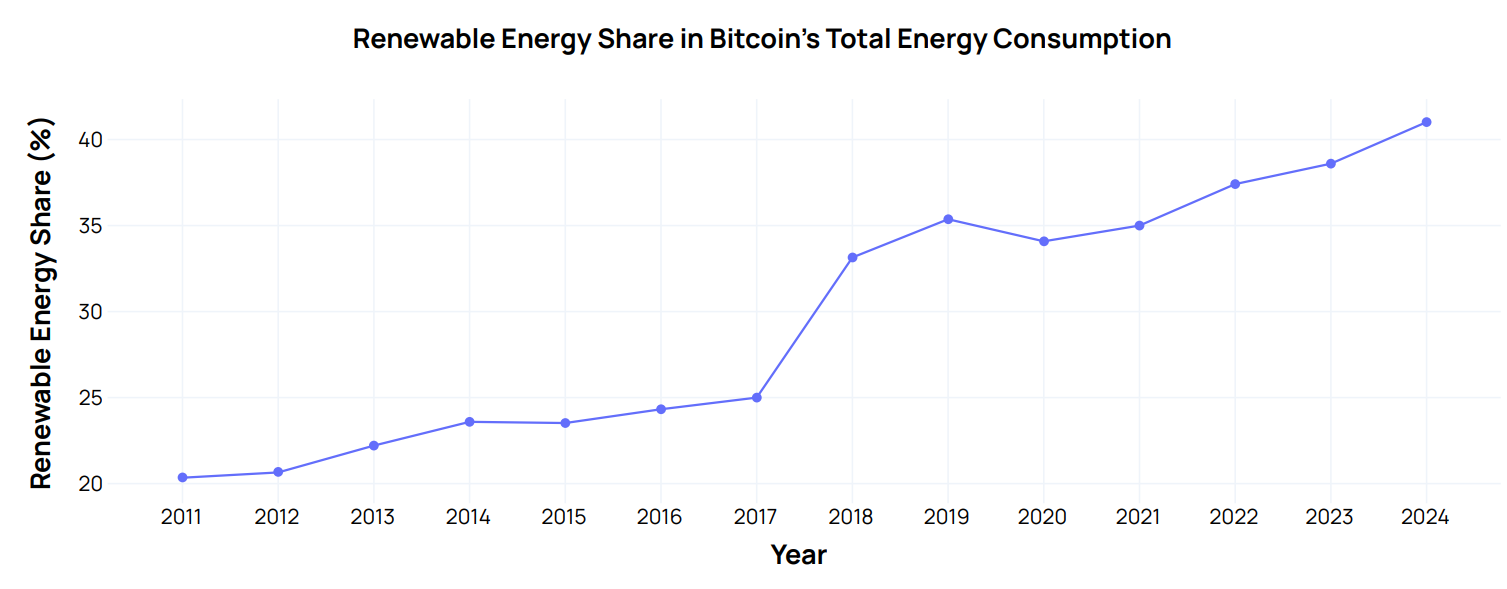 Bitcoin Miners Renewable Energy Use. Source:
MiCA Crypto Alliance
Bitcoin Miners Renewable Energy Use. Source:
MiCA Crypto Alliance
Following this rapid adoption rate, the report forecast that renewables could support over 70% of mining activities by 2030, driven by cost efficiency, evolving policies, and a broader shift toward sustainable practices
Disclaimer: The content of this article solely reflects the author's opinion and does not represent the platform in any capacity. This article is not intended to serve as a reference for making investment decisions.
You may also like
Morning News | Strategy has accumulated over 200,000 bitcoins so far this year; US SEC Chairman says US financial markets may move on-chain within two years
A summary of major market events on December 7th.

Crypto ETF Weekly Report | Last week, US Bitcoin spot ETFs saw a net outflow of $87.7 million; US Ethereum spot ETFs saw a net outflow of $65.4 million
UAE-based Mashreq Capital has included bitcoin ETFs in its new multi-asset fund.

Weekly News Preview | Federal Reserve Announces Interest Rate Decision; Stable Mainnet Launch
This week's top news highlights from December 8 to December 14.

Wang Yongli: Why did China resolutely halt stablecoins?
China is accelerating the development of the digital yuan, and its policy stance to resolutely curb virtual currencies, including stablecoins, has become fully clear. This approach is based on a comprehensive consideration of factors such as China’s global leadership in mobile payments and the digital yuan, the sovereignty and security of the renminbi, and the stability of the monetary and financial system.

Trending news
MoreMorning News | Strategy has accumulated over 200,000 bitcoins so far this year; US SEC Chairman says US financial markets may move on-chain within two years
Crypto ETF Weekly Report | Last week, US Bitcoin spot ETFs saw a net outflow of $87.7 million; US Ethereum spot ETFs saw a net outflow of $65.4 million
Crypto prices
More





