
Vitalik Buterin proposes a privacy-focused digital identity model

- Digital identity with privacy using zero-knowledge proof
- Vitalik Buterin criticizes systems with a single identity per person
- Proposal favors inclusion in cryptocurrency ecosystems
Ethereum co-founder Vitalik Buterin has presented a groundbreaking proposal for developing more inclusive digital identity systems that preserve user privacy. In a recent publication, he introduced the concept of "pluralistic identity," advocating for a decentralized approach to identification in the digital environment, especially relevant to the cryptocurrency ecosystem.
According to Buterin, models that impose a single identity per individual can compromise pseudonymity and facilitate surveillance. He emphasizes that the use of multiple accounts is essential in digital environments where privacy must be guaranteed, such as in crypto communities or sensitive regulatory spaces.
The developer highlights the advantages of applying zero-knowledge (ZK) proof technologies, which allow for the verification of someone's identity without revealing personal information. Projects such as World ID and digital identity programs in Taiwan and the European Union were cited as examples in this regard. However, he also warned of the risk of such solutions evolving into centralized systems controlled by governments or large corporations.
Buterin also criticizes “proof of wealth” as a criterion of identity, classifying this approach as exclusionary and biased, as it benefits those with greater financial resources and marginalizes users with less purchasing power.
The proposed solution involves creating identity networks based on social graphs and multiple issuers, preventing a single entity from concentrating control. This would allow for the construction of more resilient and inclusive digital systems, encompassing users with formal documents as well as those without any traditional form of identification.
Vitalik advocates combining different schemes to achieve a balance between privacy, abuse resistance, and fair access. He believes these pluralistic identities are essential for a more ethical, transparent digital future that aligns with the decentralized spirit of cryptocurrencies.
Disclaimer: The content of this article solely reflects the author's opinion and does not represent the platform in any capacity. This article is not intended to serve as a reference for making investment decisions.
You may also like
"Validator's Pendle" Pye raises $5 million, enabling SOL staking yields to be tokenized
There are truly no creative bottlenecks in the financialization of Web3.

DiDi has become a digital banking giant in Latin America
DiDi has successfully transformed into a digital banking giant in Latin America by addressing the lack of local financial infrastructure, building an independent payment and credit system, and achieving a leap from a ride-hailing platform to a financial powerhouse. Summary generated by Mars AI. This summary was produced by the Mars AI model, and its accuracy and completeness are still being iteratively improved.

Fed rate cuts in conflict, but Bitcoin's "fragile zone" keeps BTC below $100,000
The Federal Reserve cut interest rates by 25 basis points, but the market interpreted the move as hawkish. Bitcoin is constrained by a structurally fragile range, making it difficult for the price to break through $100,000. Summary generated by Mars AI This summary was generated by the Mars AI model, and the accuracy and completeness of its content are still being iteratively updated.

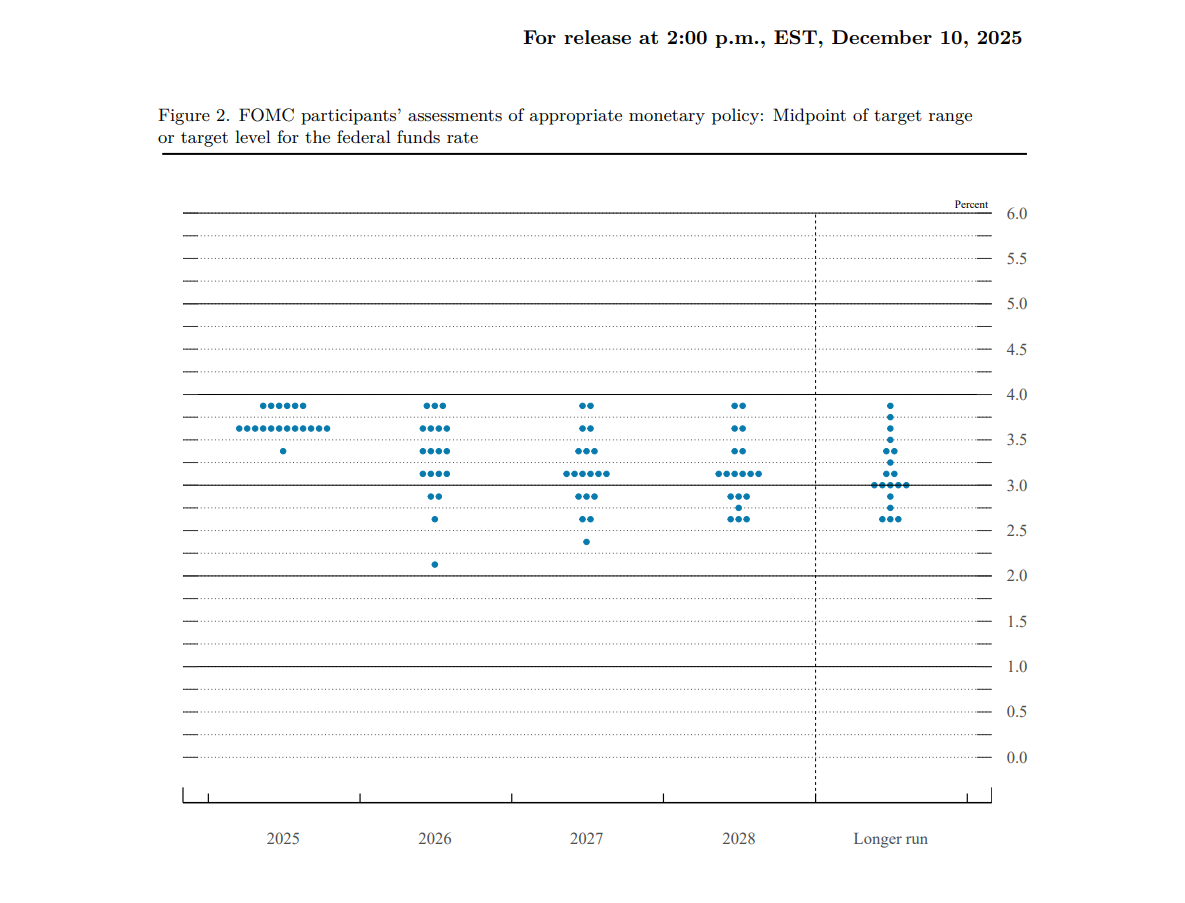
Full text of the Federal Reserve decision: 25 basis point rate cut, purchase of $4 billion in Treasury bills within 30 days
The Federal Reserve cut interest rates by 25 basis points with a 9-3 vote. Two members supported keeping rates unchanged, while one supported a 50 basis point cut. In addition, the Federal Reserve has restarted bond purchases and will buy $40 billion in Treasury bills within 30 days to maintain adequate reserve supply.
Trending news
MoreCrypto prices
More





