
Dow Jones down 600 points as rate cuts odds surge on hiring slump

U.S. stock indices fell as weak jobs data spooked investors, despite earnings beats from Apple and Amazon.
- Dow Jones fell more than 600 points on weak jobs data.
- Apple stock fell despite strong earnings.
- Fed may have to lower interest rates to boost hiring.
Weak jobs data hit stocks hard, despite improving odds of the Federal Reserve cutting interest rates. On Friday, April 1, the Dow Jones dropped 620 points, or 1.42%, while the S&P 500 lost 1.75%. At the same time, the tech-heavy Nasdaq declined as much as 2.33%. The main driver of the declines was July’s labor market report, which showed just 73,000 new jobs versus the expected 104,000.
Tech stocks were among the biggest losers, and even Apple fell 2.5% despite strong earnings . The tech giant reported its highest revenue growth since December 2021. The report indicated that U.S. consumers continued spending despite inflation concerns stemming from the trade war. Apple also stated it plans to significantly increase its investment in AI.
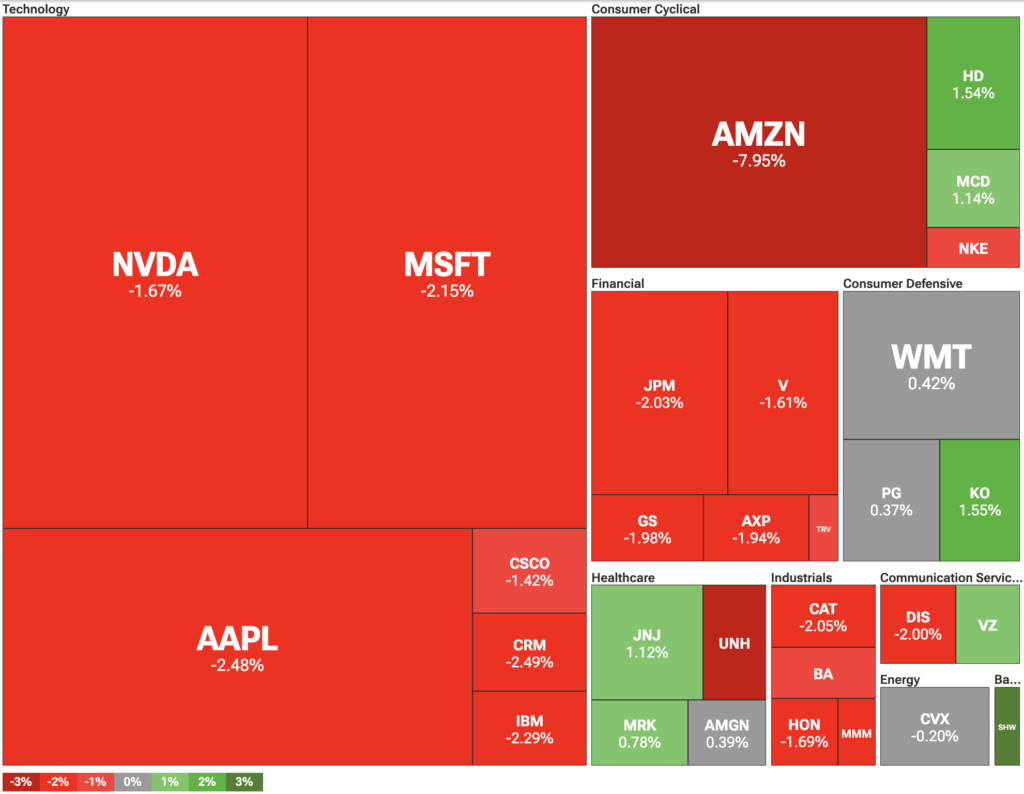 Dow Jones Industrial Average heatmap | Source: TipRanks
Amazon’s earnings also exceeded expectations, with earnings per share of $1.68 compared to the $1.33 estimate. However, the company’s third-quarter guidance was relatively modest. This fell short of investor expectations, especially following the company’s multibillion-dollar investment in AI. As a result, its stock was among the biggest losers, falling 8%.
Fed may have to cut rates on weak jobs data
While tech stocks took a beating, there may be a silver lining. Specifically, the weak labor market could force the Federal Reserve to cut interest rates. CME FedWatch futures markets are now pricing in an 83% chance of a rate cut in September, up sharply from 38% just a day earlier—likely due to the disappointing employment data.
The Fed has a dual mandate to maintain low inflation and high employment. So far, the central bank has resisted pressure from President Donald Trump’s White House to lower rates, despite a split among FOMC members.
Disclaimer: The content of this article solely reflects the author's opinion and does not represent the platform in any capacity. This article is not intended to serve as a reference for making investment decisions.
You may also like
A decade-long tug-of-war ends: "Crypto Market Structure Bill" sprints to the Senate
At the Blockchain Association Policy Summit, U.S. Senators Gillibrand and Lummis stated that the "Crypto Market Structure Bill" is expected to have its draft released by the end of this week, with revisions and hearings scheduled for next week. The bill aims to establish clear boundaries for digital assets by adopting a classification-based regulatory framework, clearly distinguishing between digital commodities and digital securities, and providing a pathway for exemptions for mature blockchains to ensure that regulation does not stifle technological progress. The bill also requires digital commodity trading platforms to register with the CFTC and establishes a joint advisory committee to prevent regulatory gaps or overlapping oversight. Summary generated by Mars AI. The accuracy and completeness of this summary, generated by the Mars AI model, is still being iteratively updated.
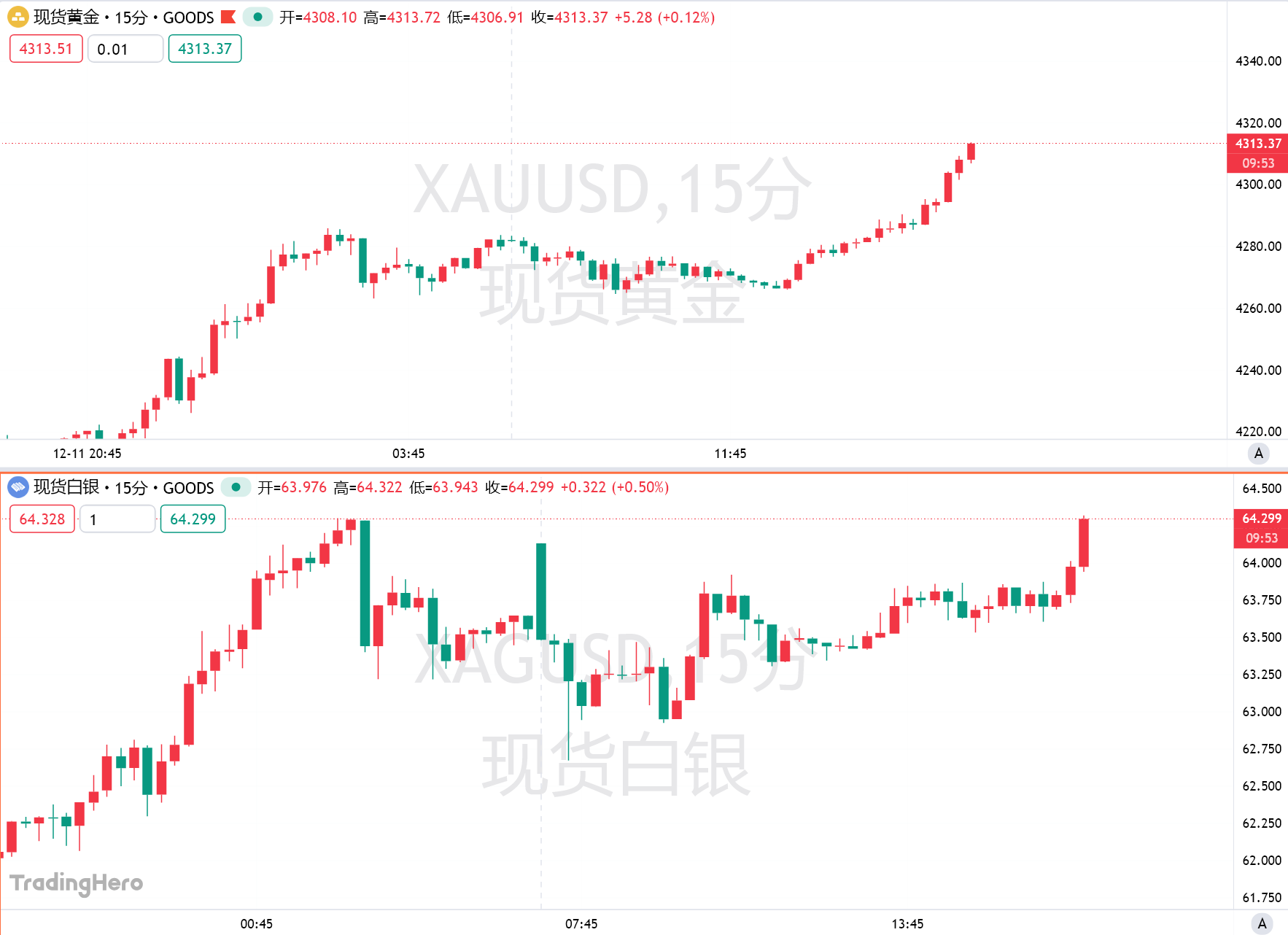
Gold surpasses the $4,310 mark—Is the "bull frenzy" returning?
Boosted by expectations of further easing from the Federal Reserve, gold has risen for four consecutive days. Technical indicators show strong bullish signals, but there remains one more hurdle before reaching a new all-time high.
Trend Research: Why Are We Still Bullish on ETH?
Against the backdrop of relatively accommodative expectations in both China and the US, which suppress asset downside volatility, and with extreme fear and capital sentiment not yet fully recovered, ETH remains in a favorable "buy zone."

Trending news
MoreCrypto prices
More





