
India ignores Trump and keeps Russian oil imports high

- India keeps Russian oil despite US pressure
- Trump threatens sanctions on Indian oil imports
- New Delhi strengthens partnership with Russia in the energy sector
India has reaffirmed that it will continue to import oil from Russia, even after current US President Donald Trump threatened to impose a 25% tariff and further penalties. Indian officials assured that no instructions were given to oil companies to reduce Russian purchases.
According to official sources, Prime Minister Narendra Modi's government is maintaining its energy policy unchanged. At a recent press conference, Ministry of External Affairs spokesman Randhir Jaiswal stated that the country's foreign relations "are not shaped by external pressures" and emphasized that the partnership between India and Russia is stable and consolidated.
The statement came after Trump suggested that India had stopped buying Russian oil, a claim immediately refuted by New Delhi. India's response was blunt, pointing out that there had been no change in its import strategy. The Asian nation relies on about 90% imported oil and currently buys from more than 40 countries.
Since the start of the war in Ukraine, the share of Russian oil in Indian imports has risen from less than 1% to over 33%. India is currently the second-largest buyer of Russian oil, behind only China, purchasing approximately 2 million barrels per day.
Despite pressure from the US and Europe since 2022, New Delhi maintains that its purchases comply with the price caps imposed by the G7 and the European Union. In past meetings, US officials have even acknowledged the effectiveness of India's approach.
Former Indian ambassador to Moscow, Pankaj Saran, warned that Russia's withdrawal from India's energy portfolio would only benefit Beijing. "Even if India cuts imports to zero, China will continue to buy at low prices," the diplomat noted.
Amid tensions, the Indian government sees risk in volatile geopolitical decisions. According to sources close to the energy sector, long-term contracts and transportation routes signed with Russia are not easily replaceable, which reinforces New Delhi's position of continuity in its relations with Moscow.
Disclaimer: The content of this article solely reflects the author's opinion and does not represent the platform in any capacity. This article is not intended to serve as a reference for making investment decisions.
You may also like
A decade-long tug-of-war ends: "Crypto Market Structure Bill" sprints to the Senate
At the Blockchain Association Policy Summit, U.S. Senators Gillibrand and Lummis stated that the "Crypto Market Structure Bill" is expected to have its draft released by the end of this week, with revisions and hearings scheduled for next week. The bill aims to establish clear boundaries for digital assets by adopting a classification-based regulatory framework, clearly distinguishing between digital commodities and digital securities, and providing a pathway for exemptions for mature blockchains to ensure that regulation does not stifle technological progress. The bill also requires digital commodity trading platforms to register with the CFTC and establishes a joint advisory committee to prevent regulatory gaps or overlapping oversight. Summary generated by Mars AI. The accuracy and completeness of this summary, generated by the Mars AI model, is still being iteratively updated.
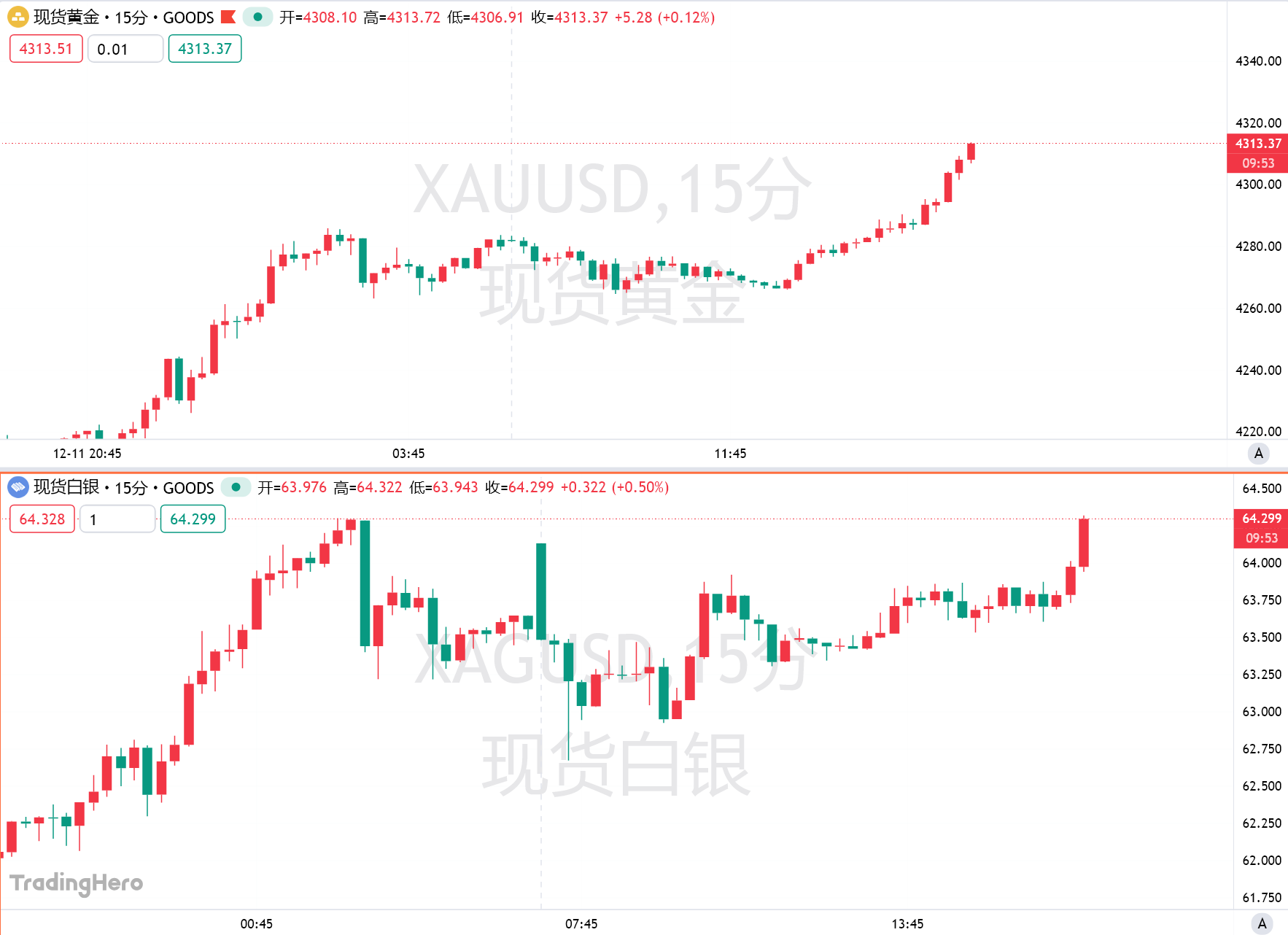
Gold surpasses the $4,310 mark—Is the "bull frenzy" returning?
Boosted by expectations of further easing from the Federal Reserve, gold has risen for four consecutive days. Technical indicators show strong bullish signals, but there remains one more hurdle before reaching a new all-time high.
Trend Research: Why Are We Still Bullish on ETH?
Against the backdrop of relatively accommodative expectations in both China and the US, which suppress asset downside volatility, and with extreme fear and capital sentiment not yet fully recovered, ETH remains in a favorable "buy zone."

Trending news
MoreCrypto prices
More





