
Bitcoin News Today: Regulators and Markets Race to Define Bitcoin’s $5 Trillion Future
- Balaji Srinivasan argues Bitcoin could replace real estate as a primary wealth preservation tool due to its scarcity, portability, and digital nature. - JPMorgan analysts note Bitcoin's volatility has hit historical lows, projecting a $126,000 price target if its market cap rises 13% to match gold's $5 trillion valuation. - Corporate treasury purchases now account for 6% of Bitcoin's supply, driven by institutional adoption and inclusion in major equity indices. - U.S. and EU regulatory frameworks (GENIU
Bitcoin’s rising prominence as a store of value and its potential to supplant traditional assets like real estate are increasingly being explored by market analysts and industry observers. Balaji Srinivasan, a well-known venture capitalist and former Chief Technology Officer of Andreessen Horowitz, has argued that Bitcoin could one day replace real estate as a primary means of wealth preservation. His perspective is grounded in the idea that Bitcoin’s scarcity, portability, and digital nature offer advantages over physical assets in a rapidly evolving financial landscape. This view aligns with broader industry trends highlighting Bitcoin’s maturing infrastructure and growing institutional adoption.
The JPMorgan analysts’ recent assessment reinforces the notion that Bitcoin is gaining traction as a reliable store of value. According to their analysis, Bitcoin’s volatility has fallen to historical lows, making it more attractive to institutional investors. The volatility ratio of Bitcoin to gold is currently at 2.0, the lowest on record, indicating that Bitcoin now requires twice as much risk capital as gold in portfolio allocations. To align with the roughly $5 trillion private gold investment, Bitcoin’s market cap would need to rise by around 13%, implying a price of about $126,000. This projection suggests further upside potential, as the current price remains below this theoretical fair value.
In parallel, a growing number of companies are integrating Bitcoin into their treasury strategies. JPMorgan cited the surge in corporate treasury purchases of Bitcoin, which now account for more than 6% of its total supply. This trend is comparable to central bank quantitative easing after 2008, which reduced bond market volatility by locking assets into passive holdings. Passive inflows in Bitcoin are also being driven by its inclusion in major equity indices. For instance, MicroStrategy’s addition to benchmarks has attracted new capital, while other firms are exploring similar strategies to position themselves as key holders of the cryptocurrency.
The rise of Bitcoin as a store of value is also being bolstered by evolving regulatory environments. In the United States, the White House and Congress have introduced legislative proposals such as the GENIUS Act and the CLARITY Act, aiming to clarify the status of stablecoins, custody arrangements, and tokenization. These efforts are seen as critical in ensuring that U.S. financial firms can compete globally in the digital asset space. At the same time, the European Union has already implemented its Markets in Crypto-Assets (MiCA) regulation, creating a framework that could attract institutional investors by providing legal clarity. In Asia, countries like Singapore and Hong Kong are also positioning themselves as hubs for blockchain innovation while balancing regulatory oversight with market access.
Bitcoin’s growing institutional acceptance is complemented by the emergence of alternative digital asset models that aim to replicate the benefits of traditional assets. For example, projects like Avalon X are marketing themselves as “digital real estate,” offering fractional exposure to asset appreciation and cash flow through a utility token. This model leverages blockchain to enable access to real estate investments with lower barriers to entry, including fractional ownership and staking rewards. While Bitcoin primarily functions as a store of value with no direct yield or utility, tokens like Avalon X aim to provide real-world benefits such as discounted stays and investment returns. This dual approach—Bitcoin for preservation and digital real estate for growth—aligns with traditional wealth management strategies.
As Bitcoin continues to mature, its role in global finance is likely to expand. Analysts and regulators are increasingly recognizing the need for a regulatory framework that supports innovation while protecting investors. The U.S., with its deep financial infrastructure and technology ecosystem, is in a unique position to shape these rules. However, global competition is intensifying, with countries like China promoting alternative models such as central bank digital currencies (CBDCs). The outcome of this regulatory race will have significant implications for the future of digital assets and their role in the broader financial system.

Disclaimer: The content of this article solely reflects the author's opinion and does not represent the platform in any capacity. This article is not intended to serve as a reference for making investment decisions.
You may also like
Five charts to help you understand: Where does the market go after each policy storm?
After this regulatory crackdown, is it a harbinger of an impending downturn, or the beginning of a new cycle where all negative news has been fully priced in? Let’s examine the trajectory after the storm through five key policy milestones.

Mars Morning News | The crypto market rebounds across the board, Bitcoin rises above $94,500; The "CLARITY Act" draft is expected to be released this week
The crypto market has fully rebounded, with bitcoin surpassing $94,500 and US crypto-related stocks rising across the board. The US Congress is advancing the CLARITY Act to regulate cryptocurrencies. The SEC chairman stated that many ICOs are not securities transactions. Whales are holding a large number of profitable ETH long positions. Summary generated by Mars AI. The accuracy and completeness of the content generated by the Mars AI model is still being iteratively updated.

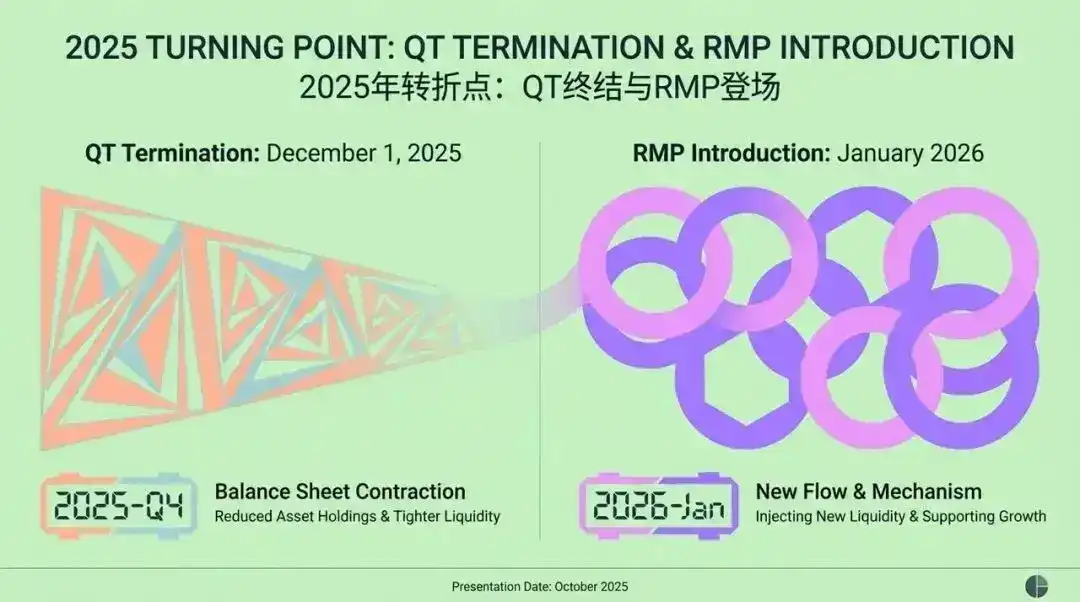
Federal Reserve’s Major Shift: From QT to RMP, How Will the Market Transform by 2026?
The article discusses the background, mechanism, and impact on financial markets of the Federal Reserve's introduction of the Reserve Management Purchases (RMP) strategy after ending Quantitative Tightening (QT) in 2025. RMP is regarded as a technical operation aimed at maintaining liquidity in the financial system, but the market interprets it as a covert easing policy. The article analyzes RMP's potential effects on risk assets, the regulatory framework, and fiscal policy, and provides strategic recommendations for institutional investors. Summary generated by Mars AI This summary was generated by the Mars AI model, and the accuracy and completeness of its content are still in the process of iterative improvement.
Rate Hike in Japan: Will Bitcoin Resist Better Than Expected?

Trending news
MoreCrypto prices
More





