
Is WLFI’s Complete Buyback-and-Burn Approach Capable of Reversing a 60% Price Drop?
- World Liberty Financial (WLFI), linked to Donald Trump, executed a 100% buyback-and-burn plan approved by 99.8% of its governance community to stabilize its token price. - The strategy redirects all treasury fees from Ethereum, BNB Chain, and Solana trading to repurchase and permanently burn WLFI tokens, aiming to reduce supply and reward long-term holders. - Despite initial price drops of 60% post-launch and a failed one-time token burn, analysts predict potential 25% price recovery if buybacks are sust

World Liberty Financial (WLFI), a crypto initiative linked to former U.S. President Donald Trump, has carried out a full buyback-and-burn plan that was overwhelmingly approved by its community, signaling a major move to steady its token’s value and reward long-term supporters. The plan, which passed with 99.8% of votes, will now use all treasury liquidity fees—generated from trading on
The buyback-and-burn process is conducted transparently on-chain. Treasury fees are swapped for WLFI tokens in open markets, and the acquired tokens are sent to a public burn address, making their removal permanent and verifiable. On-chain data shows these transactions can be tracked, providing transparency. Experts highlight that the effectiveness of this plan depends on steady fee income, how often buybacks occur, and the liquidity of the market. For instance, if monthly fees total $1 million and WLFI trades at $0.20, about 5 million tokens could be burned each year, cutting supply by 6%. Still, without official revenue forecasts, the lasting effects are unclear.
This proposal comes after a rocky start for the token. WLFI’s value dropped 40% within three days of its September 1 launch, wiping out millions for major holders. An initial one-off burn of 47 million tokens in early September did not stop the decline. The new plan, however, introduces an ongoing buyback system, which analysts such as Captain Faibik believe could spark a 25% price increase if maintained. The initiative also coincides with other ecosystem developments, like a partnership with South Korea’s Bithumb exchange and plans for a debit card that works with Apple Pay.
Despite these efforts, market sentiment remains cautious. While reducing supply through buybacks could help prices recover, the plan’s success relies on treasury income and disciplined execution. Potential challenges include limited liquidity during token swaps, price swings from large buybacks, and fewer resources for protocol growth since all fees go to burns. The absence of official fee projections also adds unpredictability, as the frequency and size of buybacks may vary with market shifts.
World Liberty Financial describes this program as a core part of its treasury management, with the possibility of expanding to other revenue sources in the future. Project leaders have stated that the initiative fits into broader ambitions for mainstream adoption, such as launching a USD1 stablecoin and a retail payment application. As the buyback plan unfolds, important indicators to watch are monthly treasury income, on-chain burn records, and liquidity levels for WLFI trading pairs.
This move is part of a wider pattern in the crypto industry, where projects use buybacks and supply cuts to support token value. For WLFI, the outcome of this approach will hinge on its ability to consistently generate fees and maintain openness, ensuring that long-term holders benefit from a deflationary system while managing the risks of relying too heavily on market-based buybacks.
Disclaimer: The content of this article solely reflects the author's opinion and does not represent the platform in any capacity. This article is not intended to serve as a reference for making investment decisions.
You may also like
Investment Prospects in STEM Learning and Workforce-Ready Talent Streams: Linking with Astar 2.0
- Global STEM education demand surges as AI, blockchain, and biotech reshape industries, creating workforce skill gaps. - Astar 2.0's DeFi innovations (ZK Rollups, interoperability) indirectly support STEM through blockchain infrastructure and cross-chain collaboration. - U.S. and Singapore prioritize tech-integrated workforce strategies, aligning with Astar 2.0's potential to bridge DeFi and STEM education via scalable tools. - Investors can leverage Astar 2.0's $1.399B TVL and hybrid AMM-CEX model to fun

The ZK Transformation: Evaluating How Zero-Knowledge Technology Influences the Future Development of Blockchain
- ZK-rollups scale blockchain networks by bundling transactions, achieving 43,000 TPS and 30% lower gas fees, attracting institutions like Goldman Sachs and JPMorgan . - ZK technology resolves privacy-scalability paradox by enabling verifiable transactions without data exposure, adopted by EU regulators and enterprises like Nike and Sony . - Challenges persist: ZK-SNARKs require heavy computation, trusted setup risks exist, and privacy conflicts with AML regulations in some jurisdictions. - $725M+ VC inves
The Influence of Vitalik Buterin's Support for ZKsync on the Advancement of Scalable Blockchain Technologies: Evaluating the Prospects for Long-Term Investment in Pr
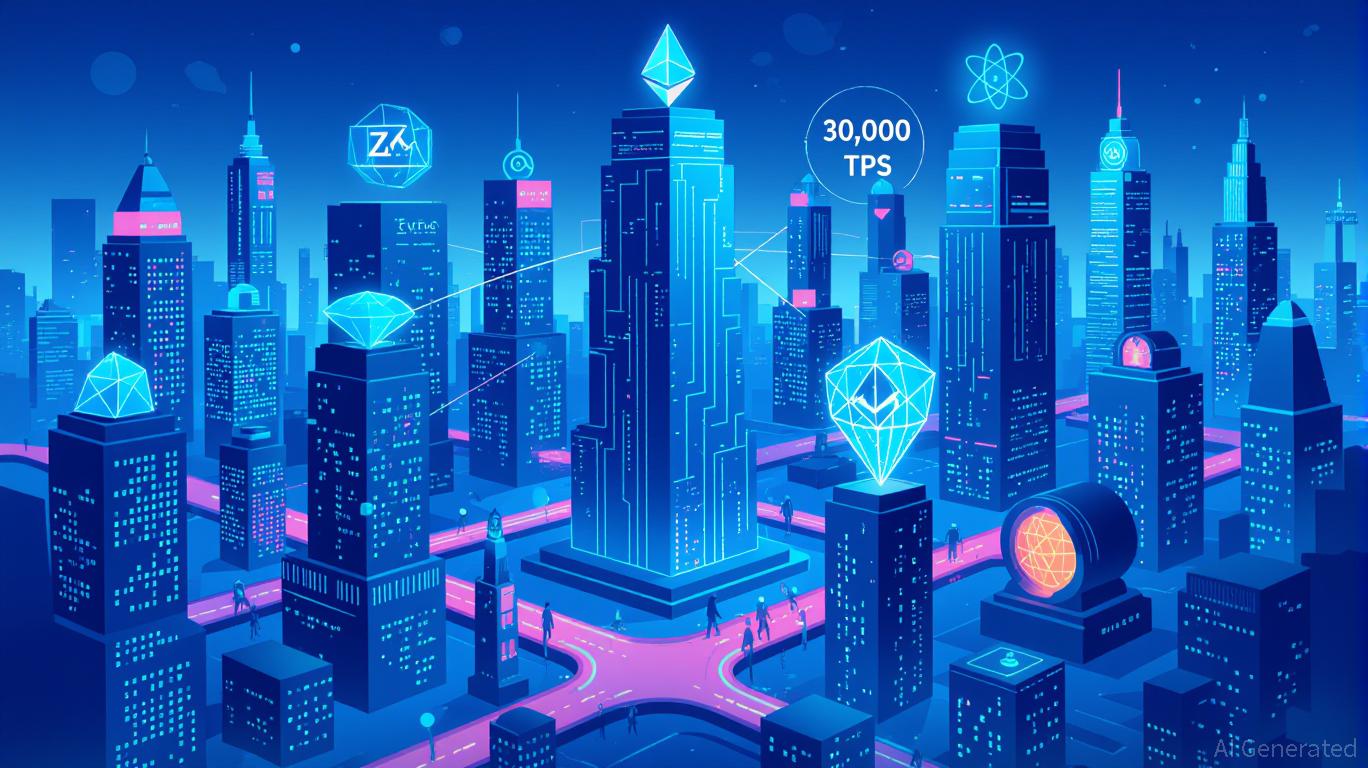
- Vitalik Buterin's 2025 endorsement of ZKsync accelerated its rise as a scalable Ethereum Layer-2 solution with 30,000 TPS and $3.3B TVL. - ZKsync's EVM compatibility and institutional partnerships contrast with StarkNet's quantum-resistant STARK proofs and Aztec's privacy-first architecture. - Analysts project ZK token prices at $0.40–$0.60 by 2025, while StarkNet faces adoption barriers and Aztec navigates regulatory challenges in privacy-focused DeFi. - The $7.59B ZKP market (2033 forecast) hinges on b
ZK Atlas Enhancement: Transforming Blockchain Scalability and Paving the Way for Institutional Integration
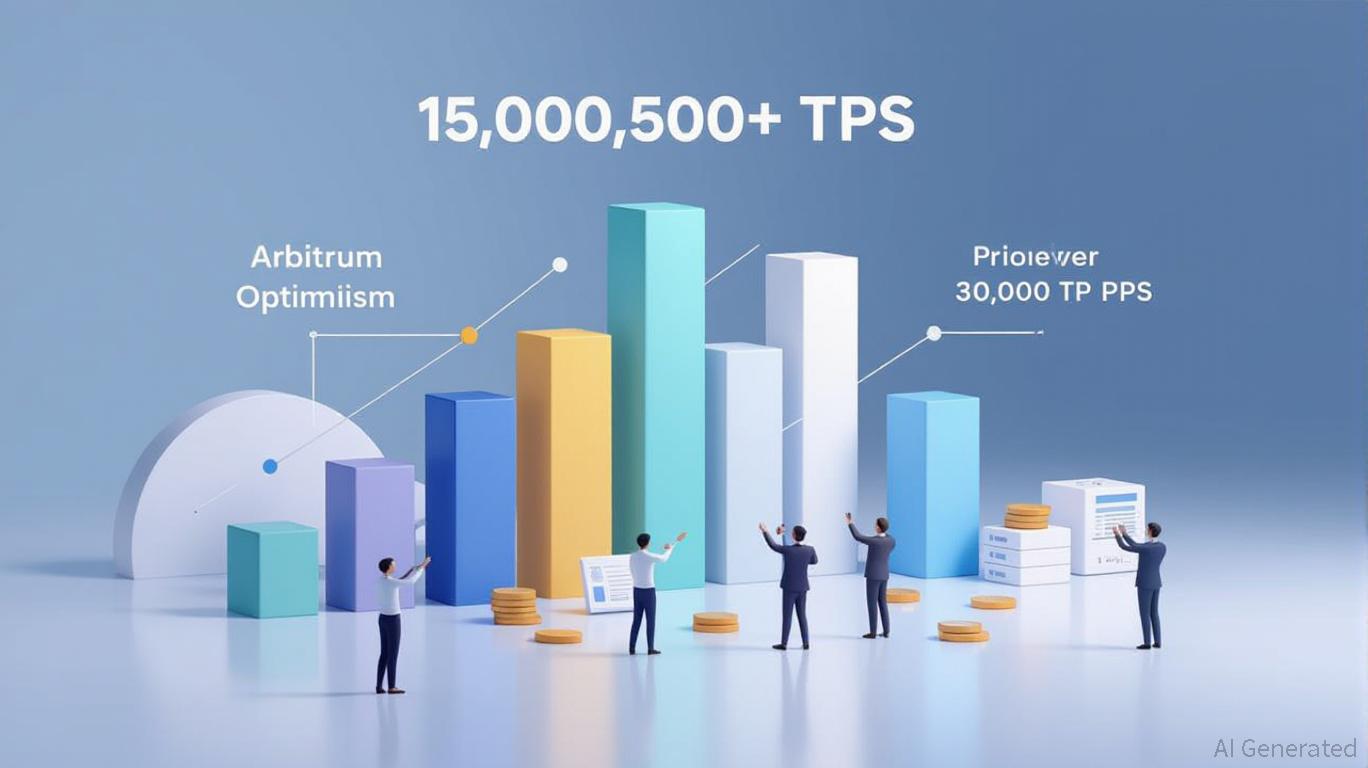
- ZKsync’s 2025 Atlas Upgrade achieves 15,000–43,000 TPS with $0.0001/transaction costs, boosting blockchain scalability for institutions. - Deutsche Bank , Sony , and Citi adopt ZKsync for tokenized assets and privacy-driven transactions, citing compliance and efficiency gains. - Market forecasts predict 60.7% CAGR for ZK Layer-2 solutions through 2031, with Fusaka upgrade targeting 30,000 TPS to solidify ZKsync’s leadership.
Trending news
MoreCrypto prices
More





