
Polkadot Aims to Unlock DeFi Potential With Native pUSD Stablecoin

PUSD is designed to reduce reliance on USDT and USDC. It would enable on-chain payments, savings, and borrowing while strengthening Polkadot’s DeFi ecosystem.
The Polkadot community is moving toward launching a native stablecoin, pUSD, backed entirely by its DOT token.
The proposal calls for deploying the DOT-collateralized stablecoin on the Polkadot Asset Hub using the Honzon protocol stack. This is the same framework that previously powered Acala’s failed aUSD stablecoin.
Polkadot Community Backs pUSD to Reduce Reliance on USDT and USDC
According to the proposal, pUSD is structured as an over-collateralized debt token, allowing users to borrow against their DOT holdings without liquidating them.
PUSD aims to address past shortcomings and provide the network with a fully collateralized, decentralized stablecoin by focusing solely on DOT as collateral.
If approved, it could reduce reliance on external stablecoins like USDT and USDC, while streamlining the OpenGov DOT-USDC/USDT conversion mechanism.
“This would be expected to be the NATIVE stablecoin for Polkadot Asset Hub, reduce/replace dependence on USDT/USDC including OpenGov DOT-USDC/USDT stablecoin conversion process,” the proposal stated.
Polkadot Treasury could also integrate the stablecoin, enabling users to make payments in pUSD instead of DOT. This would eliminate the need for the Treasury to manage separate stablecoin reserves.
Additionally, it could also pave the way for using pUSD for staking rewards, gradually replacing DOT inflation over time.
Meanwhile, Polkadot’s push for a native stablecoin comes at a critical juncture in the development of the blockchain network.
According to DeFi Llama data, the network hosts less than $100 million in stablecoin assets, a fraction of the liquidity available on Ethereum and Solana.
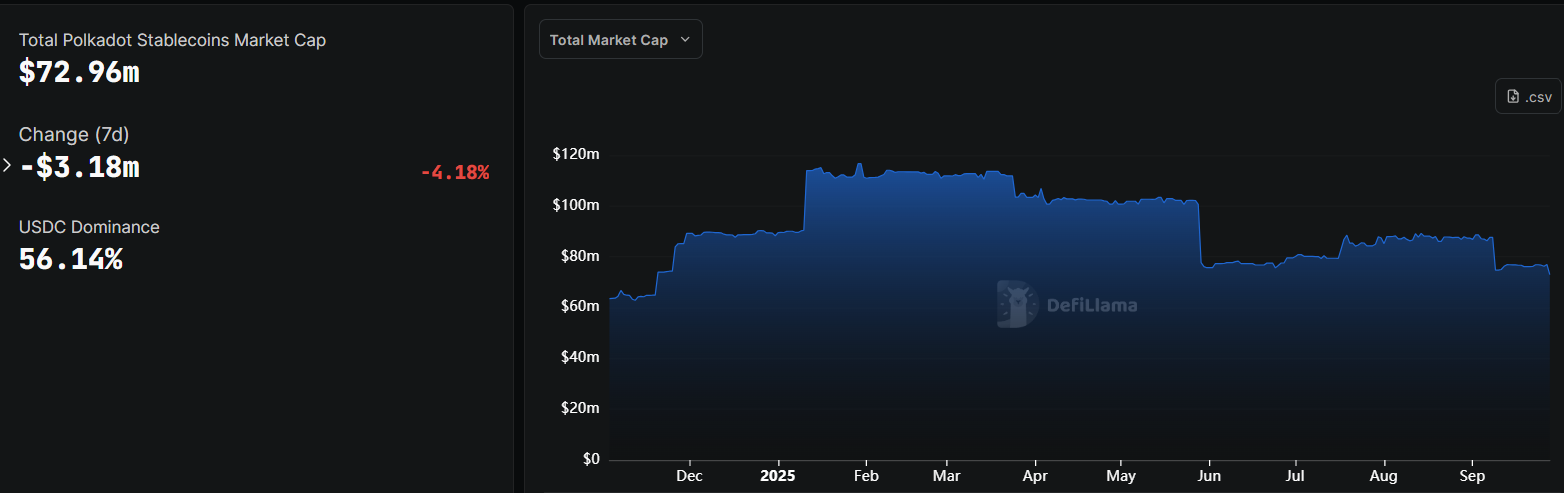 Polkadot Stablecoin Market Cap. Source:
DeFiLlama
Polkadot Stablecoin Market Cap. Source:
DeFiLlama
This shortage has constrained decentralized finance activity and limited developer experimentation on Polkadot.
Considering this, Gavin Wood, Polkadot’s co-founder, stressed that a fully collateralized decentralized stablecoin is “strategically essential.” He added that it needs to be deployed as soon as possible to unlock the network’s financial potential.
“Polkadot Hub should have a native DOT backed stable coin because people need it and otherwise we will haemorrhage benefits, liquidity and/or security,” Wood said.
Notably, the proposal has already gained significant traction within the community. The governance vote currently shows 75.4% support, inching toward the 85.6% threshold required for approval.
Meanwhile, the push for pUSD also aligns with a broader industry trend of projects launching native stablecoins to enhance liquidity and drive ecosystem growth.
The stablecoin industry, currently dominated by Tether’s USDT and Circle’s USDC, is projected to reach $4 trillion by 2030.
Disclaimer: The content of this article solely reflects the author's opinion and does not represent the platform in any capacity. This article is not intended to serve as a reference for making investment decisions.
You may also like
Tesla engaged in deceptive marketing for Autopilot and Full Self-Driving, judge rules
IBIT-Linked Structured Notes: Wall Street’s $530M Bet on Bitcoin Integration
Beldex Price: BDX Token Gains Momentum with Stargate Integration via LayerZero’s OFT Standard

Altcoin Season Index Plummets: A Stark 4-Point Drop to 18 Signals Bitcoin’s Grip
Trending news
MoreCrypto prices
More





