
Can Pi Network Price Hit $1 in 2025?

-
Pi Network has to wait till 2030 to reach $1
-
It is forming new partnerships with KYB-approved exchanges and on-ramp providers like TransFi, making it accessible in over 100 countries.
-
Dr Altcoin said Pi will reach $314 within five years.
The bullish sentiment that Pi Network brought at the beginning of the year quickly disappeared. It is currently trading around $0.2618, which is approximately 91% lower than its all-time high. Since its downfall started in March, it came closer to hitting a new low than making another high.
Many investors and users gave up on the coin amid its price fall and allegations of being a scam. But some remained optimistic and believed that it could rise again in 2026.
Pi Coin Prediction for 2026
According to data from Coincodex, the long-term forecast chart shows a bullish trend in Pi with potential highs of $1.10 and lows of $ 0.179873. But to reach $1 per coin, Pi has to wait till 2030 because the highest Pi could reach in 2026 is $ 0.715395.
Pi network has partnered with KYB-approved exchanges and on-ramp providers like TransFi, making it accessible in over 100 countries. This is part of a broader strategy to attract more adoption, which will automatically push the price without any selling pressure.
| Year | Minimum Price | Average Price | Maximum Price |
| 2025 | $ 0.182847 | $ 0.051278 | $ 0.26147 |
| 2026 | $ 0.179873 | $ 0.359238 | $ 0.715395 |
| 2027 | 0.247015 | $ 0.371687 | $ 0.480067 |
| 2028 | $ 0.255161 | $ 0.276032 | $ 0.369475 |
| 2029 | $ 0.325989 | $ 0.403848 | $ 0.538165 |
| 2030 | $ 0.528939 | $ 0.699862 | $ 1.10 |
What Are Experts Saying?
While many users believed that $1 peg could help Pi succeed in peer-to-peer (P2P) transactions, Dr Altcoin, a crypto expert, openly disagreed. He said that Pi does not need to be pegged $1 like a stablecoin because the success depends on adoption, trust, utility, and safety in the ecosystem rather than price.
Citing Pi’s large community strength and long-term fundamentals, he even declared that Pi will reach $314 within five years.
Moreover, expert Kim H Wong said in mid-September that Pi could reach $40 to $75 by 2030. He also reiterated that despite all the hurdles the network has faced this year, the token remains a safe bet.
Disclaimer: The content of this article solely reflects the author's opinion and does not represent the platform in any capacity. This article is not intended to serve as a reference for making investment decisions.
You may also like
Investment Prospects in STEM Learning and Workforce-Ready Talent Streams: Linking with Astar 2.0
- Global STEM education demand surges as AI, blockchain, and biotech reshape industries, creating workforce skill gaps. - Astar 2.0's DeFi innovations (ZK Rollups, interoperability) indirectly support STEM through blockchain infrastructure and cross-chain collaboration. - U.S. and Singapore prioritize tech-integrated workforce strategies, aligning with Astar 2.0's potential to bridge DeFi and STEM education via scalable tools. - Investors can leverage Astar 2.0's $1.399B TVL and hybrid AMM-CEX model to fun

The ZK Transformation: Evaluating How Zero-Knowledge Technology Influences the Future Development of Blockchain
- ZK-rollups scale blockchain networks by bundling transactions, achieving 43,000 TPS and 30% lower gas fees, attracting institutions like Goldman Sachs and JPMorgan . - ZK technology resolves privacy-scalability paradox by enabling verifiable transactions without data exposure, adopted by EU regulators and enterprises like Nike and Sony . - Challenges persist: ZK-SNARKs require heavy computation, trusted setup risks exist, and privacy conflicts with AML regulations in some jurisdictions. - $725M+ VC inves

The Influence of Vitalik Buterin's Support for ZKsync on the Advancement of Scalable Blockchain Technologies: Evaluating the Prospects for Long-Term Investment in Pr
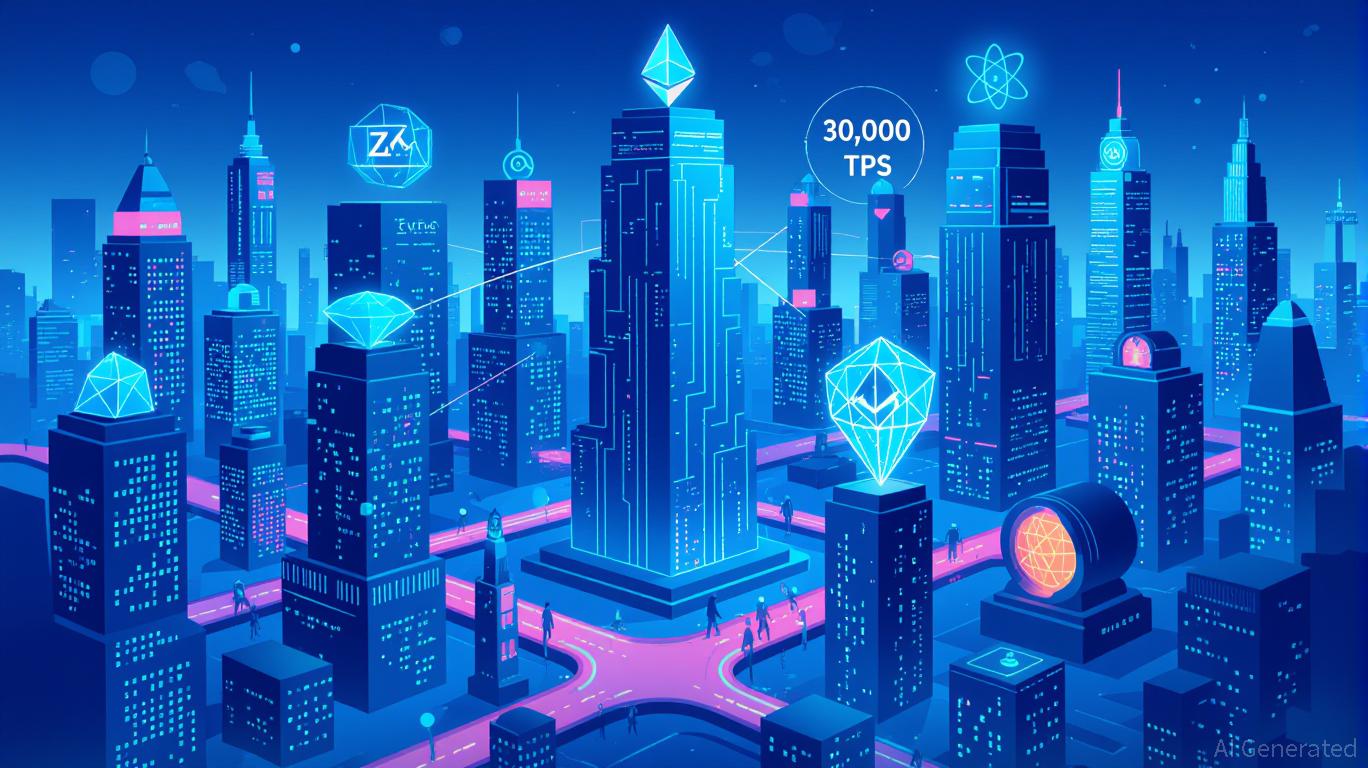
- Vitalik Buterin's 2025 endorsement of ZKsync accelerated its rise as a scalable Ethereum Layer-2 solution with 30,000 TPS and $3.3B TVL. - ZKsync's EVM compatibility and institutional partnerships contrast with StarkNet's quantum-resistant STARK proofs and Aztec's privacy-first architecture. - Analysts project ZK token prices at $0.40–$0.60 by 2025, while StarkNet faces adoption barriers and Aztec navigates regulatory challenges in privacy-focused DeFi. - The $7.59B ZKP market (2033 forecast) hinges on b
ZK Atlas Enhancement: Transforming Blockchain Scalability and Paving the Way for Institutional Integration
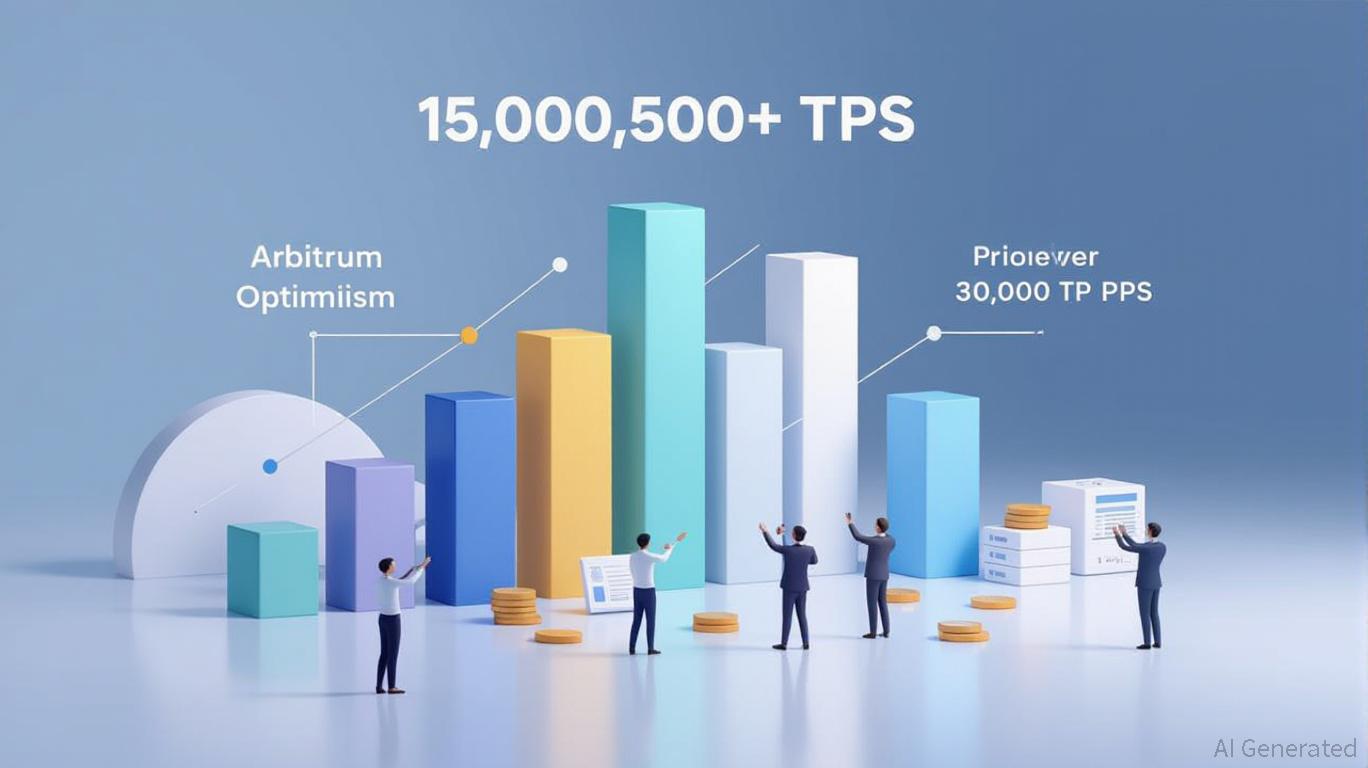
- ZKsync’s 2025 Atlas Upgrade achieves 15,000–43,000 TPS with $0.0001/transaction costs, boosting blockchain scalability for institutions. - Deutsche Bank , Sony , and Citi adopt ZKsync for tokenized assets and privacy-driven transactions, citing compliance and efficiency gains. - Market forecasts predict 60.7% CAGR for ZK Layer-2 solutions through 2031, with Fusaka upgrade targeting 30,000 TPS to solidify ZKsync’s leadership.
Trending news
MoreCrypto prices
More





