
Salesforce Invests $15 Billion in San Francisco AI Scene
- Salesforce’s $15 billion AI investment announcement led by Marc Benioff.
- Focus on San Francisco’s AI innovation capacity.
- Plans include workforce development and an AI Incubator Hub.
Salesforce’s $15 billion investment in San Francisco aims to bolster AI development by establishing an AI Incubator Hub, workforce training initiatives, and business grants, focusing on enhancing the city’s AI innovation without direct crypto asset implications.
Salesforce announced a $15 billion investment into San Francisco’s AI ecosystem, a move led by CEO Marc Benioff at the company’s headquarters.
The investment emphasizes Salesforce’s commitment to fostering AI innovation, highlighting San Francisco’s potential as an AI hub. There is no immediate impact on the cryptocurrency market.
Salesforce is allocating $15 billion to enhance San Francisco’s AI landscape. This initiative bolsters the city’s capabilities by fostering innovation and providing essential workforce training.
Led by CEO Marc Benioff, Salesforce’s directive includes creating an AI Incubator Hub at headquarters.
Salesforce Official Press Release – “Salesforce has launched Agentforce 360, a new artificial intelligence platform… Alongside the product launch, Salesforce announced a $15 billion investment in San Francisco over the next five years”: AlphaSpread
The move signifies direct investment without external institutional or venture involvement.
The initiative is expected to enhance San Francisco’s technology sector, potentially increasing startup activity and job creation. Yet, the announcement has not influenced major cryptocurrencies or sparked blockchain activities.
Comparable past investments have led to regional tech ecosystem growth. However, Salesforce’s focus remains on enterprise AI, with no explicit link to Web3 or blockchain protocols.
Potential financial results might reshape job landscapes and stimulate tech innovations. Yet, without immediate cryptocurrency involvement, regulation or blockchain shifts remain unclear, echoing historical patterns.
Disclaimer: The content of this article solely reflects the author's opinion and does not represent the platform in any capacity. This article is not intended to serve as a reference for making investment decisions.
You may also like
The ZK Atlas Enhancement and Its Impact on Blockchain Scalability
- ZKsync's October 2025 Atlas Upgrade achieves 15,000–43,000 TPS with $0.0001 fees, enhancing Ethereum's L2 scalability via ZK proofs. - Institutional adoption by Deutsche Bank/UBS and $3.5B TVL validate ZK-based L2s as infrastructure for DeFi and real-time settlements. - Upcoming Fusaka upgrade (Dec 3, 2025) aims to double throughput, positioning ZKsync to outpace competitors with 60.7% CAGR growth projections. - $ZK token's $0.28/2025 and $1.32/2030 price targets reflect deflationary mechanics and $15B B
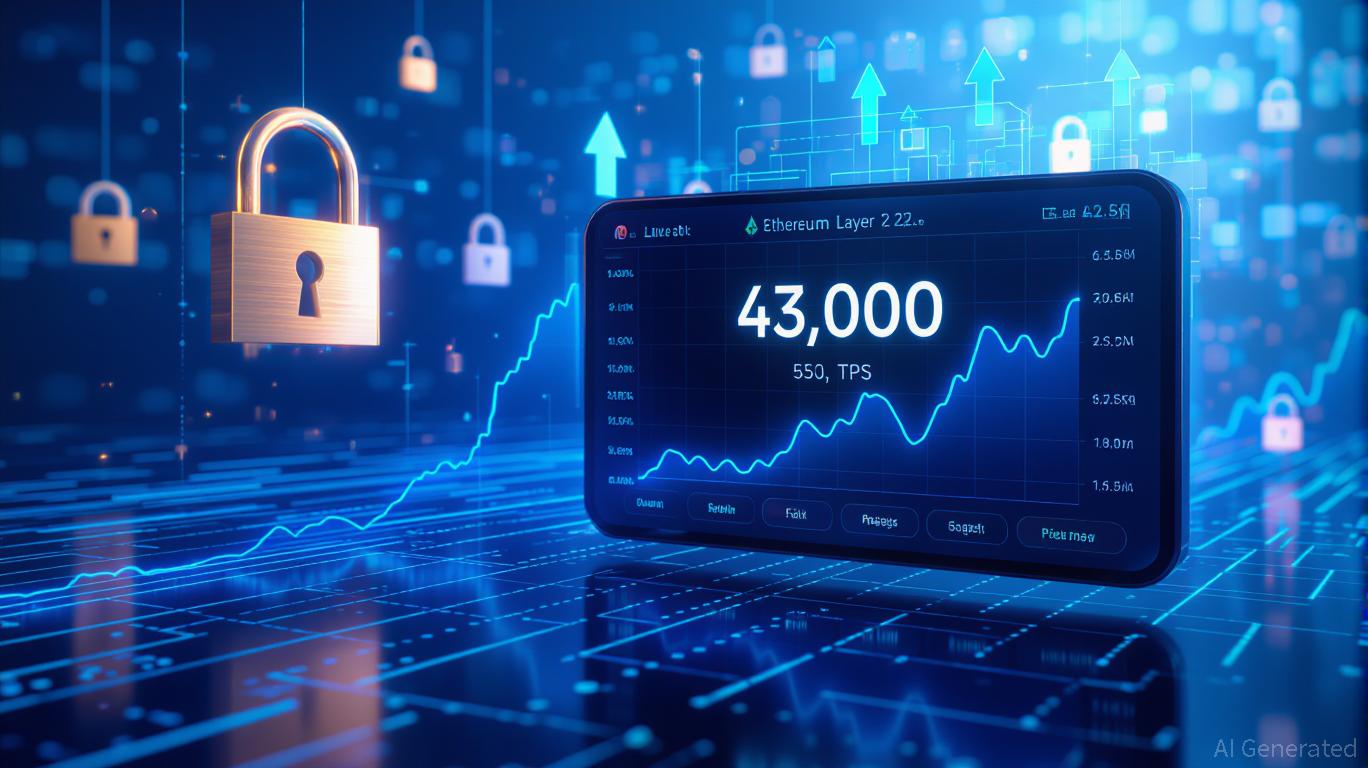
The Influence of ZK-Sync Integration on the Development of Ethereum’s Layer 2 Landscape and Scaling Approaches
- Vitalik Buterin's endorsement of ZK-Sync's Atlas upgrade highlights its role in Ethereum's scalability solutions, boosting its token price by 120%. - ZK-Sync's ZK-rollup architecture offers trustless security and cost efficiency, attracting enterprises like Deutsche Bank for real-world asset tokenization. - The ZK Layer 2 market is projected to grow at 60.7% CAGR by 2031, with ZK-Sync competing against Arbitrum and Optimism for TVL dominance.
The Rapid Rise of DASH: Uncovering the Factors Behind This Week's Rally
- Dash (DASH) experienced a 7-day rally with 50% higher transaction volume despite 39% price decline, highlighting volume-price divergence. - 77% opaque transactions and whale activity patterns suggest potential speculative accumulation or manipulation amid privacy coin interest. - Technical indicators show bullish momentum with $84 buy zone, while analysts predict 100x price potential driven by privacy demand. - Cross-market confusion with DoorDash stock and regulatory risks create mixed sentiment, emphas
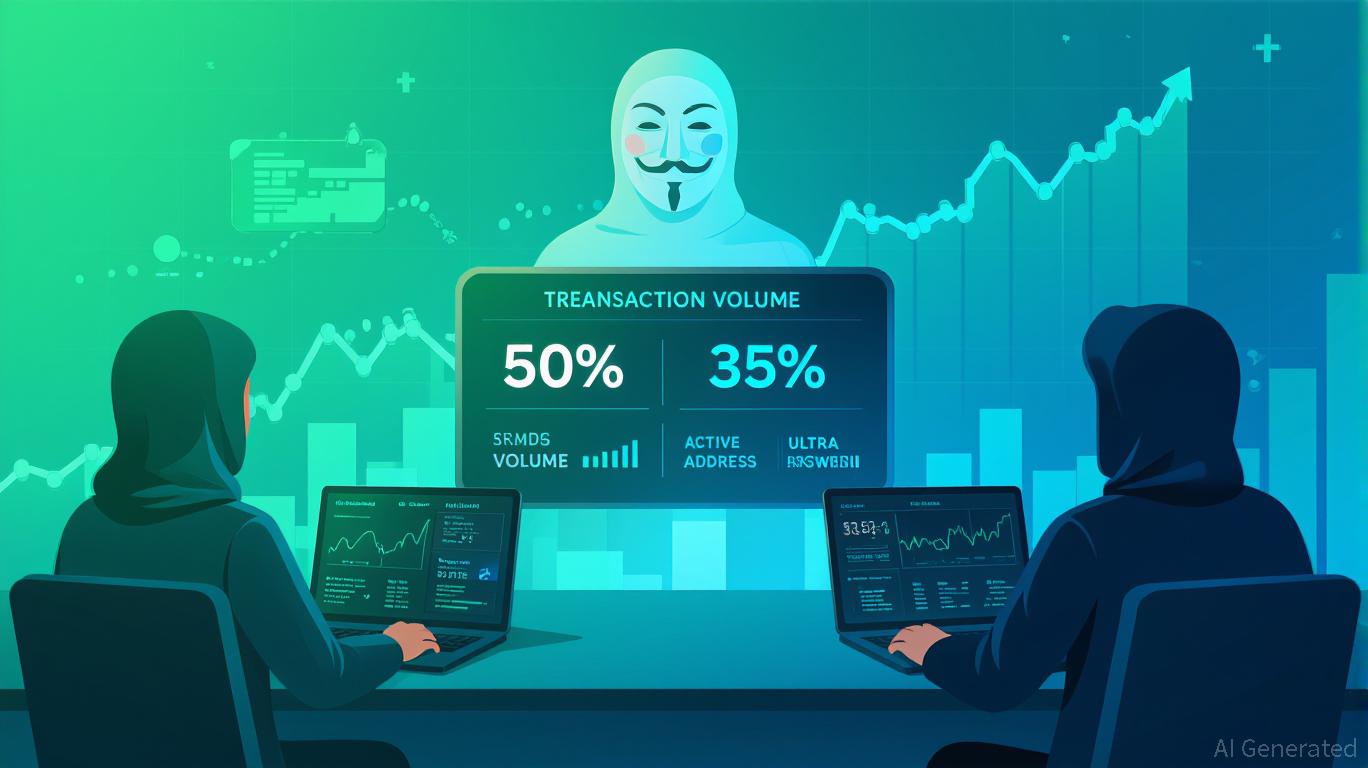
Zcash Halving and Its Impact on the Market: Supply Disruptions and Investor Attitudes in the Aftermath of Halving
- Zcash's 2025 halving cut block rewards by 50%, reducing annual inflation to 2% and reigniting debates on its privacy-focused role. - Institutional adoption grows with $151.6M Grayscale Trust and Zcash ETF proposals, balancing privacy with regulatory compliance. - Post-halving volatility saw ZEC surge 1,172% then plummet 96% in 16 days, exposing liquidity risks in its $10.3B market cap. - 70% of ZEC transactions now use shielded pools, but EU MiCA regulations and concentrated ownership create adoption unc

Trending news
MoreCrypto prices
More






