
Visa: Stablecoins to take on lending, Huma Finance leads

A new report by Visa explains that stablecoins are no longer just for payments and are taking a growing share of the credit markets.
- Stablecoins are playing a growing role in the $40 trillion global credit market, says Visa
- DeFi platforms have issued $670 billion worth of stablecoin loans since 2020
- Currently, there’s $14.8 billion in outstanding loans, with 427,000 loans issued in August alone
- Visa report highlighted Huma finance as one of the standout performers
Stablecoins are no longer just for cross-border payments or crypto trading. On Thursday, October 16, credit card giant Visa published a report detailing the growing role of stablecoins in the on-chain credit market. The report outlines their expanding role in the $40 trillion global credit market.
According to the report , on-chain lending with stablecoins has risen to more than $670 billion in total loans since 2020. That amounts to $51.7 billion in monthly activity, with more than 81,000 active borrowers. Moreover, the stablecoin loan market continues to grow, with DeFi platforms issuing 427,000 loans in August alone. Additionally, total outstanding loans amount to $14.8 billion, with $17.5 billion in total liquidity.
Visa report highlights Huma Finance growth
One of the players that Visa highlighted in its report is Huma Finance, an on-chain lending protocol. It enables short-term, receivables-backed lending using stablecoins, primarily for cross-border payments and working capital.
These short-term loans, with an average duration of 1 to 5 days, are playing an increasing role in cross-border payments. Notably, Huma Finance reached $500 million in transaction volume, which includes loan originations and repayments. The network also has $98 million in actively deployed loans.
Stablecoin use cases are growing in general. After the GENIUS Act created a stable regulatory framework for stablecoins, more companies are joining the industry, which is projected to reach $1 trillion to 4 trillion by 2030.
Disclaimer: The content of this article solely reflects the author's opinion and does not represent the platform in any capacity. This article is not intended to serve as a reference for making investment decisions.
You may also like
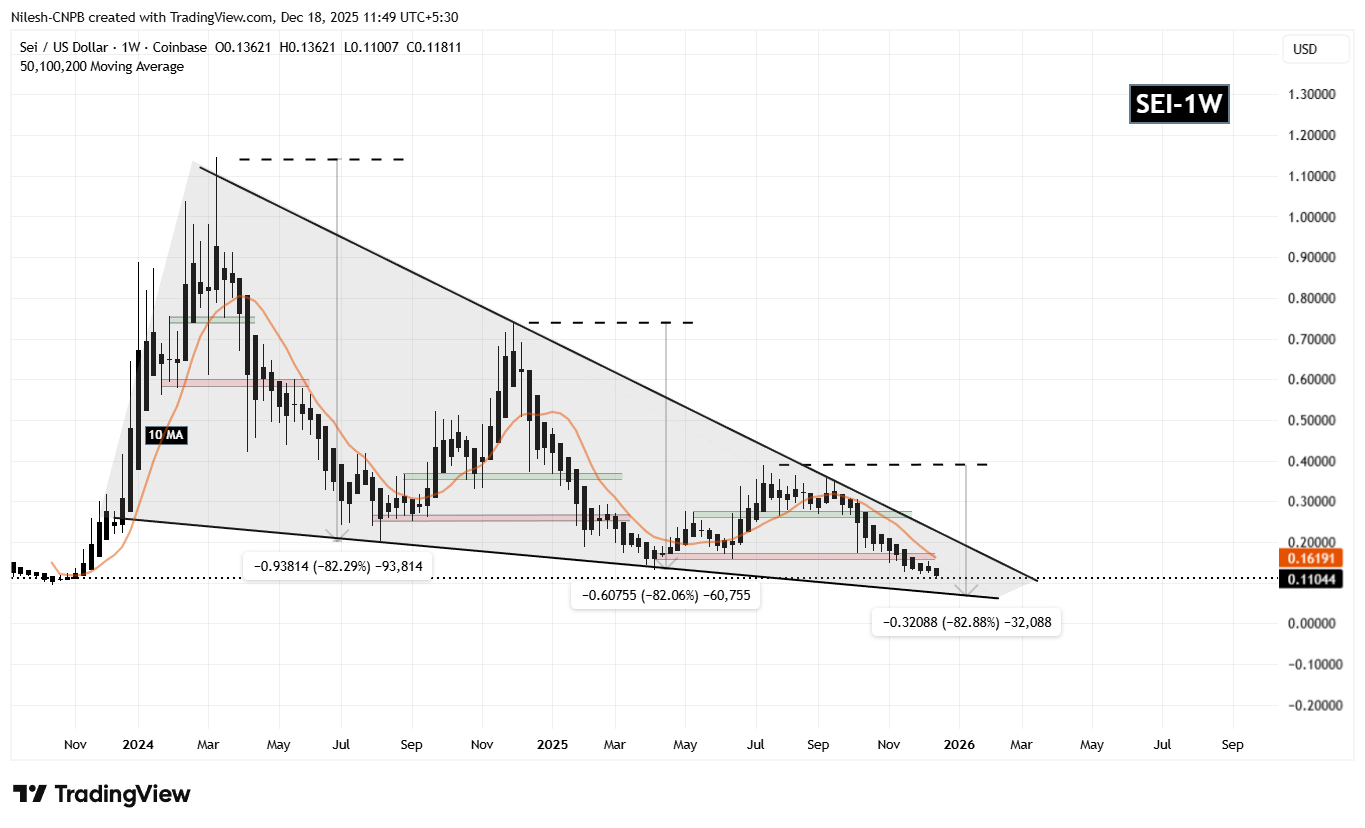
Sei (SEI) To Dip Further? This Key Fractal Setup Suggest Potential Downside Move!
GameFi或將在加密市場下一輪週期中扮演關鍵角色
Trump Family Profits from ‘Crypto Capital’ Push as Conflicts Mount
Bitcoin steady at $86,650; Trump says new Fed Chair will cut rates by 'a lot'
Trending news
MoreCrypto prices
More





