
ETHZilla takes 15% stake in Satschel to expand tokenization

ETHZilla is acquiring a key piece of financial infrastructure with its stake in Satschel, aiming to merge its tokenization expertise with a fully regulated marketplace for private credit and real estate.
- ETHZilla invests $15 million in Satschel to advance regulated tokenization of real-world assets.
- The move follows ETHZilla’s pivot from Ethereum accumulation to becoming an on-chain alternative asset manager.
- The firm positions its Nasdaq-listed stock, ETHZ, as an “alternative asset investment” offering exposure to Ethereum, DeFi yields, and tokenized assets.
According to a press release dated Oct. 23, ETHZilla has made a strategic $15 million investment to acquire a 15% stake in Satschel, Inc., the parent company of the regulated platform Liquidity.io, at a $100 million valuation.
The deal grants ETHZilla exclusive rights to list Ethereum Layer 2 tokens on Liquidity.io’s regulated alternative trading system, a platform that combines an SEC-licensed framework with blockchain technology to tokenize and trade real-world assets.
“We are in the process of combining Liquidity.io’s regulated securitization platform and token marketplace with ETHZilla’s blockchain-native asset management platform to build a next-generation asset manager. Looking ahead, we believe that ETHZilla has a clear path to deliver to investors access to cash flow-generating assets in attractive industry sectors through a seamless on-chain experience,” ETHZilla CEO McAndrew Rudisill said.
Tokenization takes center stage in ETHZilla’s evolving strategy
The move comes just a day after ETHZilla made it clear that Ethereum accumulation is no longer its end game. Instead, it is pivoting to become an “on-chain alternative asset manager,” actively deploying its resources to build tokenization infrastructure.
ETHZilla’s thesis hinges on the transformative potential of converting physical assets into ERC-20 tokens. The company believes this process shatters the traditional barriers of finance. Tokenization unlocks previously illiquid markets like private equity and commercial real estate, enabling fractional ownership and 24/7 trading with near-instant settlement.
This composability, where a tokenized building can interact with a decentralized lending protocol, is something ETHZilla notes is impossible within the siloed systems of traditional finance. They project the on-chain asset market could swell from $4.6 trillion to $100 trillion within five years.
Deeper ambitions
Concurrently, ETHZilla is positioning its Nasdaq-listed stock, ETHZ, as a novel “alternative asset investment” for institutions. The pitch is that it offers a triple play: exposure to Ethereum’s growth as core infrastructure, income from staking and DeFi yield strategies, and now, a direct path to returns from tokenized real-world assets, all wrapped in a GAAP-compliant, audited vehicle.
For retail investors, the firm promises access to asset classes that once required accredited investor status and million-dollar minimums, focusing on “real yield from actual assets generating actual returns.”
This ambitious expansion builds upon a significant treasury. According to data from EthereumTreasuries.net, ETHZilla remains a major corporate holder, currently ranking as the seventh largest with over 100,000 ETH in its reserves. This places it behind giants like BitMine Immersion Technologies, which holds over 3 million ETH .
ETHZilla’s stock jumped 3% following the announcement, according to Yahoo Finance data.
Disclaimer: The content of this article solely reflects the author's opinion and does not represent the platform in any capacity. This article is not intended to serve as a reference for making investment decisions.
You may also like
A decade-long tug-of-war ends: "Crypto Market Structure Bill" sprints to the Senate
At the Blockchain Association Policy Summit, U.S. Senators Gillibrand and Lummis stated that the "Crypto Market Structure Bill" is expected to have its draft released by the end of this week, with revisions and hearings scheduled for next week. The bill aims to establish clear boundaries for digital assets by adopting a classification-based regulatory framework, clearly distinguishing between digital commodities and digital securities, and providing a pathway for exemptions for mature blockchains to ensure that regulation does not stifle technological progress. The bill also requires digital commodity trading platforms to register with the CFTC and establishes a joint advisory committee to prevent regulatory gaps or overlapping oversight. Summary generated by Mars AI. The accuracy and completeness of this summary, generated by the Mars AI model, is still being iteratively updated.

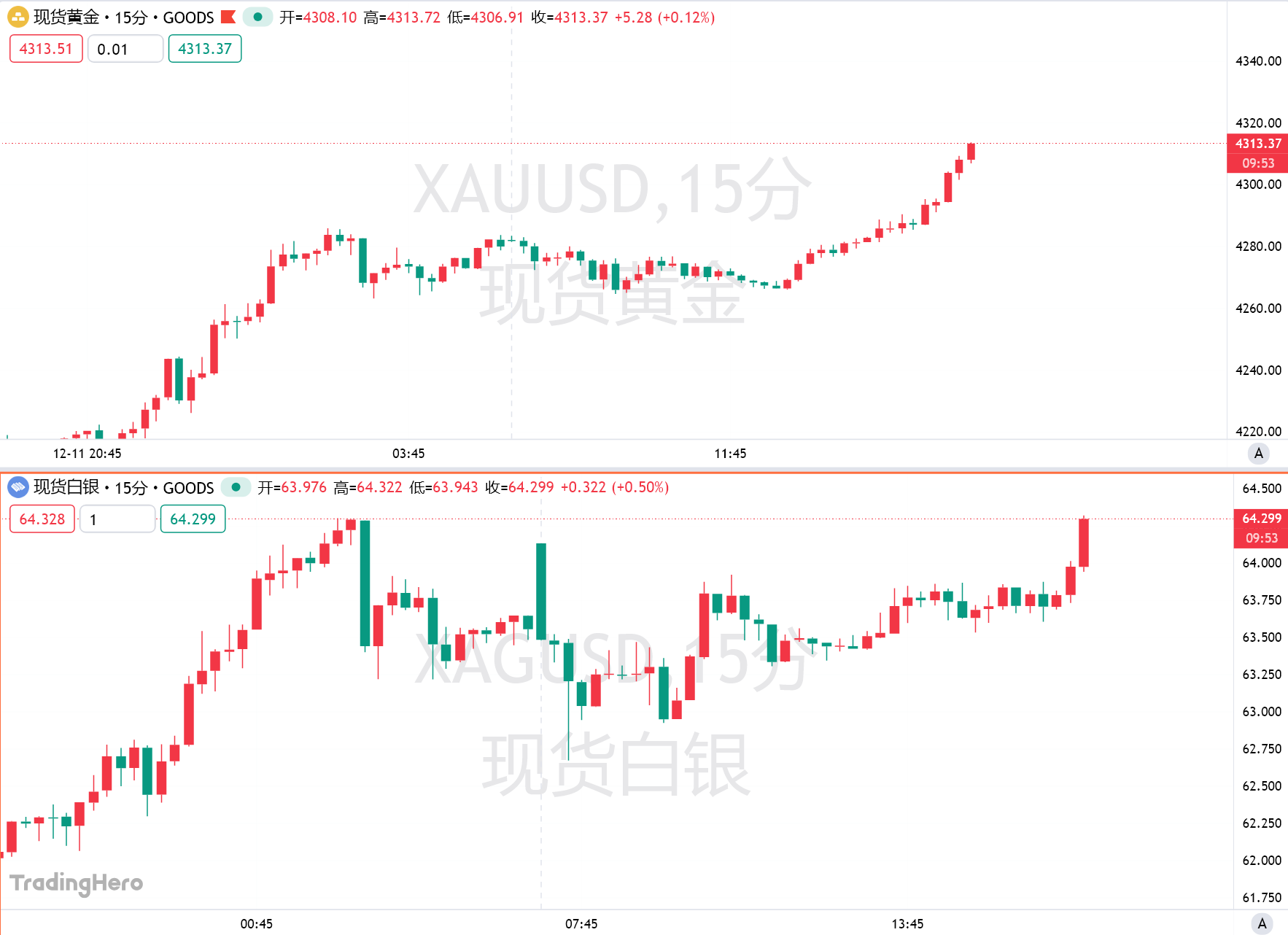
Gold surpasses the $4,310 mark—Is the "bull frenzy" returning?
Boosted by expectations of further easing from the Federal Reserve, gold has risen for four consecutive days. Technical indicators show strong bullish signals, but there remains one more hurdle before reaching a new all-time high.
Trend Research: Why Are We Still Bullish on ETH?
Against the backdrop of relatively accommodative expectations in both China and the US, which suppress asset downside volatility, and with extreme fear and capital sentiment not yet fully recovered, ETH remains in a favorable "buy zone."

Trending news
MoreCrypto prices
More





