
Armstrong Says U.S. Senate Supports Bipartisan Crypto Bill

- US Senate Seeks to Pass Crypto Bill by November
- Coinbase Supports Proposal, But Warns of DeFi Restrictions
- Project may repeat regulatory impact of GENIUS Law
Coinbase CEO Brian Armstrong stated that the cryptocurrency market structure bill has strong bipartisan support in the U.S. Senate and could be passed by Thanksgiving. After participating in a crypto roundtable with Democratic senators on October 22, Armstrong emphasized in an interview with CNBC that "there is strong bipartisan support and willingness to implement this market structure legislation."
According to the executive , the Senate committee aims to finalize the text before the November holiday, aiming to replicate the positive impact that the GENIUS Act, signed into law by President Donald Trump in July, had on the stablecoin market and the global adoption of the tokenized dollar. "This gave the U.S. dollar a chance to truly be exported around the world [...] they want to see something similar happen now with the market structure," Armstrong said.
The proposal is seen as a decisive step toward creating regulatory clarity and attracting institutional investors. However, Armstrong stressed that parts of the text still need to be adjusted, especially those related to DeFi. He criticized a draft circulated among Democratic aides for imposing overly strict rules on decentralized finance, calling it "a bad proposal" that could stifle innovation and jeopardize U.S. leadership in the sector.
After the Senate meetings, Armstrong clarified that the more restrictive draft is not considered representative of lawmakers' intentions and reinforced that regulation should focus on centralized custodians and exchanges, not open-source protocols.
Coinbase has expressed general support for the market framework proposal, describing it as essential for defining clear boundaries between the SEC and CFTC and establishing formal categories of digital assets. In previous statements, the exchange has argued that the legislation will bring predictability to the industry, encouraging innovation, liquidity, and institutional adoption.
Armstrong concluded by saying he was optimistic about the committee's vote in November, signaling that both the House and Senate "can unify their texts and get them to the president's desk soon."
Disclaimer: The content of this article solely reflects the author's opinion and does not represent the platform in any capacity. This article is not intended to serve as a reference for making investment decisions.
You may also like
"Validator's Pendle" Pye raises $5 million, enabling SOL staking yields to be tokenized
There are truly no creative bottlenecks in the financialization of Web3.

DiDi has become a digital banking giant in Latin America
DiDi has successfully transformed into a digital banking giant in Latin America by addressing the lack of local financial infrastructure, building an independent payment and credit system, and achieving a leap from a ride-hailing platform to a financial powerhouse. Summary generated by Mars AI. This summary was produced by the Mars AI model, and its accuracy and completeness are still being iteratively improved.

Fed rate cuts in conflict, but Bitcoin's "fragile zone" keeps BTC below $100,000
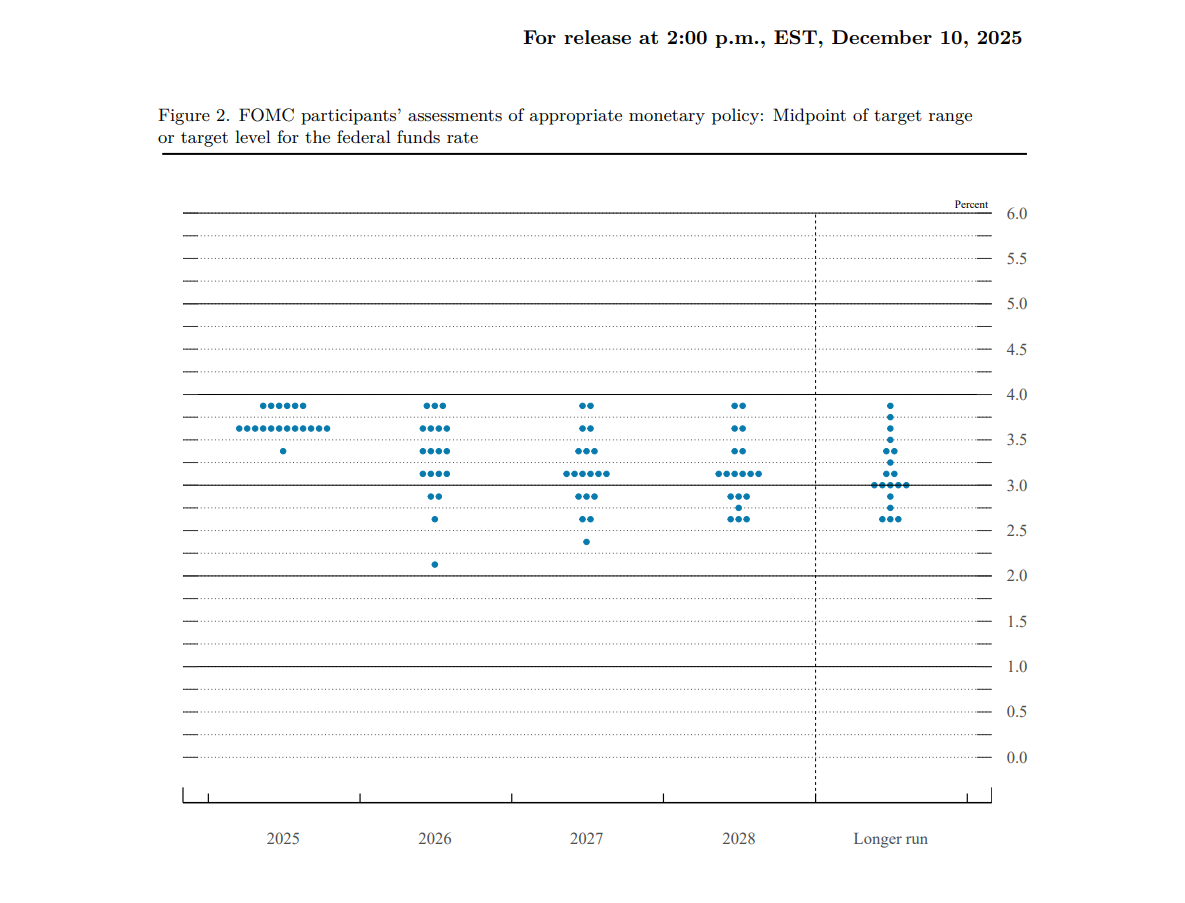
The Federal Reserve cut interest rates by 25 basis points, but the market interpreted the move as hawkish. Bitcoin is constrained by a structurally fragile range, making it difficult for the price to break through $100,000. Summary generated by Mars AI This summary was generated by the Mars AI model, and the accuracy and completeness of its content are still being iteratively updated.

Full text of the Federal Reserve decision: 25 basis point rate cut, purchase of $4 billion in Treasury bills within 30 days
The Federal Reserve cut interest rates by 25 basis points with a 9-3 vote. Two members supported keeping rates unchanged, while one supported a 50 basis point cut. In addition, the Federal Reserve has restarted bond purchases and will buy $40 billion in Treasury bills within 30 days to maintain adequate reserve supply.
Trending news
MoreCrypto prices
More





