
YFI Drops 2.52% Over 7 Days as Market Fluctuates
- YFI fell 0.23% in 24 hours, with a 2.52% 7-day decline, indicating a prolonged bearish phase driven by market dynamics and investor sentiment. - Analysts predict the downward trend may persist amid macroeconomic uncertainties and lack of positive catalysts, worsening selling pressure and confidence. - Technical indicators like RSI and MACD reinforce the bearish outlook, though oversold levels may not signal a reversal in volatile assets. - A backtest is being conducted to evaluate historical recovery pat
As of October 25, 2025,
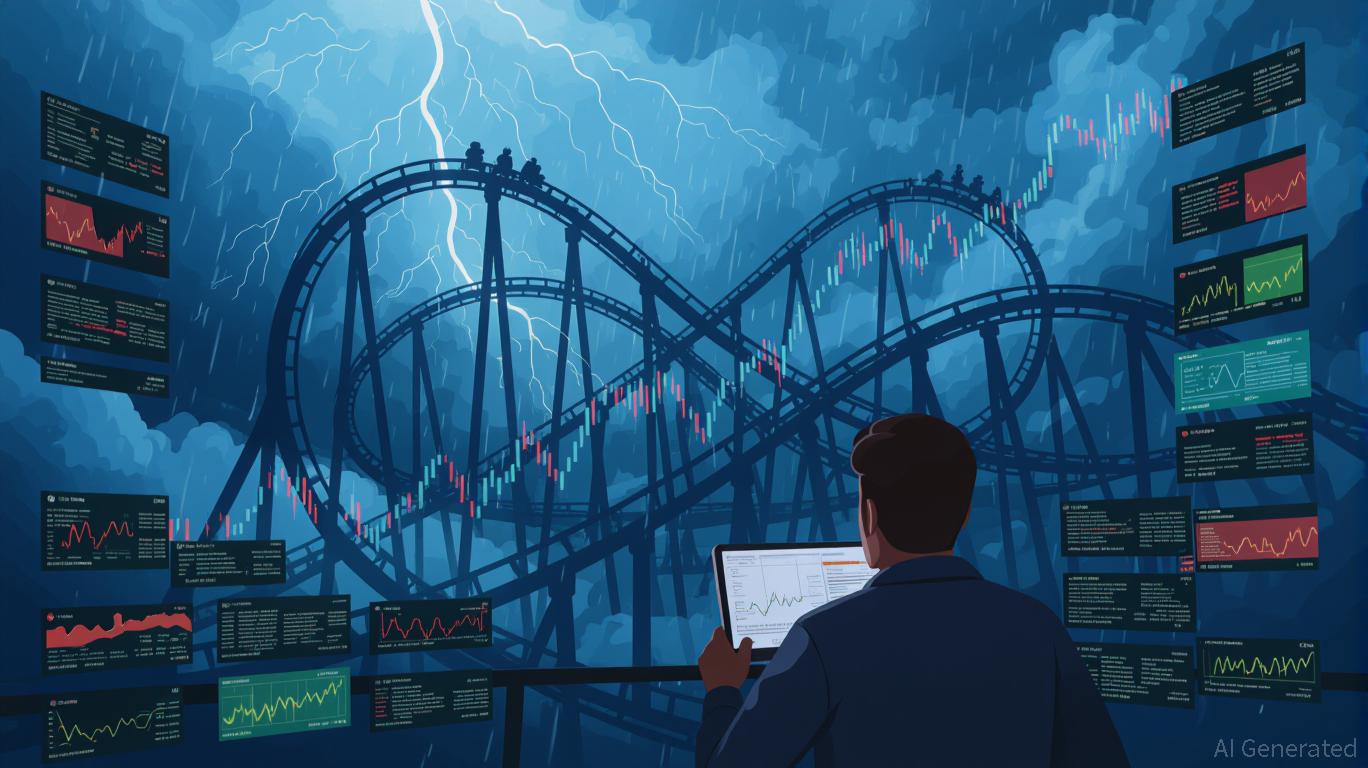
YFI’s latest trajectory mirrors the general market environment, where extended downturns are frequently linked to overarching issues like economic pressures or regulatory changes. The lack of immediate positive news—such as significant strategic moves or encouraging economic indicators—has contributed to investor wariness. The pronounced decline over the past month, which has intensified since the beginning of October, points to heightened selling activity and waning confidence. Although the 24-hour loss is relatively minor, it may be a sign that the overall downward pattern is likely to persist rather than reverse.
Several technical signals currently support the ongoing bearish sentiment. Short-term moving averages remain below their longer-term counterparts, indicating continued downward pressure. The Relative Strength Index (RSI) has fallen into oversold levels, which could suggest a short-lived rebound. However, this indicator alone does not guarantee a turnaround, as oversold conditions in volatile assets can last for some time without a recovery. The MACD has also shifted into negative territory, further confirming the pessimistic outlook.
Backtest Hypothesis
Considering the recent price action and technical signals, a backtest is being planned to explore the potential for either a mean-reversion or trend-following approach based on YFI’s price behavior. The backtest will investigate whether days with a 10% or greater drop from the previous close (termed “-10% down-days”) typically lead to a rebound or continued losses. By analyzing how prices behave after such significant declines, the strategy aims to uncover any repeatable patterns that could inform present trading tactics.
To carry out this backtest, detailed historical price records are necessary. The specific ticker and trading platform for YFI must be confirmed—options include “YFI-USD” or “YFIUSDT” on leading exchanges like Coinbase, Binance, or Kraken. The analysis will cover daily price movements from January 1, 2022, up to now, focusing on identifying down-days and tracking subsequent performance over various periods (such as 3, 7, and 14 days). The findings will feature graphical representations of price reactions to down-days and statistical breakdowns of average and median results.
Disclaimer: The content of this article solely reflects the author's opinion and does not represent the platform in any capacity. This article is not intended to serve as a reference for making investment decisions.
You may also like
The CFTC-Authorized Clean Energy Marketplace: An Innovative Gateway for Institutional Investors
- REsurety’s CleanTrade platform, CFTC-approved as a SEF, addresses clean energy market illiquidity and opacity by centralizing VPPAs, PPAs, and RECs. - Within two months of its 2025 launch, it attracted $16B in notional value, enabling institutional investors to streamline transactions and reduce counterparty risk. - By aggregating market data and automating compliance, CleanTrade enhances transparency, aligning with ESG priorities and regulatory certainty for institutional portfolios. - It democratizes a

SOL Drops 50%: Is This a Healthy Market Adjustment or the Onset of a Major Sell-Off?
- Solana's 50% price drop sparks debate over whether it signals a bear market correction or deeper structural selloff. - On-chain metrics show liquidity contraction and reduced exchange supply, but ETF inflows and validator activity suggest structural resilience. - Corporate transfers and the Upbit hack highlight volatility risks, while Solana's alignment with Bitcoin's trend underscores macroeconomic influence. - Key watchpoints include liquidity recovery timelines, ETF inflow sustainability, and potentia

Key Bitcoin price levels to watch ahead of 2025’s last FOMC meeting

Navigating the Fluctuations of Bitcoin in Late 2025: Adaptive Risk Management Approaches for an Evolving Cryptocurrency Landscape
- Bitcoin's November 2025 price swung between $80,553 and $91,000, eroding 25% of value amid macroeconomic and regulatory pressures. - Volatility stemmed from technical breakdowns, leveraged liquidations, and market makers' gamma exposure shifts below $85,000. - U.S. GENIUS Act and EU MiCA framework provided regulatory clarity, boosting institutional adoption through compliant ETPs and stablecoins. - Investors adopted risk-rebalance strategies: options hedging, macro-adjusted DCA, and diversified crypto tr
Trending news
MoreCrypto prices
More





