
Assessing COAI's Significant Price Decline: Should Investors Consider Buying or Exercise Caution?
- ChainOpera AI (COAI) token plummeted 99% from $44.90 to $0.52 in 2025, sparking debates over market fundamentals and governance risks. - Synchronized trading by 60 wallets and governance failures at parent company C3.ai highlighted manipulation risks and operational instability. - Macroeconomic pressures, regulatory ambiguity, and capital shifts to stable AI equities exacerbated COAI's collapse amid broader sector uncertainty. - Analysts caution COAI's structural weaknesses—concentrated ownership and unc
COAI Token Crash: Analysis and Implications
The dramatic downfall of ChainOpera AI (COAI) has ignited widespread discussion among market participants. Once trading at $44.90 in October 2025, the token plummeted to just $0.52 by December, erasing more than 99% of its value. This steep decline has prompted serious concerns regarding the project's underlying stability, management practices, and the broader market environment. This article explores the factors behind COAI's rapid descent, including short-term market turbulence, economic headwinds, and inherent structural vulnerabilities, to assess whether the token is undervalued or if its collapse signals deeper systemic issues.
Extreme Price Swings and Shifting Market Mood
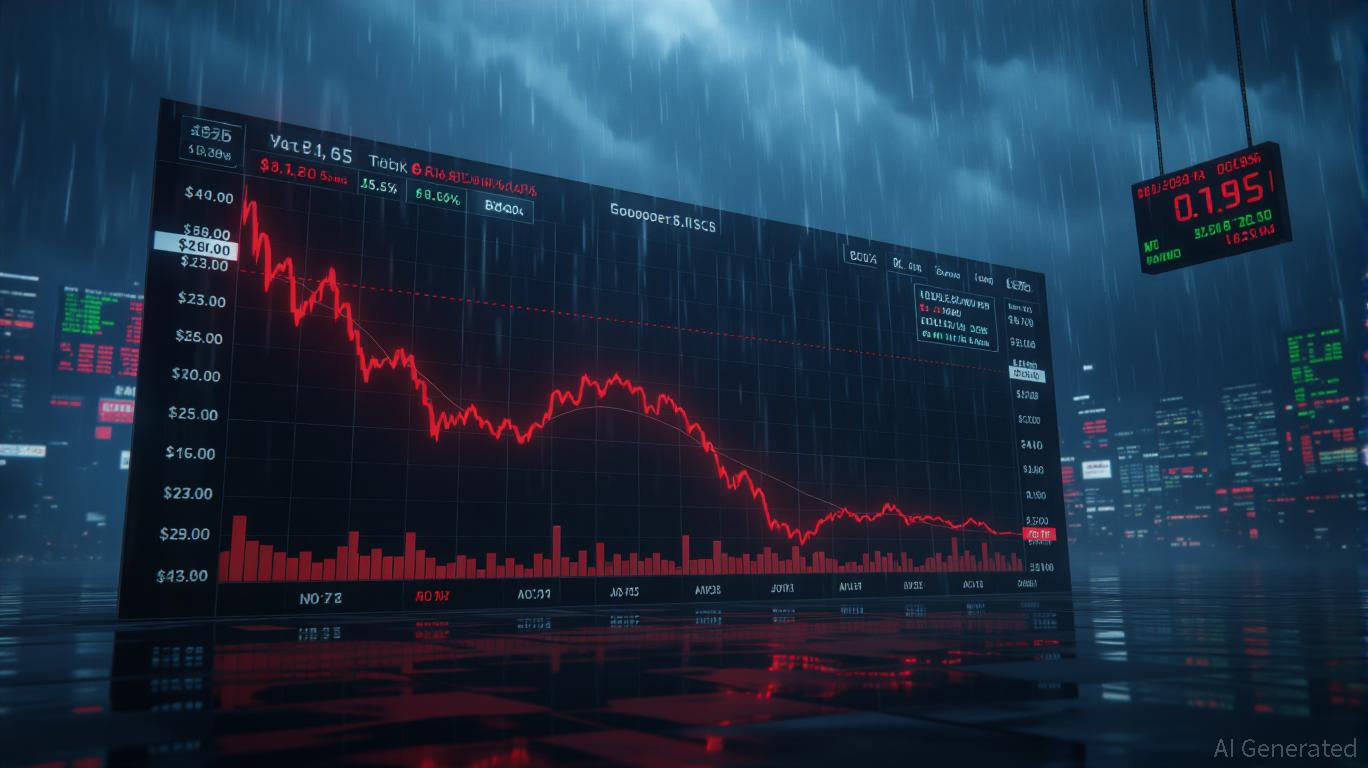
COAI's value did not erode gradually; instead, it suffered a swift and severe crash. In a single day in October 2025, the price tumbled from $44.90 to $14, followed by an additional 88% drop by December, highlighting the token's extraordinary volatility. Experts have pointed to coordinated trading activity among 60 wallets as a possible sign of market manipulation. The mood among investors soured further after the Federal Reserve reduced interest rates by 25 basis points in the third quarter of 2025, triggering a classic "buy the rumor, sell the news" scenario that intensified short-term instability. By November, COAI had lost 96.72% of its value in just 30 days, reflecting a widespread loss of faith in the project's recovery prospects.
Core Weaknesses and Governance Challenges
Although COAI's token model was designed to encourage collaboration through its "Proof of Intelligence" protocol and by allocating 58.5% of tokens to the community, major flaws have emerged. Notably, 88% of the token supply is held by only ten wallets, raising serious concerns about liquidity and the potential for price manipulation—parallels can be drawn to the systemic risks seen during the 2008 financial crisis. Further undermining confidence, COAI's parent company, C3.ai, reported a $116.8 million loss in the first quarter of 2025, faced leadership instability, and became the subject of a class-action lawsuit. Additionally, the lack of clear regulatory guidance for AI tokens, following the failure of the CLARITY Act, has left the sector in a state of uncertainty, discouraging institutional investment.
Economic Headwinds and Shifting Investment Trends
Wider economic conditions have further exacerbated COAI's troubles. Delays in the release of key economic data due to U.S. government shutdowns created policy ambiguity and complicated expectations for future Federal Reserve actions. Although inflation eased to 2.1% in October, investor appetite for risk remained subdued. At the same time, capital flowed toward established AI companies like Microsoft and Nvidia, which offered stronger financial results and clearer regulatory standing. Meanwhile, global investment in clean energy soared to $3.3 trillion in 2025, drawing funds away from speculative AI tokens. These developments highlight a market increasingly focused on transparency and sustainable value rather than speculative hype.
Evaluating Risks and the Path to Recovery
Despite the bleak short-term picture, some observers believe COAI may be trading below its intrinsic value. C3.ai's business model, which derives 84% of its revenue from recurring subscriptions, suggests there could be long-term potential. However, any recovery will depend on resolving governance issues, achieving regulatory clarity, and improving liquidity. SK Group Chairman Chey Tae-won has recognized AI's revolutionary potential but cautions against inflated valuations, predicting a market correction if fundamentals do not catch up. The token's four-year vesting schedule could align with broader adoption, offering a potential path to stabilization if the ecosystem can regain trust.
Final Thoughts: Warning Signs and Conditional Prospects
COAI's dramatic fall serves as a warning rather than an immediate investment opportunity. While the project's ambition to build a decentralized AI platform is noteworthy, its concentrated ownership, governance shortcomings, and regulatory uncertainty present significant risks. Prospective investors must carefully consider the chances of a turnaround against the possibility of further decline. For COAI to recover, it must implement meaningful governance reforms, ensure transparent token distribution, and adapt to changing regulatory landscapes. Until these issues are addressed, the token remains a highly speculative asset, suitable only for those with a strong grasp of the sector's risks and a high tolerance for uncertainty.
Disclaimer: The content of this article solely reflects the author's opinion and does not represent the platform in any capacity. This article is not intended to serve as a reference for making investment decisions.
You may also like
The Revival of Industrial Properties in Webster, NY, Driven by Major Infrastructure Improvements and the Transformation of the Xerox Campus
- Webster , NY, is revitalizing industrial real estate through infrastructure upgrades and Xerox campus redevelopment, creating a high-tech industrial hub. - A $9.8M FAST NY grant transformed a 300-acre brownfield, reducing vacancy rates to 2% and attracting $650M in projects like fairlife® dairy. - EPA-approved remediation and a solar garden project highlight sustainability efforts, aligning with ESG goals and boosting investor confidence. - Statewide infrastructure funding and tax incentives are projecte
XRP Mirrors 2017 and 2020 Patterns as 2,605-Day Setup Nears Apex

Altcoin Market at Critical Support: TOTAL2 Defends Key Bull-Market Level — 5 Coins Primed for Major Upside

PEPE Poised for Momentum Gains at $0.0545 Amid Tight Market Range

Trending news
MoreCrypto prices
More





