
TWT's Updated Tokenomics Framework: Transforming DeFi Rewards and Enhancing Capital Utilization
- Trust Wallet Token (TWT) redefines DeFi tokenomics in 2025 with utility-driven incentives, deflationary mechanisms, and cross-chain functionality. - TWT enables gas fee payments, premium service access, and staking rewards, linking token value directly to ecosystem engagement. - A 40% supply burn in 2020 and organic token locking create scarcity, while interoperability reduces multi-asset dependency for users. - Unlike speculative models, TWT's demand grows through usage rather than trading, positioning
The Transformation of DeFi: Trust Wallet Token’s Innovative Tokenomics in 2025
Decentralized finance (DeFi) has continually evolved, striving to connect token value with genuine user participation rather than mere speculation. In 2025, Trust Wallet Token (TWT) has become a standout example of this shift, unveiling a revamped tokenomics framework that emphasizes practical use, scarcity, and efficient capital deployment. Through the introduction of tiered incentives, deflationary tactics, and cross-chain compatibility, TWT’s latest approach not only tackles persistent DeFi challenges but also sets a new standard for sustainable token models that encourage widespread adoption.
Utility-Driven Demand: Redefining Token Value
TWT’s 2025 update marks a decisive move away from speculative rewards, focusing instead on real utility to drive demand. Within the Trust Wallet ecosystem, TWT now functions as a versatile asset—users can pay gas fees, unlock premium features such as Trust Premium, and receive loyalty incentives by staking or accumulating tokens, as outlined in the TWT litepaper. The Trust Premium rewards structure, for example, enables holders or stakers to benefit from lower swap fees and early access to new features like Trust Alpha. This gamified rewards system forges a direct connection between token value and ecosystem involvement, encouraging users to engage for the long term rather than chase short-term gains.
Adding to this, TWT’s deflationary design further reinforces its value proposition. In 2020, a major burn event removed 88.9 billion TWT—amounting to 40% of the total supply—thereby increasing scarcity and demonstrating the project’s dedication to value preservation. Unlike conventional token burns that often exclude user involvement, TWT’s ongoing burn strategy is paired with incentives for users to lock up their tokens, which naturally reduces the circulating supply over time.
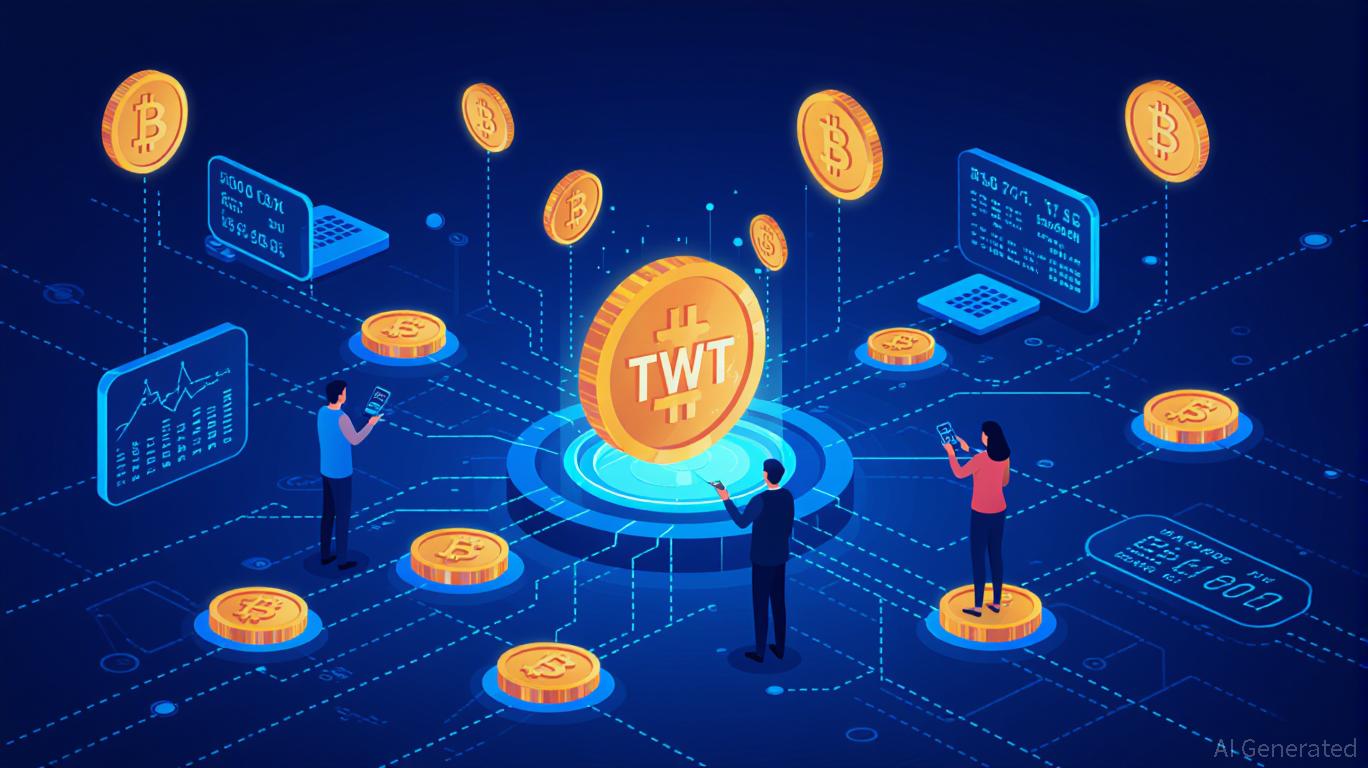
This dual approach—combining deflationary measures with utility-based demand—positions TWT as a token with inherent worth, a crucial quality as DeFi projects increasingly focus on tangible use cases rather than hype, as highlighted by DeFi education resources.
Enhancing Capital Efficiency and Incentives in DeFi
TWT’s tokenomics also address the need for capital efficiency, a fundamental aspect of DeFi’s appeal. By enabling users to stake TWT as collateral in DeFi protocols or use it for gas payments through features like FlexGas, the token minimizes the necessity for users to manage multiple assets for different functions. This seamless interoperability not only makes DeFi more accessible to newcomers but also boosts TWT’s liquidity, as its utility extends across both on-chain and off-chain activities.
When compared to other DeFi tokens, TWT’s strategy stands out. For instance, Hyperliquid’s HYPE token employs automated buybacks funded by trading fees to decrease supply and align incentives, but this model relies heavily on a steady stream of fee revenue. In contrast, TWT’s emphasis on organic ecosystem growth—fueled by user retention and cross-chain expansion—creates a more robust and adaptable economic structure. By anchoring token value to actual ecosystem usage rather than trading volume alone, TWT is better equipped to weather market fluctuations and liquidity shocks.
Impacts on DeFi Growth and Adoption
TWT’s approach directly addresses two major hurdles in DeFi: maintaining liquidity and fostering user loyalty. Analysts forecast that TWT could reach a value of $5.13 by 2025, propelled by its deflationary supply and utility-focused incentives. However, the token’s long-term success will depend on its ability to broaden its use cases. Integrating TWT into cross-chain liquidity pools or real-world asset (RWA) protocols could further diversify its sources of demand, following the example of projects like EigenLayer and Ondo.
Nonetheless, certain challenges persist. Before the 2020 burn, over 40% of TWT’s supply was already circulating, which could lead to liquidity issues if demand surpasses available supply. To address this, Trust Wallet may need to continue innovating—potentially by introducing yield-generating TWT derivatives or expanding its network of partners. The token’s future will also be shaped by its adaptability to regulatory changes and technological advancements, such as the emergence of modular blockchains and AI-powered DeFi analytics.
Conclusion: Setting the Standard for Sustainable Tokenomics
TWT’s 2025 tokenomics overhaul marks a significant advance toward lasting DeFi incentives. By focusing on practical utility, scarcity, and active user participation, TWT offers a model for how tokens can progress beyond speculative trends to become essential components of decentralized ecosystems. While challenges like liquidity constraints remain, the emphasis on organic growth and cross-chain integration positions TWT as a formidable contender in the next wave of DeFi innovation. For investors, the message is clear: tokens that tie value creation to user engagement, rather than market speculation, are poised to lead the DeFi sector in the coming years.
Disclaimer: The content of this article solely reflects the author's opinion and does not represent the platform in any capacity. This article is not intended to serve as a reference for making investment decisions.
You may also like
Vitalik Buterin's Latest ZK-Focused Statement and What It Means for Blockchain Infrastructure
- Vitalik Buterin advocates integrating ZK proofs with MPC, FHE, and TEE to enhance blockchain privacy and scalability. - GKR protocol reduces ZK verification costs 15-fold, enabling 43,000 TPS on platforms like ZKsync. - Ethereum's "Lean Ethereum" roadmap prioritizes ZK-EVMs and gas optimizations to compete with ZK-native layer 2s. - ZK ecosystem secures $28B TVL in 2025, with institutional adoption and $725M+ VC funding driving growth. - ZKP market projected to grow 22.1% CAGR to $7.59B by 2033, but face

State Street & Galaxy Launch Tokenized Liquidity Fund
State Street and Galaxy Digital unveil a tokenized private liquidity fund using PYUSD, launching on Solana in 2026.How SWEEP Works with PYUSDSolana Chosen as First Chain for Launch

Bitcoin ETFs See $224M Inflows, Led by BlackRock
U.S. spot Bitcoin ETFs gained $224M on Dec 10, with BlackRock's IBIT leading at $193M. Ethereum, Solana, and XRP ETFs also saw gains.Ethereum and Altcoin ETFs Also Gaining MomentumWhat This Means for Crypto Investors

Stripe Acquires Valora Team to Boost Crypto Plans
Stripe acquires the Valora team to strengthen its crypto capabilities, while Valora wallet remains under cLabs.What This Means for Stripe and Crypto AdoptionValora Wallet Continues as Part of cLabs

Trending news
MoreCrypto prices
More





