
Bank of America Steps Into a New Era as Bitcoin Becomes Financial Collateral

The crypto industry just entered a bold new phase as Bank of America moves deeper into digital asset finance. The bank now issues Bitcoin backed credit, marking one of the most significant steps by a major US financial institution toward embracing crypto. The shift signals stronger confidence in Bitcoin’s evolving role as secure, high-value collateral. It also marks a turning point for institutions that once stayed away from crypto but now chase its growing influence.
The move sparks interest across the global crypto community. Traders, institutions, and everyday investors now watch closely as traditional finance accepts Bitcoin in new ways. The idea of using Bitcoin to unlock credit appeals to holders who want liquidity without selling their assets. It also creates new activity in the broader crypto lending market, which grows quickly as demand rises. Bank of America now positions itself as a leader in this new financial cycle.
This development also comes at a time when more users explore asset-backed lending. Investors seek stable credit options that keep long-term exposure to Bitcoin. With Bitcoin backed credit, Bank of America sets a clear message. Crypto is now part of mainstream banking. The move strengthens the bridge between legacy finance and digital assets as demand for flexible credit expands at a fast pace.
BULLISH: 🇺🇸 Bank Of America is now issuing credit against Bitcoin! pic.twitter.com/fzyHRj9Ja1
— Coinvo (@Coinvo) December 11, 2025
Why Bank of America Turns to Bitcoin for Credit Services
Bank of America sees strong demand for crypto-linked financial tools. Many clients hold Bitcoin as a long-term asset and prefer not to sell during market growth. Bitcoin collateral loans allow them to unlock funds while still holding exposure to future gains. This model attracts many high-net-worth investors and businesses that manage crypto portfolios.
The bank also responds to trends in the crypto lending market, which now sees rapid growth. Many fintech platforms already offer similar services, but clients prefer regulated banks for large transactions. Bank of America capitalises on this trust. It provides security, compliance, and efficient settlement that many users expect when handling high-value collateral.
How Bitcoin Collateral Loans Improve Liquidity and Financial Flexibility
The introduction of Bitcoin collateral loans creates a new layer of financial flexibility. Investors can borrow funds and still keep long-term exposure to Bitcoin’s market movement. This approach works well in a technology-driven investment era. Users want fresh financial tools that adapt to rapid market changes.
These loans also protect investors during uncertain price movements. They avoid forced selling and allow strategic decisions. As the crypto lending market expands, more institutions adopt similar practices. Bank of America now enters with a strong advantage due to its size and global reach.
The banking system benefits from higher-quality collateral. Bitcoin stays transparent, verifiable, and easy to track. That helps lenders manage risks and maintain strong credit structures. With Bitcoin backed credit, the bank boosts liquidity in a safe and modern way for its clients.
A Major Step That Signals a New Phase for Crypto Finance
Bank of America’s updated services confirm a major shift in global finance. Crypto now influences everyday banking processes at a deeper level. The launch of Bitcoin collateral loans opens new paths for liquidity, investment, and credit growth. It also strengthens the entire crypto lending market, which gains structure and maturity through institutional participation.
This change shows how digital assets reshape credit systems. Investors gain stronger control of their funds without losing long-term positions. Banks gain new clients and build modern financial products. And the market gains confidence as Bitcoin proves its role as a powerful financial tool.
Disclaimer: The content of this article solely reflects the author's opinion and does not represent the platform in any capacity. This article is not intended to serve as a reference for making investment decisions.
You may also like
Momentum ETF (MMT) and the Intersection of Retail Hype and Institutional Backing in November 2025
- Momentum ETF (MMT) surged 1,330% in Nov 2025 due to retail frenzy and institutional validation. - Binance airdrop and Sui-based perpetual futures DEX boosted retail demand through liquidity and yield incentives. - $10M HashKey funding and $600M TVL validated MMT's institutional credibility under CLARITY Act/MiCA 2.0 frameworks. - ve(3,3) governance model and token buybacks created flywheel effects, aligning retail/institutional incentives. - Q1 2026 Token Generation Lab aims to expand Sui ecosystem proje

Fed Cuts Rates, Announces $40B T-Bill Program, Crypto Dips
U.S. Marine Policy and Blue Economy Prospects: Key Infrastructure and Geostrategic Roles in Oceanic Commerce
- U.S. oceans policy balances geopolitical strategy, deep-sea tech investments, and UNCLOS ratification challenges to secure maritime influence. - Executive actions accelerate seabed mineral extraction while facing environmental criticism and legal risks from bypassing international seabed authority rules. - Offshore energy partnerships with Australia, Japan, and Saudi Arabia aim to diversify supply chains but face geopolitical tensions in chokepoints like the Red Sea. - Maritime security contracts expand

Aster DEX's On-Chain Momentum: Signaling the Future of DeFi
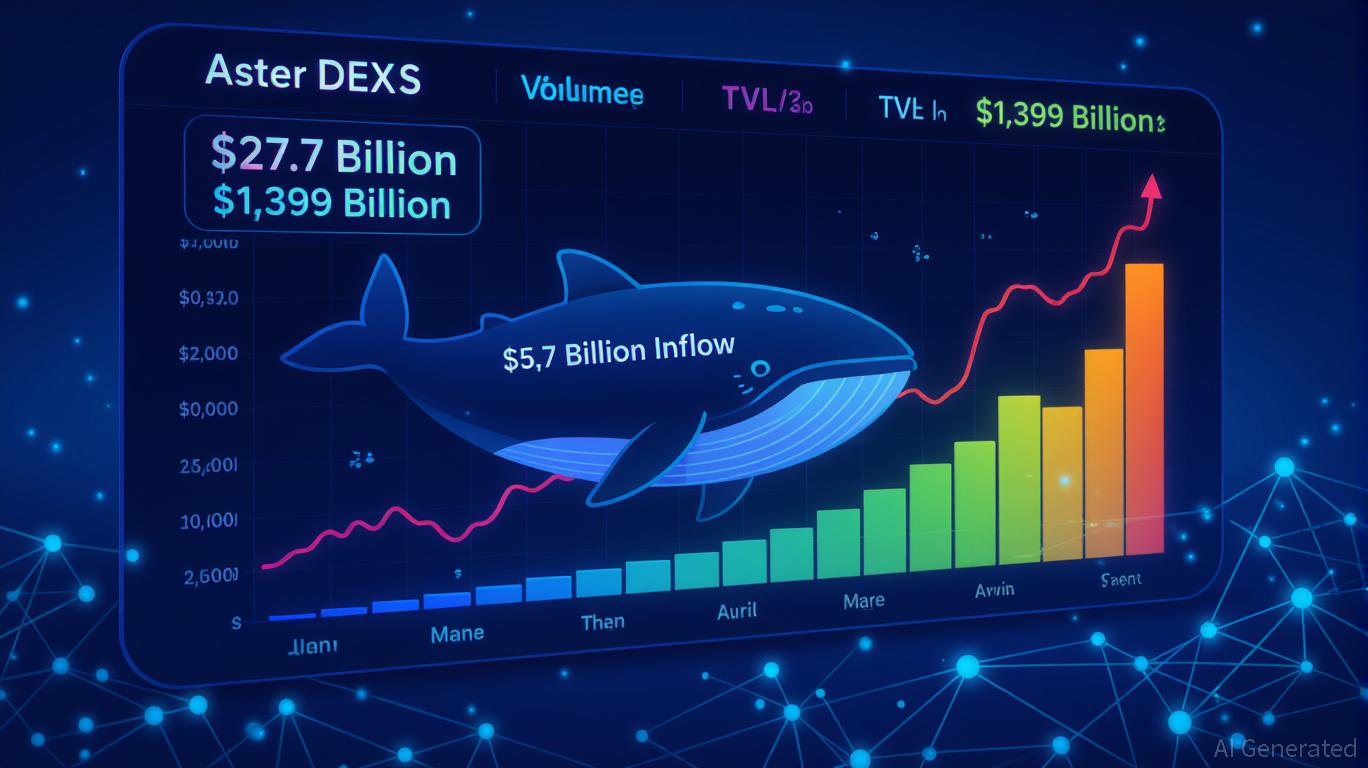
- Aster DEX reported $27.7B daily volume and $1.399B TVL in Q3 2025, outpacing DeFi benchmarks with 2M users. - Institutional whale activity, including CZ's $2M ASTER purchase, drove $5.7B inflows and 800% volume spikes. - Hybrid AMM-CEX model and ZKP privacy tech enabled 40.2% TVL growth, 77% private transactions, and 19.3% perpetual DEX market share. - ASTER's margin trading upgrades and Stage 4 airdrops fueled 30% price surges, while Aster Chain's 2026 launch will integrate privacy-preserving ZKPs. - On
Trending news
MoreCrypto prices
More





