As the crypto market grinds sideways, the question for investors is no longer just “what will pump next?” but “where can capital actually work?” Top altcoins remain range-bound, with Ethereum trading around $2,900, yet staking rewards remain capped at 3%, leaving large sums of capital idle while market volatility dilutes potential gains.
Meanwhile, early-stage utility tokens like Digitap ($TAP) are introducing yield structures designed for investors who want returns even when charts stay red. In this environment, yield, not price speculation, is a significant driver of portfolio strategy for investors seeking smarter ways to deploy capital.
Table of Contents
- Digitap Overview: Yield Mechanisms and Utility Features
- Ethereum Staking: Large-Cap Network With Lower Passive Yield
- USDT Staking: Stability With Modest Returns
- Comparing Crypto Yield Structures Across Asset Types
- Digitap’s Roadmap Transparency and Market Context
- Yield-Focused Crypto Strategies in Sideways Markets
- Disclaimer
Digitap Overview: Yield Mechanisms and Utility Features
Digitap’s yield proposition goes beyond conventional staking by introducing multiple yield structures alongside real-world banking utility.
Yield Mechanisms Within the Digitap Ecosystem

The platform does not require minimum staking thresholds or validator infrastructure, lowering participation barriers compared to traditional proof-of-stake networks. By combining staking, cashback, and utility-driven incentives, Digitap emphasizes active participation as part of its yield model.
Ethereum Staking: Large-Cap Network With Lower Passive Yield
Ethereum, the second-largest blockchain by market capitalization, remains a widely adopted network with strong security and infrastructure. However, despite these strengths, ETH currently offers limited opportunities for passive income relative to higher-yield alternatives.
Staking ETH yields approximately 3%, a level that has declined over time as validator participation has increased. Native staking also requires a minimum of 32 ETH and carries potential risks related to validator performance and network conditions.
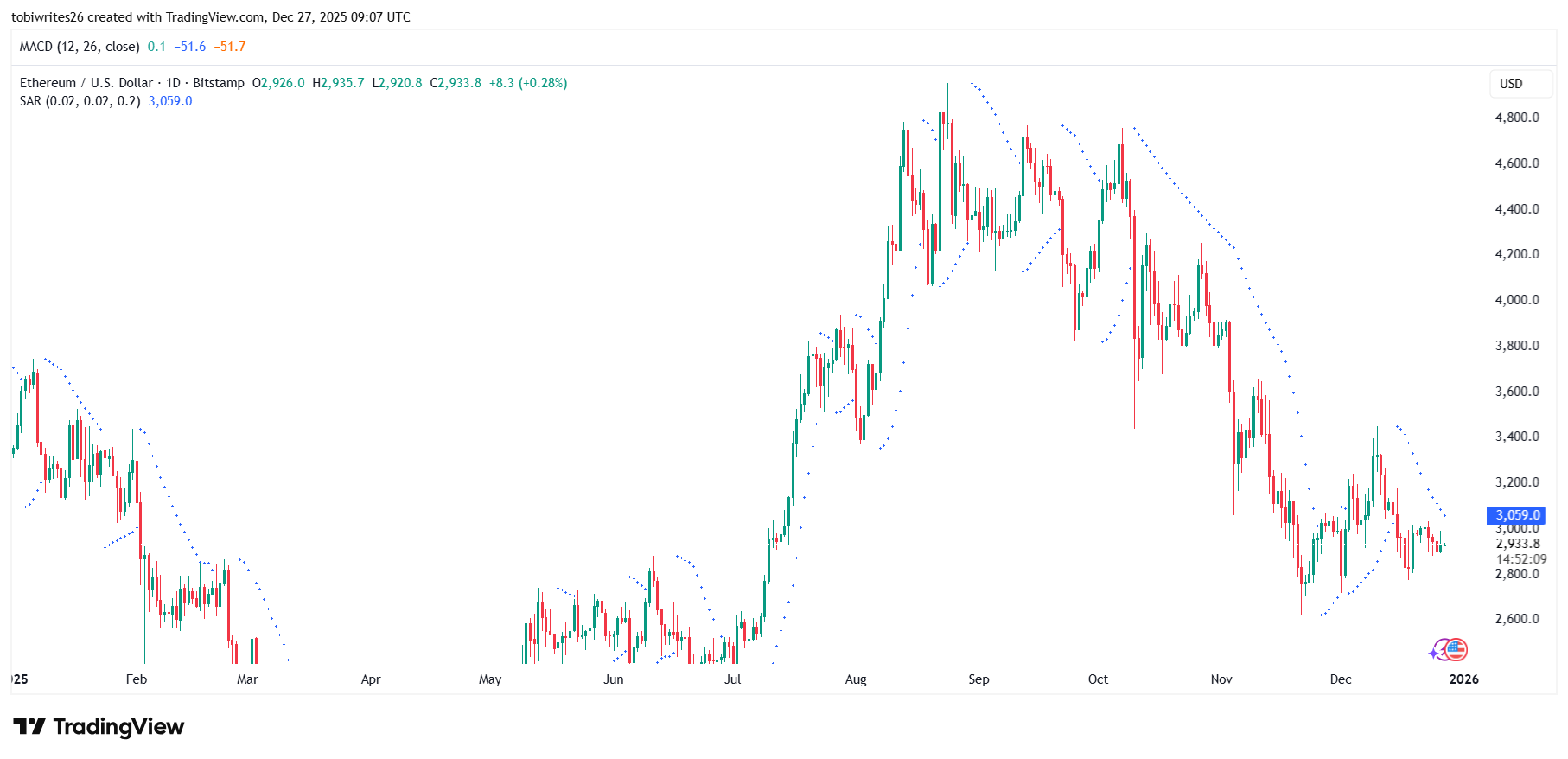
Recent price action further complicates yield considerations. ETH has struggled to break above the $3,000 resistance level and continues to trade near $2,900, limiting upside potential during periods of consolidation.
For investors primarily focused on passive yield, ETH staking may offer limited compounding potential under current conditions.
USDT Staking: Stability With Modest Returns
Tether (USDT), one of the largest stablecoins by market capitalization, provides a predictable way to earn passive income through staking or interest-bearing accounts. Typical yields range between 4% and 12% APY, depending on platform and lock-up terms.
The primary advantage of USDT staking is price stability, as the token remains pegged to the US dollar. This appeals to more conservative participants seeking reduced volatility exposure.

However, lower yields may reduce overall return potential, particularly when compared with higher-yield utility-token ecosystems that integrate multiple reward mechanisms.
Comparing Crypto Yield Structures Across Asset Types
Digitap stands out from other high-yield platforms by combining multiple earning mechanisms, including aking, cashback, and governance rewards within a single ecosystem, while also delivering functional financial tools for everyday use. Unlike many high-yield platforms, it avoids complex setups, risky smart contracts, and limited real-world utility.
Rewards on Digitap are highly predictable, with incentives structured to benefit early adopters. Unlike networks such as Ethereum, where staking yields decrease as participation grows, Digitap aggressively rewards contributors during the early adoption phases, providing clarity and confidence for investors.
Digitap removes the barrier to access. Investors are not required to meet high minimum thresholds or manage validator infrastructure; rather, as long as they hold $TAP, they can access high-yield opportunities without any technical complexity. This accessibility encourages sustained engagement and maximizes returns while the broader market remains uncertain.
Digitap’s Roadmap Transparency and Market Context
Investor confidence is further reinforced by a transparent growth path. With clear pricing and a predictable transition from initial adoption to open-market exposure, Digitap provides structure, growing demand, and a smooth introduction for yield-focused investors.
Historically, this phase is where liquidity expands, visibility increases, and valuation discovery begins, particularly for utility-driven platforms with live products.
Yield-Focused Crypto Strategies in Sideways Markets
In this current market, investors are increasingly favoring assets with higher yield potential. With large-cap cryptocurrencies like ETH trading within tight ranges and offering limited staking rewards, capital is pivoting toward utility-driven, high-yield protocols.
Digitap aligns perfectly with this trend, offering a platform where returns are generated through active participation rather than short-term price swings. Investors can earn up to 124% APY on staked $TAP, alongside cashback and governance rewards that compound across the ecosystem.

To celebrate the festive season, Digitap is running its ongoing New Year promotion, giving early adopters exclusive bonuses and incentives.
As adoption grows, $TAP stands out as a practical financial layer for both yield and utility-oriented investors heading into 2026.
In extended periods of low volatility, investors often prioritize yield generation over short-term price appreciation. With large-cap assets offering modest staking returns, attention has shifted toward platforms that emphasize utility-driven rewards.
Digitap positions itself within this broader trend by offering staking yields alongside cashback and governance participation, with returns tied to ecosystem activity rather than price movement alone.
Project Resources (For Reference Only)
- Presale:
- Website:
- Social links: