
News
Stay up to date on the latest crypto trends with our expert, in-depth coverage.

- XRP Ledger partners with China's Linklogis to tokenize trade assets, enabling 3–5 second settlements and slashing cross-border costs. - Platform processed RMB 20.7B in 2024, leveraging XRPL's $0.0001+ fees vs. 5–10% traditional banking charges. - RWA tokenization hit $305.8M in August 2025, with 500% transaction throughput growth, proving blockchain's enterprise scalability. - Strategic adoption by listed fintech firm validates XRPL's stability, positioning it as a regulated market infrastructure solutio

- Telegram's 2025 XLM integration taps 100M+ users, leveraging Stellar's fast, low-cost cross-border transactions to address global financial gaps. - Strategic alignment with high-inflation regions and PayPal's PYUSD integration in July 2025 boosted XLM by 5%, while Protocol 23 upgrades aim to scale DeFi and RWA adoption. - XLM's 2024 daily transactions hit 5M+, with Eastern Europe's 40% DeFi growth and Asia's 502.84% price surge highlighting regional utility potential. - Risks include weak price-user corr






- Philippines pioneers blockchain-based fiscal reform through government-led initiatives like CARF and tokenized treasury bonds, enhancing transparency and attracting investment. - Regulatory frameworks (CASP guidelines, regulatory sandboxes) balance innovation with investor protection, aligning with OECD standards and global Bitcoin adoption trends. - Startups like PDAX and BayaniChain drive real-world applications in remittances and public finance, supported by state-backed innovation hubs and 100+ ventu

- The 2025 meme coin market hit $74.5B, driven by speculative FOMO and community-driven projects like APC, FARTCOIN, and GIGA. - Projects use deflationary mechanics, influencer ecosystems, and whale incentives (e.g., APC’s 11,263% ROI projection) to amplify scarcity and engagement. - Meme coins increasingly blend humor with utility, such as FARTCOIN’s metaverse plans and MOODENG’s charity-linked NFTs, though long-term viability remains uncertain. - Risks persist via volatility, liquidity traps, and pump-an
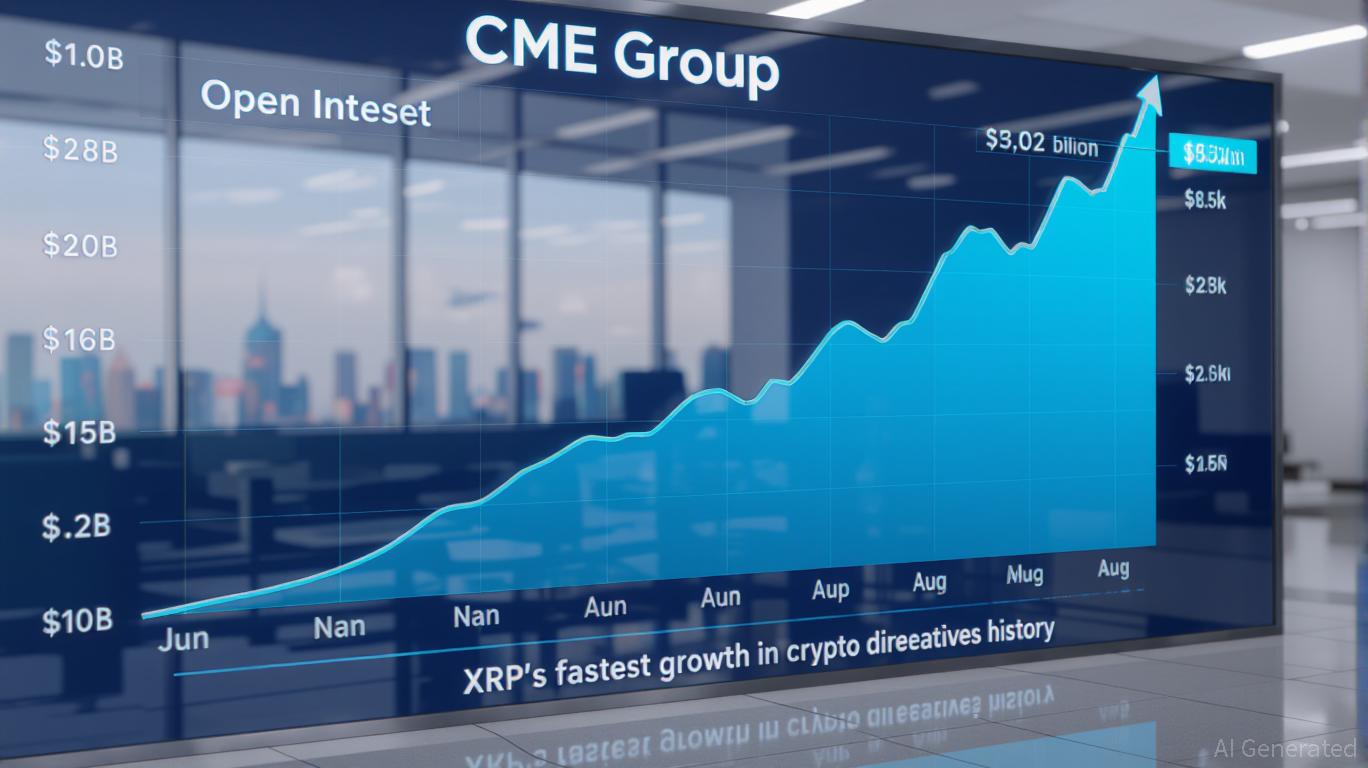
- XRP's 2025 rally defies skepticism as CME's $9.02B open interest and ETF applications signal institutional adoption. - SEC's 2025 regulatory clarity and 300+ financial institutions using RippleNet validate XRP's cross-border utility. - Tokenization partnerships with central banks (e.g., ECB's 2025 pilot) position XRP as a bridge currency in real-time settlements. - Analysts predict XRP could surpass Ethereum in market cap by September 2025 amid ETF approval optimism and asymmetric upside potential.
- 05:35Sources: Japan's cryptocurrency tax reform may not be officially implemented until January 2028PANews, December 17 — According to CoinDesk, Japanese political sources have indicated that the country's cryptocurrency tax reform—specifically the shift to a “separate self-assessment taxation” scheme—may not be officially implemented until January 2028. Previously, the market generally expected that, since the amendment to include cryptocurrency under the regulation of the Financial Instruments and Exchange Act is almost certain to pass in next year's parliament, the new tax regime could be introduced in 2027 alongside this law. However, according to political insiders, the actual process may be slower than anticipated. One source stated: “Currently, there is a lack of grounds to accelerate the (tax reform) process. The government is more focused on investor protection measures and needs to observe the situation after the implementation of the Financial Instruments and Exchange Act before launching the new tax system. Based on the normal process, it is expected to take effect from January 1, 2028.” Under Japan's current tax system, profits from cryptocurrency trading are classified as “miscellaneous income,” which must be combined with salary and other income for comprehensive taxation, with a maximum marginal tax rate of up to 55% (including local resident tax). The industry and investors have long called for the adoption of a separate self-assessment taxation system, similar to stock investment, with a unified tax rate of 20% for cryptocurrency, in order to reduce the tax burden and promote market development.
- 05:26Former Theta Labs executive sues CEO for alleged fraud and market manipulationAccording to TechFlow, on December 17, Decrypt reported that two former Theta Labs executives, Jerry Kowal and Andrea Berry, filed a whistleblower lawsuit in California, accusing company CEO Mitch Liu and Theta Labs of fraud, token market manipulation, and retaliation against whistleblowing employees. The lawsuit alleges that Liu used Theta Labs as a personal trading tool, inflating the price of THETA tokens through misleading partnerships (including exaggerating ties with Google), undisclosed internal token sales, and NFT market manipulation. The plaintiffs described a long-term pattern of self-dealing, claiming that Liu carried out a "deliberate pump-and-dump scheme," harming the interests of investors and employees. As of press time, Liu and Theta Labs have not commented on the matter.
- 05:19Former Theta executive accuses the company’s CEO of fraud and retaliationPANews, December 17 — According to Decrypt, two former executives of blockchain company Theta Labs have filed whistleblower lawsuits in California, accusing the company and its CEO Mitch Liu of years of fraud, market manipulation, and retaliatory behavior. Former executives Jerry Kowal and Andrea Berry filed lawsuits in Los Angeles Superior Court, alleging that Liu used Theta Labs and its parent company Sliver VR Technologies to inflate token prices through misleading partnerships and undisclosed insider token sales, while retaliating against employees who raised concerns. The attorney representing Jerry Kowal pointed out that Mitch Liu used Theta Labs as a personal trading tool, engaging in fraud, self-dealing, and market manipulation. Liu's carefully orchestrated pump-and-dump schemes repeatedly wiped out the value for investors and employees. The alleged schemes also include "generating fake bids for NFTs," some of which were related to high-profile collaborations with celebrities such as Katy Perry. Berry's complaint also targets Theta's previous statements about Google, accusing the company of publicly misrepresenting a routine cloud services agreement as a strategic partnership. The complaint also highlights two other instances of self-dealing, alleging that "Theta's so-called 'partners' were actually other companies created and wholly owned by Liu."