
Vitalik Buterin's Latest Support for ZKsync and What It Means for the Layer 2 Scalability Market
- Vitalik Buterin endorsed ZKsync's Atlas upgrade, boosting Ethereum's Layer 2 scalability with 43,000 TPS and low fees. - The endorsement drove a 143% surge in $ZK token value and institutional adoption by Deutsche Bank and Sony . - ZKsync's Fusaka upgrade aims for 30,000 TPS, aligning with Ethereum's scalability goals and projected $0.15–$0.20 price by 2025. - Despite competition from Arbitrum and short-term volatility, ZKsync's deflationary tokenomics and enterprise partnerships strengthen its market po
Vitalik Buterin’s Endorsement Sparks New Era for ZKsync and Ethereum Layer 2
In the closing months of 2025, Vitalik Buterin publicly voiced his support for ZKsync, marking a significant milestone for Ethereum’s Layer 2 landscape. The Ethereum co-founder’s recognition of ZKsync’s Atlas upgrade—which boasts the ability to process up to 43,000 transactions per second, deliver near-instant settlement, and lower computational expenses—has fueled a wave of enthusiasm among investors and institutions alike. This review explores the impact of Buterin’s backing, the technical strides made by ZKsync, and the evolving investment climate surrounding Layer 2 scaling solutions.
Breakthroughs in Technology: Atlas and Fusaka Upgrades
Buterin’s praise focused on the Atlas upgrade, which utilizes the GKR protocol and the Airbender proof system to set new standards for speed and efficiency. Reports indicate that this upgrade delivers “almost instantaneous finality and minimal transaction fees,” positioning ZKsync as a vital component in Ethereum’s scalability ambitions. The GKR protocol notably halves computational demands, while Airbender accelerates the process of validating transactions.
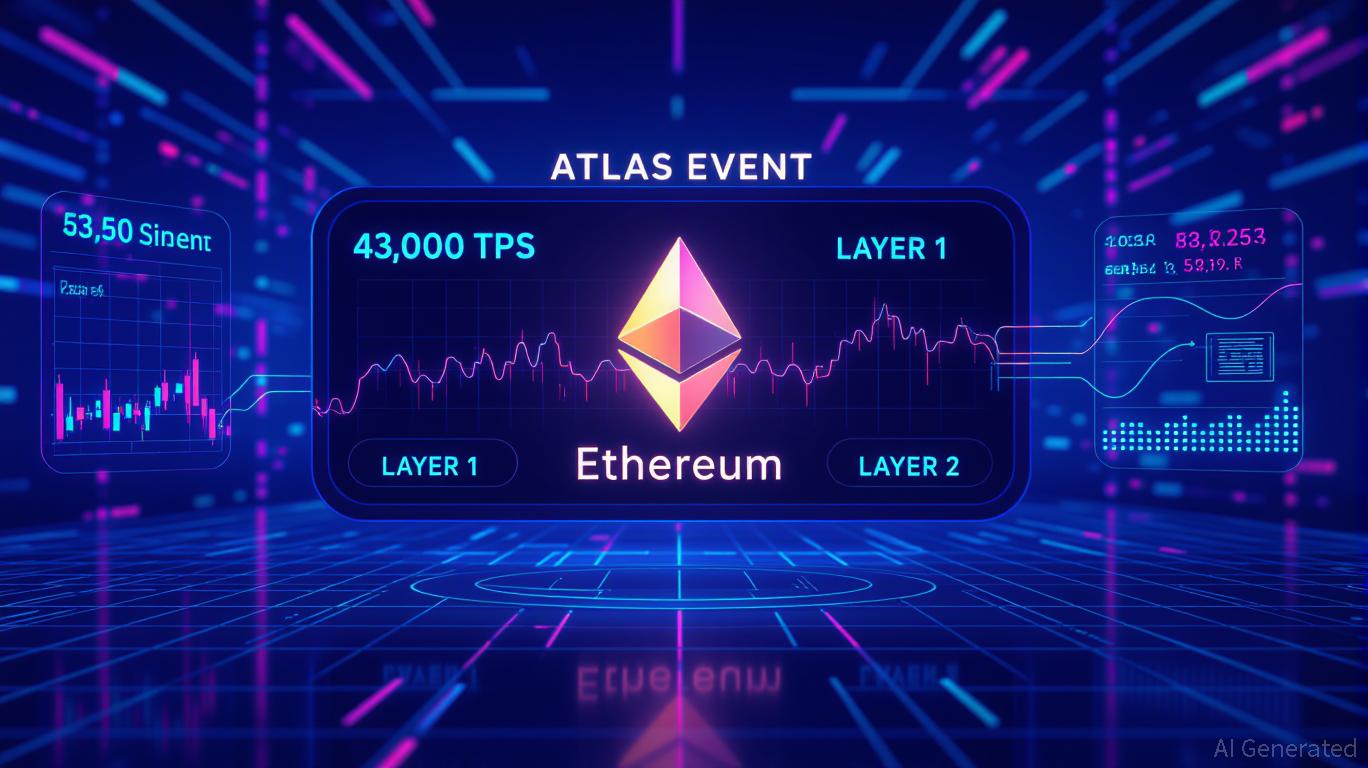
Looking forward, the Fusaka upgrade—expected in December 2025—aims to further boost throughput to 30,000 TPS, reinforcing ZKsync’s leadership among Layer 2 solutions. Buterin has also highlighted the significance of combining zero-knowledge proofs with technologies such as multi-party computation (MPC) and trusted execution environments (TEE) to strengthen both privacy and scalability. These advancements are in line with Ethereum’s vision for a modular, secure, and high-performance blockchain ecosystem.
Market Impact: Token Rally and Institutional Adoption
Following Buterin’s endorsement, the $ZK token surged by 143%, reflecting growing trust in ZKsync’s direction and capabilities. Major institutions have taken notice: Deutsche Bank has adopted ZKsync for real-world asset tokenization, while Sony is leveraging the platform for NFT initiatives, demonstrating its appeal across both finance and digital entertainment sectors.
In 2025, ZKsync’s ecosystem attracted $15 billion in new capital, with total value locked (TVL) surpassing $28 billion. This expansion is underpinned by a revamped tokenomics framework that includes buybacks, token burns, and staking rewards, transforming $ZK into a deflationary asset with increasing utility. Analysts have observed strong technical momentum, with $ZK trading near $0.057 in November 2025 and forecasts suggesting a rise to $0.067 by year’s end.
Investment Outlook: Growth Prospects and Competitive Landscape
ZKsync’s alignment with Ethereum’s scaling objectives and its robust institutional partnerships make it an attractive investment opportunity. The market for zero-knowledge proof (ZKP) technologies—driven by innovations in decentralized finance and enterprise use cases—is expected to expand at a compound annual growth rate of 22.1%, reaching $7.59 billion by 2033. The Atlas upgrade’s liquidity-sharing feature, which enables seamless cross-chain transactions between Ethereum’s mainnet and Layer 2, further enhances ZKsync’s interoperability and addresses fragmentation concerns.
Nonetheless, ZKsync faces challenges, including technical integration complexities and competition from platforms like Arbitrum, which has also experienced significant TVL growth. Short-term volatility remains a risk, as evidenced by a 5.87% price dip in late 2025 due to profit-taking and token unlock events. Despite these hurdles, the upcoming Fusaka upgrade and expanding applications in gaming, artificial intelligence, and international finance are projected to propel $ZK toward the $0.15–$0.20 range by the end of 2025.
Conclusion: ZKsync as a Strategic Choice for Ethereum’s Next Chapter
Vitalik Buterin’s endorsement has not only validated ZKsync’s technical achievements but also elevated its profile within the competitive Layer 2 sector. With its ability to deliver rapid finality, robust security, and a deflationary token model, ZKsync stands out as a pivotal player in Ethereum’s evolution. For investors, ZKsync offers a strategic opportunity at the intersection of zero-knowledge technology, enterprise integration, and Ethereum’s long-term scalability objectives. While challenges persist, the combination of technological innovation and strong market momentum positions ZKsync to meet the rising demand for scalable, privacy-focused blockchain infrastructure.
Disclaimer: The content of this article solely reflects the author's opinion and does not represent the platform in any capacity. This article is not intended to serve as a reference for making investment decisions.
You may also like
OG Strategies May Be Hurting Bitcoin’s Momentum
Is FET Nearing a Recovery Phase? This Key Emerging Fractal Suggests So

Core (CORE) Testing Key Resistance – Could This Pattern Trigger an Upside Breakout?

Zcash Halving 2025: Effects on the Market, Investor Reactions, and Tactical Investment Prospects
- Zcash's 2025 halving reduces block rewards by 50%, tightening supply and reinforcing its deflationary model. - The event coincided with a 1,172% price surge, driven by institutional investments and growing shielded transaction adoption. - Institutional demand, including Grayscale and Cypherpunk's ZEC acquisitions, highlights Zcash's strategic value in privacy-focused crypto markets. - Regulatory risks under MiCA and short-term volatility remain concerns, but long-term projections suggest potential for $1
Trending news
MoreCrypto prices
More





